Best Time to See Dolphins in Charleston, SC: A Month-by-Month Timing Guide
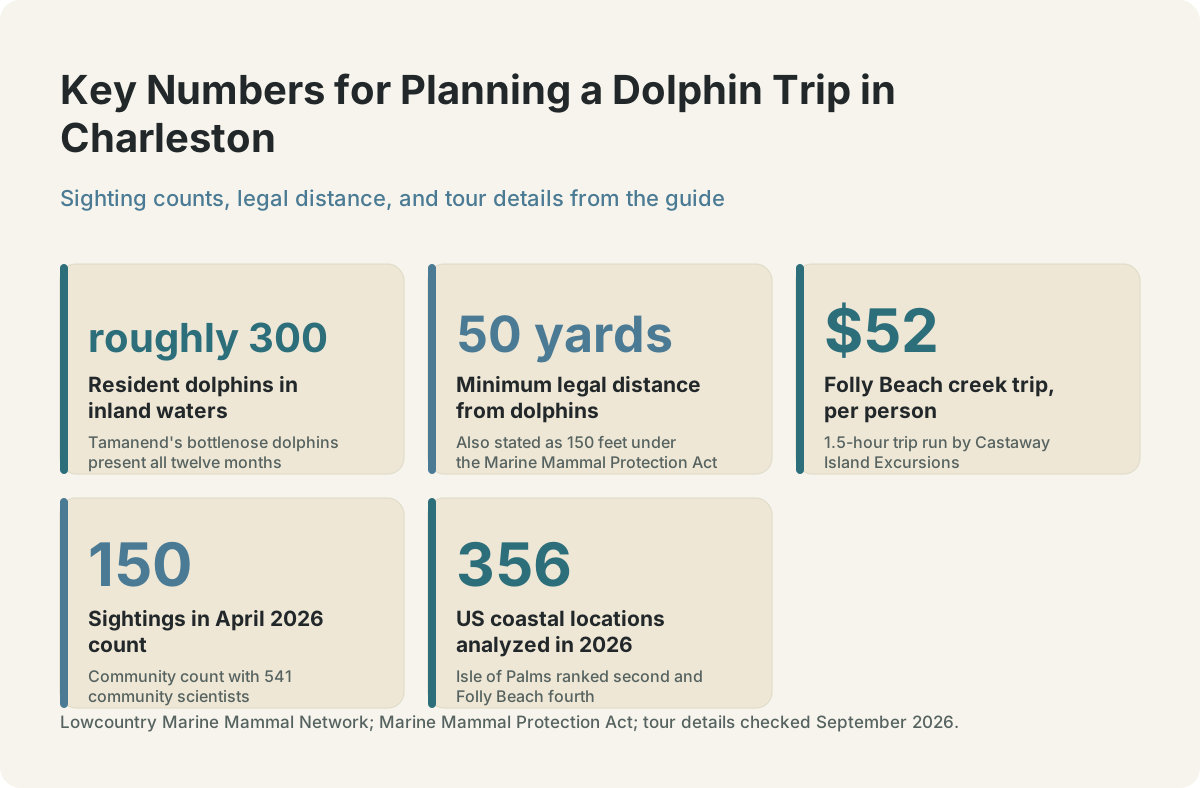
Roughly 300 bottlenose dolphins live year-round in Charleston's inland waters, so timing matters less than tide, departure point and expectations. Here is what the research actually says about when they show up.
Short answer
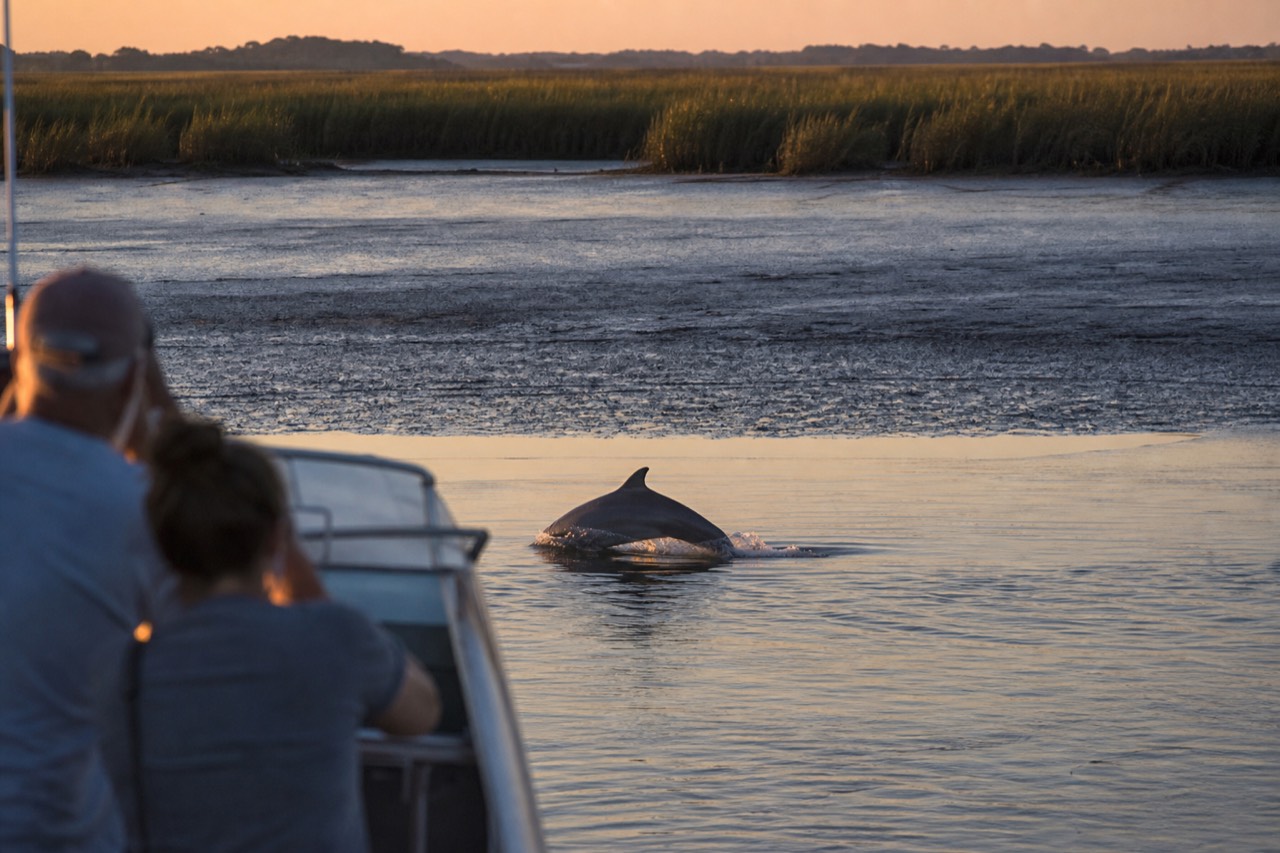
About 300 resident dolphins live in Charleston's waters year-round, so sightings happen in every month. Summer brings migratory pods and peak activity, while July through September is strand feeding season near Folly Beach on a low-to-mid tide. Morning and late afternoon offer the calmest water, and Folly Beach ranks fourth nationally for dolphin sightings.
Charleston's dolphins do not keep an appointment book, but they follow patterns tight enough to plan around. The Lowcountry Marine Mammal Network puts the resident population of Charleston's inland waters at roughly 300 animals, and a 2026 national analysis of sighting data ranked Isle of Palms second and Folly Beach fourth among 356 US coastal locations for bottlenose dolphin sightings. That is an unusually strong hand for a mid-sized city to hold, and it means the question is rarely whether dolphins are here. It is when, where and on what tide you position yourself to see them.
This guide lays out the timing in practical order: the month-by-month picture, the strand feeding window that draws wildlife watchers from across the country, the morning-versus-afternoon question, and the choice between leaving from Folly Beach or the downtown marinas. Every tour mentioned here is one we track on Charleston Harbor Cruises, with pricing checked against the live listings.
What is the best time of year to see dolphins in Charleston?
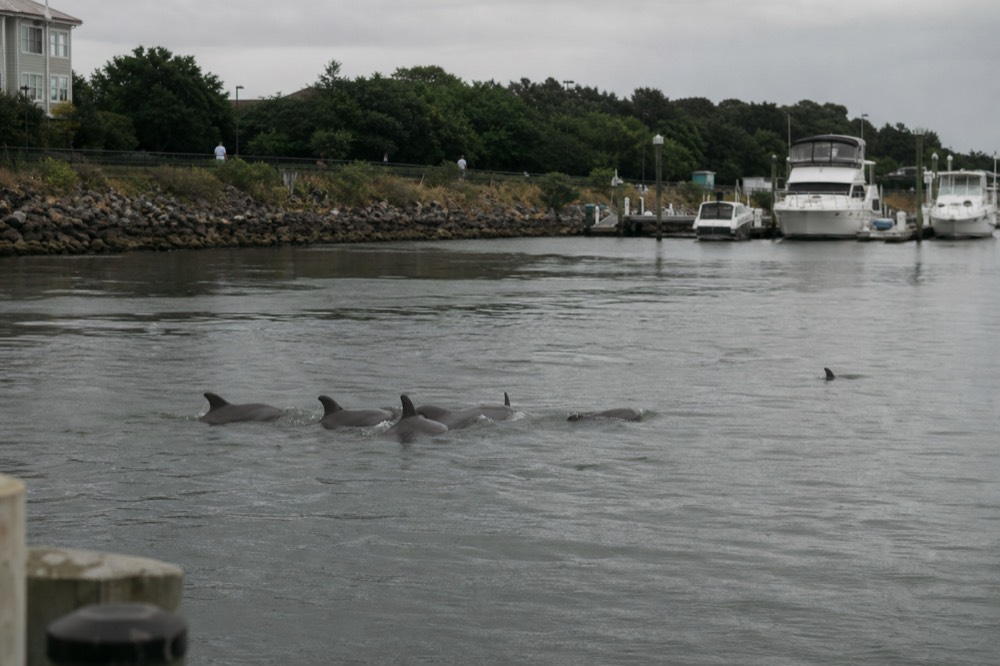
Dolphins live in Charleston's waters all twelve months, but sighting odds peak in summer, roughly May through September, when migratory Atlantic bottlenose dolphins join the resident population and the creeks warm into prime feeding territory. Fall and spring are strong second tiers, since migratory pods pass through in both seasons, while winter holds the resident core of about 300 animals and still produces regular sightings for boaters who pick calm days.
The resident animals are Tamanend's bottlenose dolphins, a species formally separated from the common bottlenose in recent years, and they do not leave. What changes through the year is density and behavior. Summer adds seasonal and migratory Atlantic bottlenose dolphins to the estuary, which is why charter captains consistently report more dorsal fins per trip in June, July and August. It is also why the water gets busier: summer is peak tourist season in a destination that drew a record 7.9 million visitors in 2025.
Fall deserves more credit than it gets. Migratory pods pass through in autumn, the air cools into the low 70s by late September, and boat traffic thins after Labor Day. Spring is similar, with the added advantage of the April community dolphin count run by the Lowcountry Marine Mammal Network: the April 25, 2026 event logged 150 dolphin sightings across Charleston-area sites with 541 community scientists participating, a snapshot that confirms the animals are active and visible well before summer arrives.
Here is the month-by-month picture in table form. Treat it as likelihood, not a guarantee: dolphins are wild animals, and no honest operator promises a sighting.
| Month | Sighting likelihood | What is happening |
|---|---|---|
| January | Moderate | Resident core of ~300 animals; calm winter days can be excellent |
| February | Moderate | Quiet water, minimal boat traffic, resident pods in the creeks |
| March | Good | Warming water, spring migratory pods beginning to arrive |
| April | Good | Spring migration; LMMN community count logged 150 sightings in April 2026 |
| May | Very good | Water warming, baitfish moving in, summer visitors arriving |
| June | Excellent | Peak season begins; resident and migratory dolphins overlap |
| July | Excellent | Peak season plus strand feeding season opens |
| August | Excellent | Peak density; strand feeding near Folly Beach at its most reliable |
| September | Excellent | Strand feeding season continues; crowds thin after Labor Day |
| October | Very good | Fall migratory pods passing through; calm, clear days |
| November | Good | Driest month of the year locally; resident pods in the tidal creeks |
| December | Moderate | Resident core; dress warm and pick a calm-weather window |
When is dolphin strand feeding season near Folly Beach?
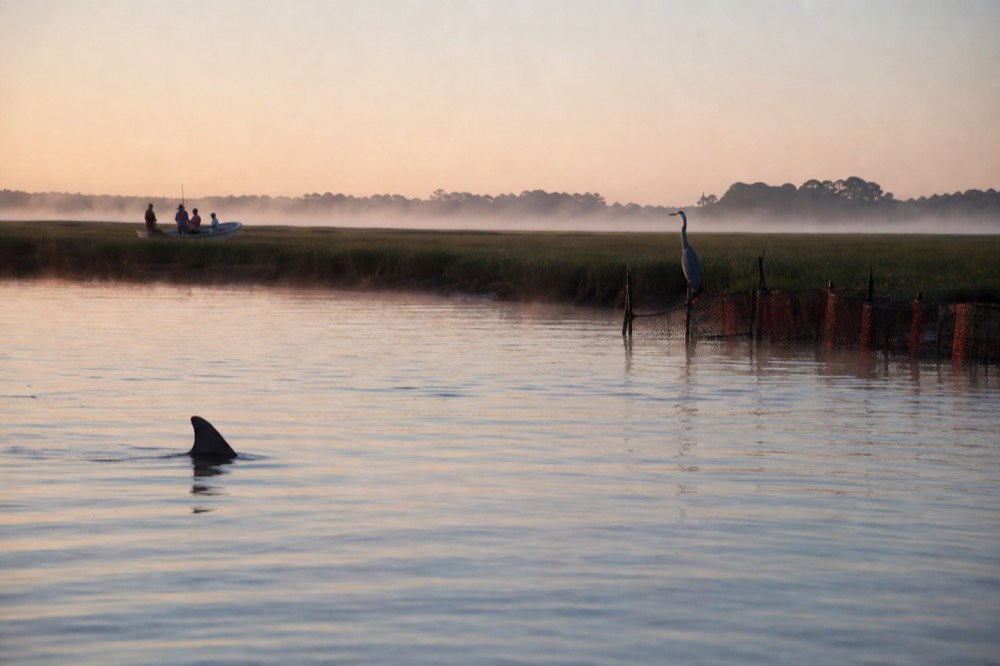
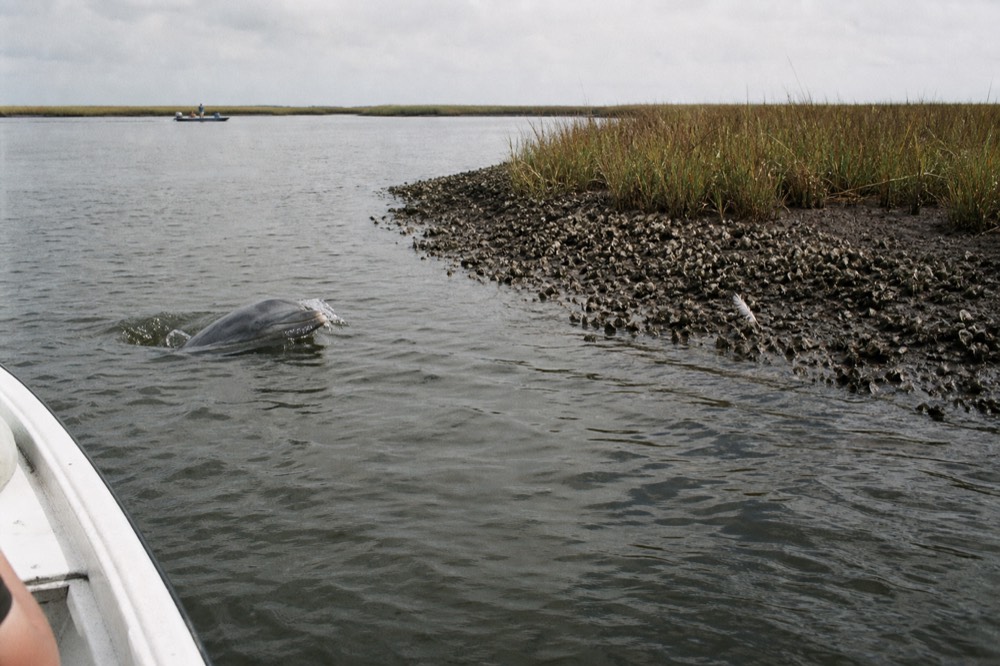
Strand feeding, the behavior where dolphins deliberately beach themselves to catch fish, peaks July through September in the waters around Folly Beach, and it happens most often on a low-to-mid receding tide when the shallows concentrate prey. A 2026 peer-reviewed paper in Marine Mammal Science documented the behavior specifically at Captain Sams Inlet, South Carolina, confirming what local guides have watched for years.
This is the headline wildlife event in Charleston, and it is rarer than most visitors realize. Strand feeding has been documented in South Carolina and Georgia salt marshes since 1971, and it is essentially unseen elsewhere on the US Atlantic coast. The dolphin chases fish onto a mudbank at speed, throws itself ashore, gulps the stranded prey, then rocks back into the water. It is a learned behavior passed from mothers to calves, which is why it shows up in some creeks and not others.
The timing mechanics matter if you want to witness it. The behavior occurs on receding or low tide, when fish are pushed out of the protective marsh grass into the shallows where they are easier to trap. Groups of three dolphins are the most common strand feeding party size, per the Captain Sams Inlet research. Some local naturalists also point to late August through November, when mullet migration concentrates prey, as a strong secondary window.
The practical takeaway: if strand feeding is your goal, book a trip that actually works the Folly Beach tidal creeks, and book it for a day when low tide falls during your tour window. A downtown harbor loop will show you dolphins, but the creek systems behind Folly Beach and around the Morris Island Lighthouse are where this specific behavior lives.
Is morning or afternoon better for dolphin sightings?
Neither slot has a monopoly on dolphins, since the animals feed on tides rather than clock time, but morning and late afternoon offer the calmest water, the least glare and the lowest boat traffic, all of which make dorsal fins easier to spot and photography better. Midday trips still see dolphins regularly; they just compete with chop, glare and the busiest water of the day.
The calm-water point is physical rather than mystical. Charleston Harbor is relatively protected compared with the open ocean, and wind typically builds through the afternoon before easing in the evening. Early morning departures ride the flattest water, and slack tide periods are repeatedly recommended by local operators for the smoothest rides. A dolphin surfacing in glassy water at 8am is visible from a hundred yards; the same dolphin in a two-foot afternoon chop can be invisible until it is beside the boat.
Dolphins themselves feed opportunistically through the day, keyed to tide and bait movement. If your trip's timing aligns with a falling tide in a creek system, the hour on the clock matters far less than that alignment. This is the single most useful question to ask before booking any dolphin trip: not "what time?" but "what tide?"
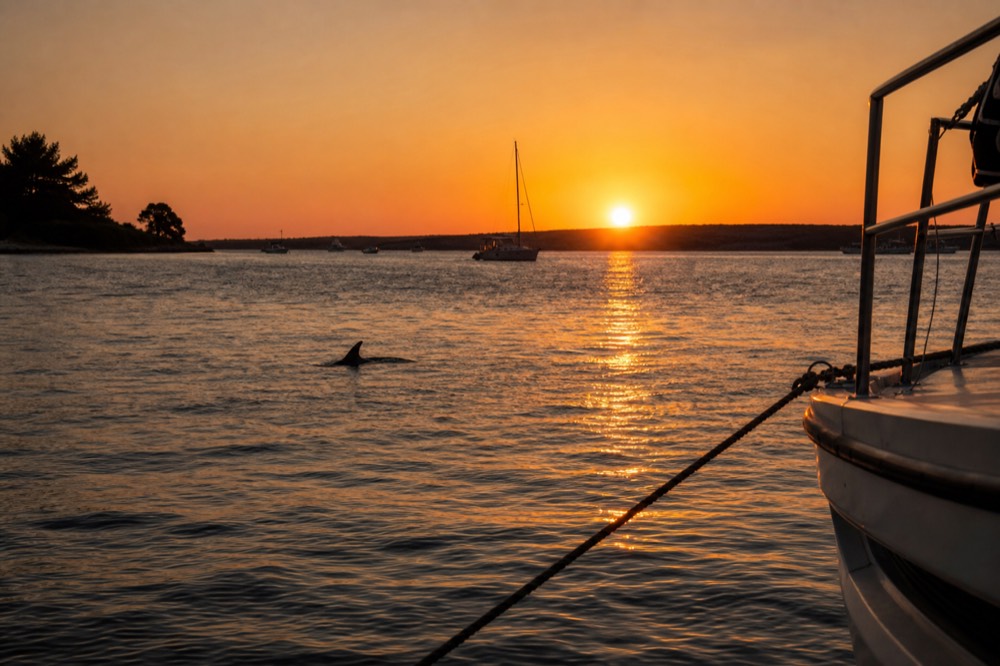
The afternoon has one real advantage: golden hour. Sunset dolphin trips combine the day's second calm-water window with the light that makes the harbor worth photographing even on a quiet dolphin day. For a deeper look at the time-of-day question, our piece on the best time of day for dolphin sightings in Charleston breaks the day into windows.
Should you leave from Folly Beach or the downtown harbor marinas?
Leave from Folly Beach if strand feeding, tidal creeks and the Morris Island Lighthouse are the goal, because that is the only departure point on this site that works those shallow systems. Leave from the downtown marinas or Mount Pleasant if you want dolphins plus the skyline, Fort Sumter and the Ravenel Bridge in one trip, since the harbor proper holds resident pods that patrol the shipping channel year-round.
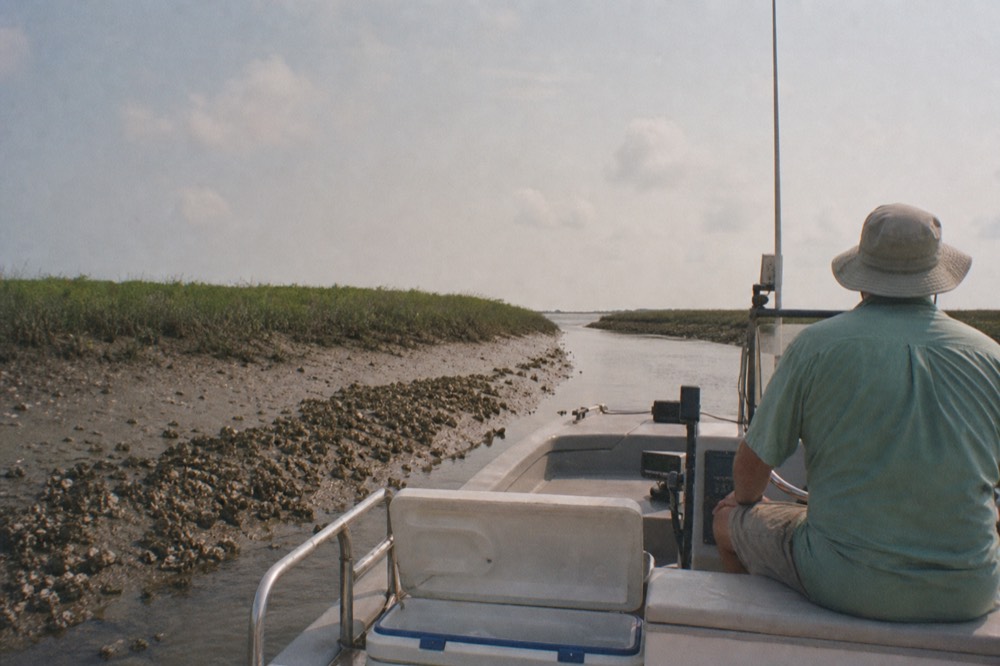
The distinction is real and it shapes the whole experience. Trips out of the Charleston Maritime Center, Aquarium Wharf or Patriots Point cover open harbor water: wide views, big landmarks and dolphins that ride the channel wakes. Trips out of Folly Beach, by contrast, head into the narrow creeks behind the barrier island, where the water is shallow, the banks are marsh grass and the dolphin behavior is more visible at close range simply because there is less room for the animals to be elsewhere.
Neither is the "right" choice. Families with kids often prefer the harbor trips for the landmark checklist and the bigger, steadier boats. Wildlife-focused travelers and photographers usually prefer the creek trips, accepting a longer drive to Folly Beach in exchange for behavior sightings you cannot get downtown.
| Departure point | Water you cover | Best for | Dolphin style |
|---|---|---|---|
| Folly Beach | Tidal creeks, Folly River, Morris Island Lighthouse area | Wildlife watchers, photographers, strand feeding seekers | Close-range feeding behavior in shallow creeks |
| Charleston Maritime Center (downtown) | Open harbor, Fort Sumter, the Battery | First-time visitors, families, landmark combos | Dolphins plus skyline and history in one trip |
| Aquarium Wharf (downtown) | Harbor proper and channel edges | Sail-style trips, hands-on sailing | Dolphins from a tall-ship platform |
| Shem Creek (Mount Pleasant) | Harbor's east side, Ravenel Bridge approaches | Casual cruises, BYOB crowds | Dolphins as a bonus on a social trip |
The Folly Beach excursion on this site, run by Castaway Island Excursions, is the one to single out for the creek experience: it is a 1.5-hour trip from $52 per person, it holds a 5.0-star rating on a small sample of 17 reviews, and it is the only tour on this site that does not depart from a Charleston Harbor marina at all. That is not a quirk; it is the whole point, since the creeks behind Folly Beach are where the strand feeding action concentrates.
How close can boats legally get to dolphins?
Federal law under the Marine Mammal Protection Act requires boaters, including tour vessels, to stay at least 50 yards, or 150 feet, from dolphins, which means every legitimate Charleston dolphin tour is a viewing trip, not an interaction trip. Operators who crowd the animals risk harassment penalties, and any outfit promising close contact or feeding should be treated as a red flag rather than a better deal.
The 50-yard rule is enforced and it is not bureaucratic decoration. NOAA and the Lowcountry Marine Mammal Network both emphasize it for busy areas like Shem Creek and the Folly River, where recreational boater traffic runs high in summer. Responsible tour captains hold position, let the dolphins choose to approach or pass, and shut down engines when animals are feeding nearby. The good news is that dolphins are curious and frequently come to boats on their own terms, so the legal distance rarely feels like a handicap.
Feeding wild dolphins is separately illegal, and it matters more than visitors expect. Fed dolphins change their hunting behavior, lose their wariness of boats and propellers, and can pass those bad habits to calves. The strand feeding culture around Charleston is precisely the kind of learned behavior that human interference can disrupt, which is one more reason the peer-reviewed documentation of Captain Sams Inlet matters: it is a baseline researchers can track as pressure on the estuary grows.
This is also the honest answer to a question we get often: no, you cannot swim with dolphins in Charleston, and there is more on that in our piece on why you can no longer swim with dolphins.
Which dolphin tours run here, and what do they cost?
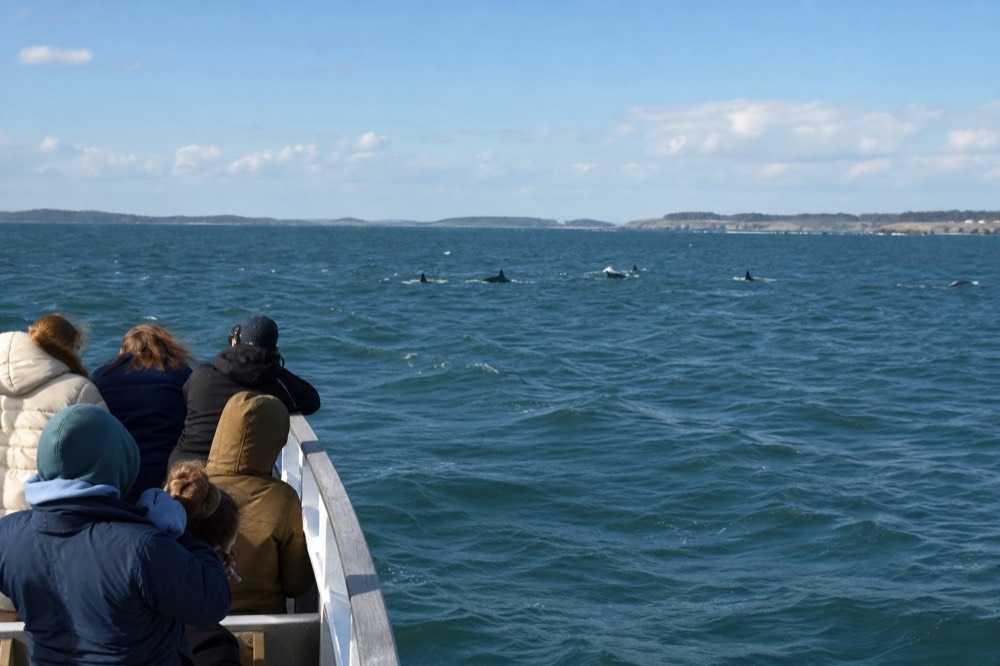
Dolphin-focused trips on this site run from $52 to $58 per person, spanning a creek excursion from Folly Beach, a tall-ship sail from Aquarium Wharf and a sunset dolphin trip from Mount Pleasant. Ratings range from 4.5 stars on 787 reviews for the schooner cruise to a perfect 5.0 on a small 17-review sample for the Folly Beach excursion, so read the review counts alongside the averages.
Here is the current dolphin roster in one table, with the numbers as they stand on the live listings.
| Tour | Departure point | Duration | Price | Rating snapshot |
|---|---|---|---|---|
| Folly Beach Dolphin Viewing Boat Excursion | Folly Beach | 1.5 hours | From $52/person | 5.0 stars, 17 reviews, small sample |
| Schooner Sailing Experience with Dolphin Watch | Aquarium Wharf | 1.5 hours | From $56/person | Ratings on the live listing |
| Afternoon Schooner Sightseeing Dolphin Cruise | Not stated | 1.5 hours | From $56/person | 4.5 stars, 787 reviews |
| Sunset cruise with dolphin spotting | Mount Pleasant | 1.5 hours | From $58/person | 8 reviews, too thin for an average |
Two honesty notes on that table. The schooner sailing experience has two rating reads that disagree, so we print neither and point you to the live listing instead. And the sunset dolphin trip's 8 reviews are too thin to treat as a reliable average, though its from-$58 price makes it the cheapest sunset option on the site, which is worth knowing if you want dolphins and golden hour on a budget.
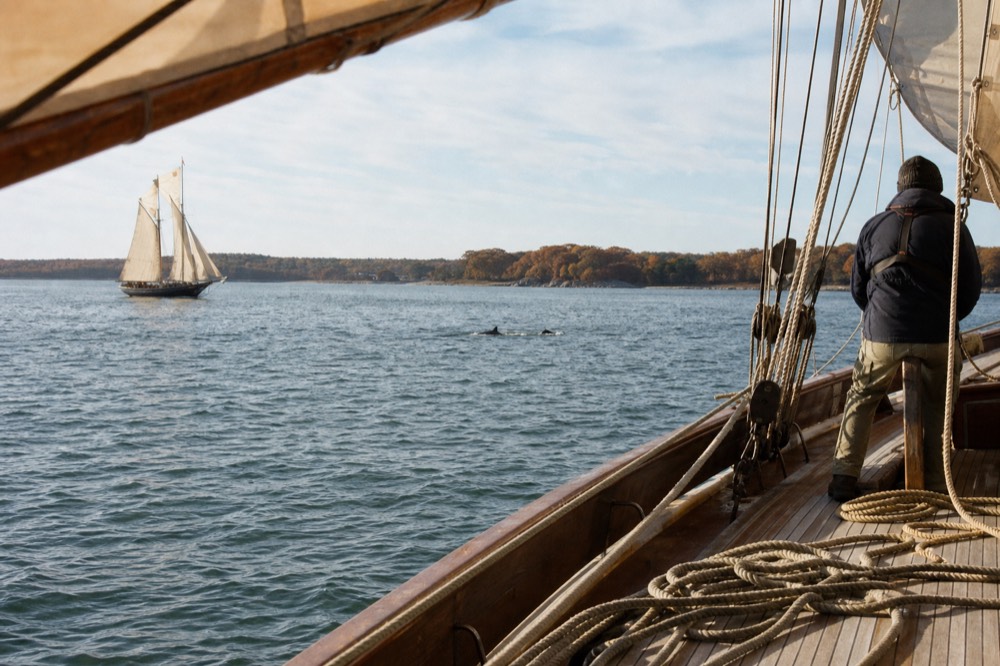
The afternoon schooner cruise deserves a closer look for one operational reason: it is marked "likely to sell out" on the live listing, it carries free cancellation, and its 787-review base at 4.5 stars is the most substantial track record among the dolphin-specific options. It runs on an 84-foot tall ship, which turns a sighting trip into a genuine sailing experience.
For a fuller comparison that includes non-dolphin options, see our guide to Charleston dolphin cruises, tours and prices.
What about dolphins in fall and winter?
Fall is arguably the local secret: September keeps the strand feeding window and peak-season density while shedding the summer crowds, October brings migratory pods through on calmer water, and November is the driest month of the year locally with just 2.66 inches of average rainfall. Winter drops to the resident core of about 300 animals, which still produces regular sightings for anyone willing to layer up.
The NOAA 1991-2020 climate normals for the Charleston station back this up. August is the wettest month at 6.97 inches of average precipitation, while November is the driest at 2.66 inches. For a boat trip, that difference matters: clear, dry, low-humidity fall days deliver the best visibility of the year, and the cooling air (70s in September, 60s by November) makes an hour and a half on the water genuinely pleasant rather than a sweat test.
Wildlife-wise, fall brings its own show. Migratory pods pass through in both spring and autumn, mullet run hard through the creeks from late August into November, and that bait concentration feeds everything above it in the food chain. Some local naturalists actually flag late August through November as the richest strand feeding stretch for exactly this reason, overlapping with the July-September peak most often cited.
Winter is the contrarian's play. The dolphins do not leave, the water is at its quietest, and a calm January morning on the harbor can feel private in a way July never will. Dress for it, pick your weather window carefully, and set expectations to "resident pods, steady but not spectacular" and winter delivers.
How reliable are dolphin sightings, honestly?
No Charleston tour can promise a dolphin sighting, and any operator that does is selling certainty the estuary cannot back up, but the odds here are genuinely strong: roughly 300 resident dolphins patrol these waters year-round, and the area's creeks rank among the most documented dolphin habitat on the US coast. Treat sighting claims as probability, read the review base before booking, and pick tours whose captains talk tides rather than guarantees.
The honest framing cuts both ways. On one side, the density numbers are real: the OBIS-SEAMAP analysis behind the national rankings documented 14,443 dolphins across 3,161 recorded events at Folly Beach alone. On the other side, dolphins move with bait and tide, not with ticket schedules, and a trip that sees eight dolphins one afternoon can see none the next.
Review patterns tell you what to expect operationally. Guest reviews of the dolphin trips here consistently praise crews and sighting outcomes, but the broader harbor-cruise review base also carries complaints about crowded boats and narration that is hard to hear on busy departures. Those critiques are worth weighing if you are choosing between a big-boat harbor tour and a small creek excursion: the smaller the boat, the fewer the sightline battles.
One more honesty item: nobody publishes a sighting rate. No named Charleston operator puts a percentage on dolphin encounters in current materials, so when a listing says dolphins are "frequent" or "likely," that is description, not data. The resident population and the rankings are the data, and they are strong enough on their own.
How do you plan a dolphin trip around tides and weather?
Plan around three variables in this order: season, tide and weather. Pick your month for density (summer for peak, fall for the sweet spot of action plus calm), pick your departure time so the tour window overlaps a falling or low tide if strand feeding is the goal, and then hold your date loosely enough to shift if wind or storms make the water rough.
The tide piece is the one travelers most often miss, and it is the one you can actually control. Strand feeding happens on receding or low-to-mid tide, so a Folly Beach creek trip booked for a window two hours before low tide is structurally better positioned than the same trip at high water. Tide tables for the Charleston area are published by NOAA, and a quick check against your tour's departure time takes under a minute.
Weather planning has a seasonal shape. Hurricane season runs June 1 through November 30, and the National Weather Service notes an average of 14 tropical storms forming over the Atlantic in a season, which is why operators sometimes reschedule summer and early-fall trips. It does not mean avoid those months; it means book with free cancellation where it exists and check the forecast 48 hours out. Our guide to the best months to book a harbor cruise covers the full seasonal calculus.
| Planning variable | What to do | Why it matters |
|---|---|---|
| Season | May-September for peak density; September-October for the fall sweet spot | Migratory dolphins overlap with residents in summer |
| Tide | Book creek trips to overlap falling or low-to-mid tide | Strand feeding occurs on receding tides |
| Time of day | Early morning or late afternoon for calmest water | Wind and glare build midday |
| Departure point | Folly Beach for behavior; downtown for landmarks plus dolphins | Creek systems versus open harbor |
| Weather buffer | Prefer free-cancellation bookings June-November | Hurricane season reschedules are real |
| Review base | Check review counts, not just star averages | Thin samples swing ratings sharply |
A final word on expectations. The sunset dolphin trip from Mount Pleasant, from $58 per person, is the cheapest way on this site to combine the golden-hour harbor with dolphin odds, and its route doubles as a solid backup if a Folly Beach creek trip sells out. Its review base is currently just 8 strong, too thin for a reliable average, but the price and the timing make it a reasonable low-stakes bet.
The short version of everything above: come in summer for volume, come in fall for the best overall conditions, watch the tide table more than the clock, and match your departure point to what you actually want to see. The dolphins are here in every month of the year. The difference between a good sighting day and a great one is usually preparation, not luck.
The short answers to the questions readers ask most: dolphins are present in every month, strand feeding peaks July through September on falling tides near Folly Beach, morning and late afternoon give the calmest water, and federal law keeps all tour boats at least 50 yards from the animals. No tour guarantees a sighting, but the resident population of roughly 300 dolphins makes Charleston one of the strongest dolphin-watching destinations on the US coast.
Common questions about seeing dolphins in Charleston
Yes, you can often see dolphins in Charleston, especially in the harbor and along the coastal waterways, where bottlenose dolphins are frequently spotted year-round. Boat tours, kayak trips, and waterfront spots around the city offer some of the best chances to observe them, though sightings are never guaranteed since dolphins are wild animals that come and go on their own schedules.
When can you see dolphins strand feeding near Folly Beach?
Strand feeding peaks July through September on low-to-mid receding tides in the creek systems around Folly Beach. A 2026 peer-reviewed paper in Marine Mammal Science documented the behavior at Captain Sams Inlet, and it has been recorded in South Carolina and Georgia salt marshes since 1971. Book a creek trip timed to a falling tide for the best odds.
Is morning or afternoon better for dolphin sightings?
Dolphins feed on tides rather than clock time, so neither slot owns the advantage. Morning and late afternoon offer the calmest water, the least glare and the least boat traffic, which makes dolphins easier to spot. Midday trips still see dolphins, just in choppier, busier conditions.
How close can a tour boat get to dolphins in Charleston?
Federal law under the Marine Mammal Protection Act requires boats to stay at least 50 yards, or 150 feet, from dolphins. Every legitimate tour is a viewing trip, not an interaction trip, and dolphins frequently approach boats on their own terms anyway.
Can you see dolphins in Charleston in the winter?
Yes. The resident population of roughly 300 dolphins stays in the inland waters year-round, and calm winter days on quiet water can produce excellent sightings. Dress warmly and pick your weather window, since winter trips depend more on conditions than on dolphin availability.
Do dolphin tours in Charleston guarantee sightings?
No, and any operator promising one is overstating what a wild estuary can deliver. The area's dolphin density is genuinely high, with Folly Beach ranking fourth nationally for sightings among 356 US coastal locations, but dolphins move with bait and tide. Book with free cancellation where available and treat sightings as very likely rather than certain.