Dolphin Cruises in Charleston: Best Tours, Prices, and What You'll Actually See
Charleston's inland waters hold roughly 300 resident bottlenose dolphins, and the area ranks among the best dolphin-sighting spots in the United States. Here is every dolphin cruise option, what each costs, and what a 90-minute trip actually delivers.
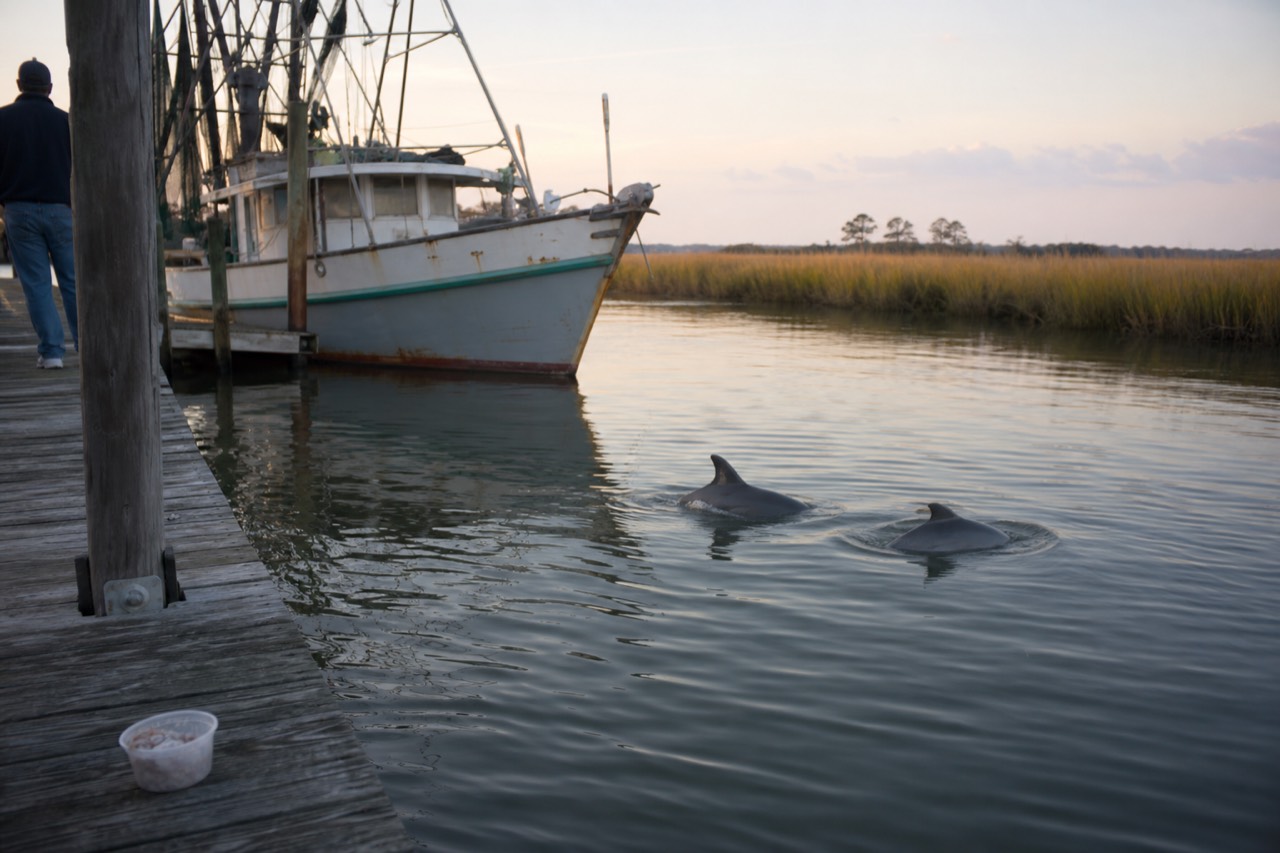
Short answer
A dolphin cruise in Charleston runs from $52 to $65 per adult for a 1.5-hour trip. The best-reviewed dedicated options are the afternoon schooner cruise at 4.5 stars from 787 reviews and the Folly Beach excursion at 5.0 stars from a small sample of 17. Dolphin sightings are frequent but never guaranteed.
Roughly 300 bottlenose dolphins live year-round in Charleston's inland waters, according to the Lowcountry Marine Mammal Network, and the local sighting data is better than almost anywhere else on the US coast. A 2026 BoatBooker analysis of OBIS-SEAMAP records ranked Isle of Palms second and Folly Beach fourth among 356 US coastal locations for dolphin sightings, with 16,588 dolphins documented across 2,446 events at Isle of Palms alone. That is the honest reason a dolphin cruise is one of the most reliable wildlife bookings in the Southeast: the animals are resident, not migratory luck.
This guide covers every dolphin-focused boat tour sold through this site, what each one costs, what a 90-minute trip actually looks like on the water, and the federal rules that shape the whole experience. It also answers the questions most booking pages skip, like why no legal tour lets you swim with dolphins and why some trips never leave the tidal creeks while others stay in open harbor.
What does a dolphin cruise in Charleston actually cost?
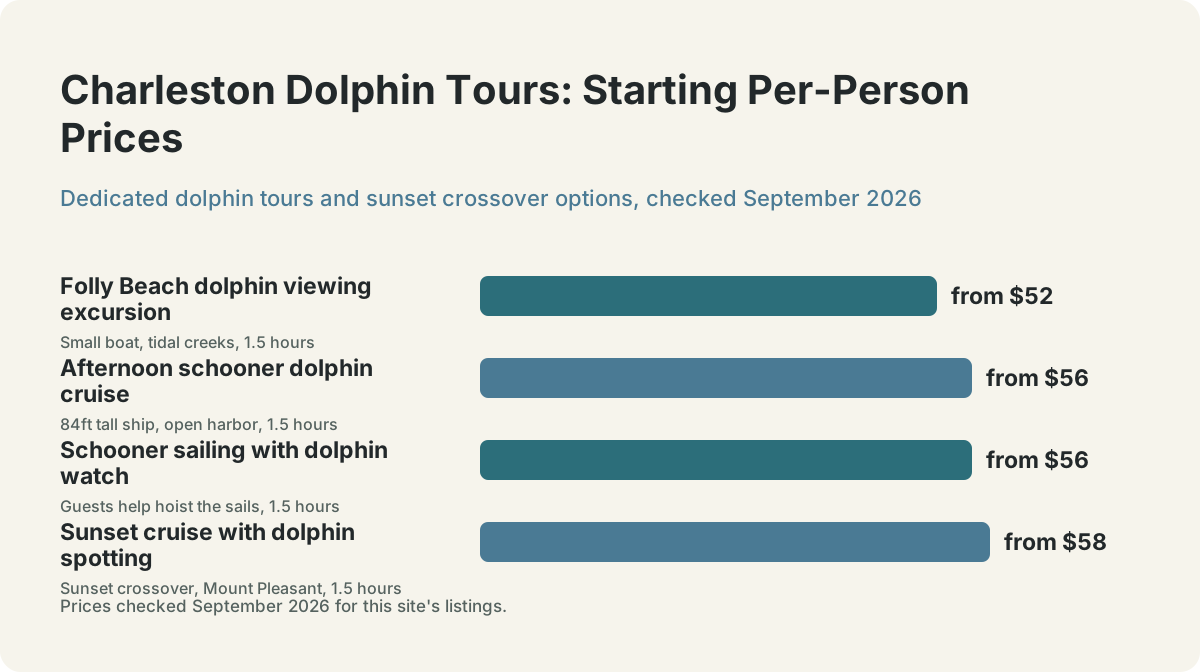
A dolphin cruise in Charleston costs between $52 and $65 per adult for a roughly 1.5-hour trip, with the dedicated dolphin tours clustered at $52 to $56 and the sunset-plus-dolphin crossover options at $58 to $65. There is no meaningful premium for dolphin-specific departures; you are paying for the boat format, not the animals.
The cheapest dedicated dolphin option on this site is the Folly Beach excursion from Castaway Island Excursions at from $52 per person, which trades a harbor departure for the tidal creeks behind Folly Beach. The two harbor-based dolphin tours, the afternoon schooner cruise and the sailing experience with sail-hoisting, both run from $56 per person. The crossover products, sunset trips that also watch for dolphins, run from $58 to $65. If your only goal is dolphins at the lowest price, the Folly Beach trip wins on fare; if you want dolphins plus the Ravenel Bridge and Fort Sumter in the same frame, the harbor options win on scenery.
One pricing note worth knowing before you compare: private charters in Charleston are priced per group, not per person, and two of the best dolphin-viewing platforms on the site are whole-boat sailings. The 43ft yacht Mystique charters from $599 per group for up to six guests, and the BYOB luxury yacht runs from $525 for the whole boat. Split three ways, a private charter can land close to the per-person public tour price, with dolphins and harbor history narrated by your own captain and no strangers aboard.
| Tour | Format | Duration | From (per person) | Rating |
|---|---|---|---|---|
| Folly Beach dolphin viewing excursion | Small boat, tidal creeks | 1.5 hours | $52 | 5.0 stars, 17 reviews |
| Afternoon schooner sightseeing and dolphin cruise | 84ft tall ship | 1.5 hours | $56 | 4.5 stars, 787 reviews |
| Schooner sailing experience with dolphin watch | Schooner, guests help sail | 1.5 hours | $56 | Ratings on the live listing |
| Sunset cruise with scenic views and dolphin spotting | Sunset crossover | 1.5 hours | $58 | No average yet, 8 reviews |
| Private sunset sail (Mystique) | Private yacht, up to 6 | 2-4 hours | $599 per group | 5.0 stars, 59 reviews |
| Private BYOB luxury yacht cruise | Private yacht, up to 6 | 2.5 hours | $525 per group | 5.0 stars, 44 reviews |
If you are weighing a dolphin trip against the other big water categories, the pricing logic is different: a narrated history cruise starts lower, from $45, while dinner cruises start at $72. The sunset versus dinner versus harbor tour comparison breaks down those trade-offs in detail.
Which dolphin tours are available, and how do they differ?
This site sells three dedicated dolphin tours and one sunset crossover product, plus two private charters that reliably encounter dolphins: the Folly Beach creek excursion, an 84ft afternoon schooner, a hands-on sailing experience, and a budget sunset trip that doubles as a dolphin watch. They differ mostly in water, boat and vibe, not in dolphin odds.
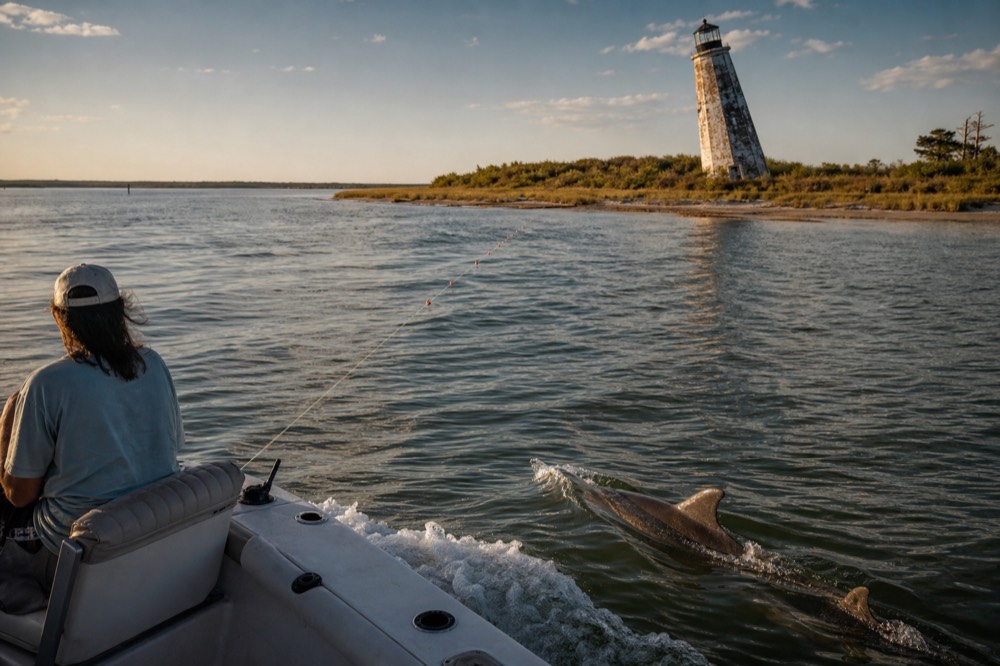
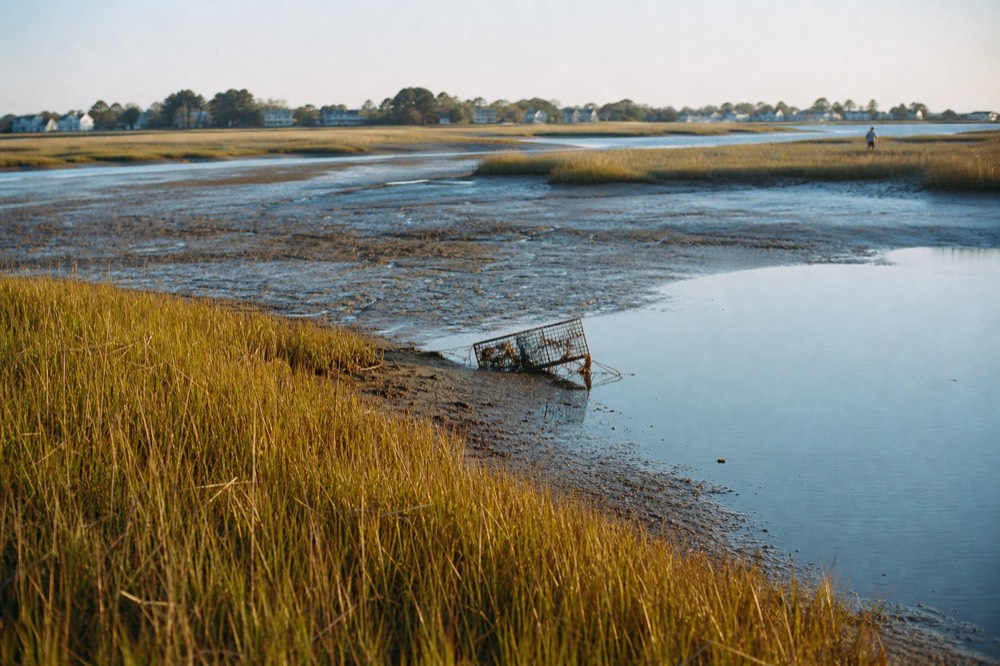
The Folly Beach excursion from Castaway Island Excursions is the only tour on this site that does not depart from a Charleston Harbor marina. It leaves from Folly Beach and works the tidal creeks and the waters around Morris Island Lighthouse, which puts it in the shallow estuary where dolphins feed, strand feed and generally behave like residents rather than passersby. It carries a 5.0-star rating from only 17 reviews, a small sample, so treat the perfect score as promising rather than proven. From $52 per person.
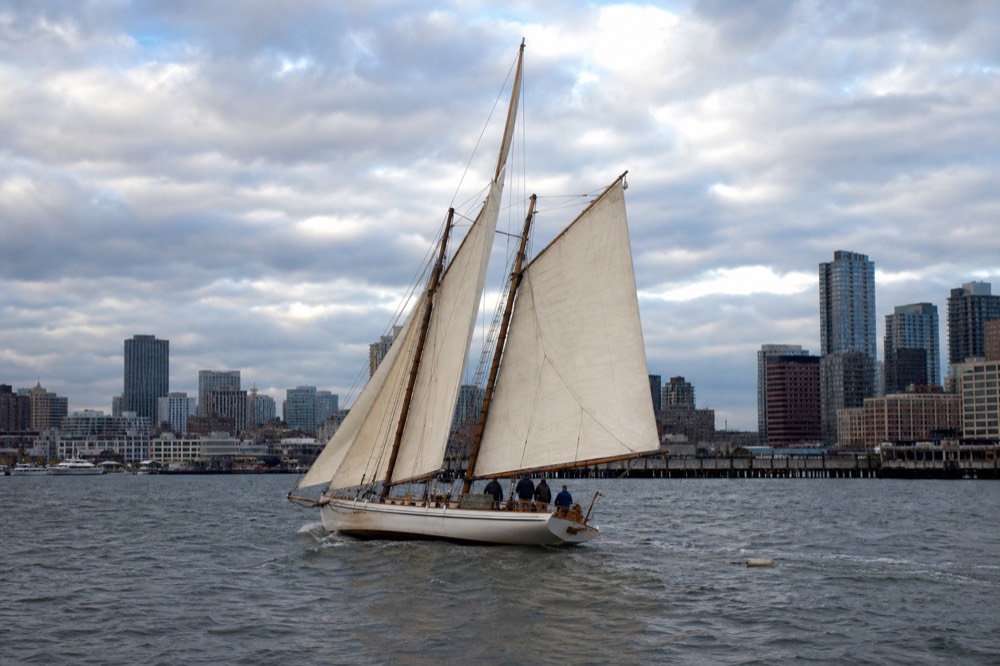
The afternoon schooner cruise is the volume leader of the dolphin category: 4.5 stars from 787 reviews, free cancellation, and an 84ft tall ship that sails the open harbor. It is marked "likely to sell out" on the live listing, which is a real signal worth planning around, not marketing filler. The hands-on sailing experience from Charleston Harbor Tours departs Aquarium Wharf and lets guests help hoist the sails; its rating figures are on the live listing because two independent reads of the listing disagreed, so we print no number rather than a guess. Both harbor trips run about $56.
The crossover option is the scenic-views sunset cruise from Mount Pleasant, the cheapest sunset product on the site at from $58, which explicitly pairs golden-hour views with dolphin spotting. It has 8 reviews and no star average yet, thin data, but the concept is sound: dolphins are active in the hours around sunset, so you are not sacrificing sighting odds for the view.
The private options deserve a mention in any dolphin conversation because the resident population does not care whether your boat is public or chartered. The Mystique private sunset sail passes the Battery, the Ravenel Bridge and the USS Yorktown with captain-narrated history and BYOB, from $599 per group for up to six guests with free cancellation up to 24 hours. The Blue Life yacht runs from $525 for the whole boat with no other passengers aboard.
When is the best time of day and year to see dolphins?
Dolphins in Charleston waters are resident year-round, so there is no closed season, but sighting activity peaks in summer when migratory Atlantic bottlenose dolphins join the local Tamanend's bottlenose population, and the calmest water comes on morning and late-afternoon departures. Low to mid-tide is the window for strand feeding near Folly Beach.
The seasonal pattern is well documented. South Carolina's dolphin population peaks in summer, when seasonal and migratory animals join the residents, and spring and fall are noted as strong periods for migratory pods passing through. Fall adds a practical bonus: operators themselves, including Sandlapper Water Tours' own blog, describe September through November as the best season for harbor trips, with cooling temperatures, clearer days, thinner crowds and calmer water. September 2026 sunsets run from about 7:44pm on the first of the month to 7:05pm on the last, so late-season sunset departures shift earlier by nearly 40 minutes across the month.
Time of day matters more for water conditions than for dolphin behavior. Morning and late-afternoon departures see the calmest water because wind and glare are lower, and Charleston Harbor is relatively protected compared with the open ocean. Dolphins feed throughout the day; what changes is how easy they are to watch. Flat water makes a dorsal fin visible from much farther away.
The one behavior worth timing deliberately is strand feeding, the rare hunting technique where dolphins deliberately beach themselves to catch fish, documented in South Carolina and Georgia salt marshes since 1971 and almost nowhere else on the Atlantic coast. Peak strand-feeding season around Folly Beach runs July through September, most often at low to mid-tide when the shallows aid hunting. A 2026 peer-reviewed paper in Marine Mammal Science examined the behavior specifically at Captain Sams Inlet, just south of the Charleston area. If strand feeding is your goal, the Folly Beach creek excursion is the right product, timed to the tide table rather than the clock.
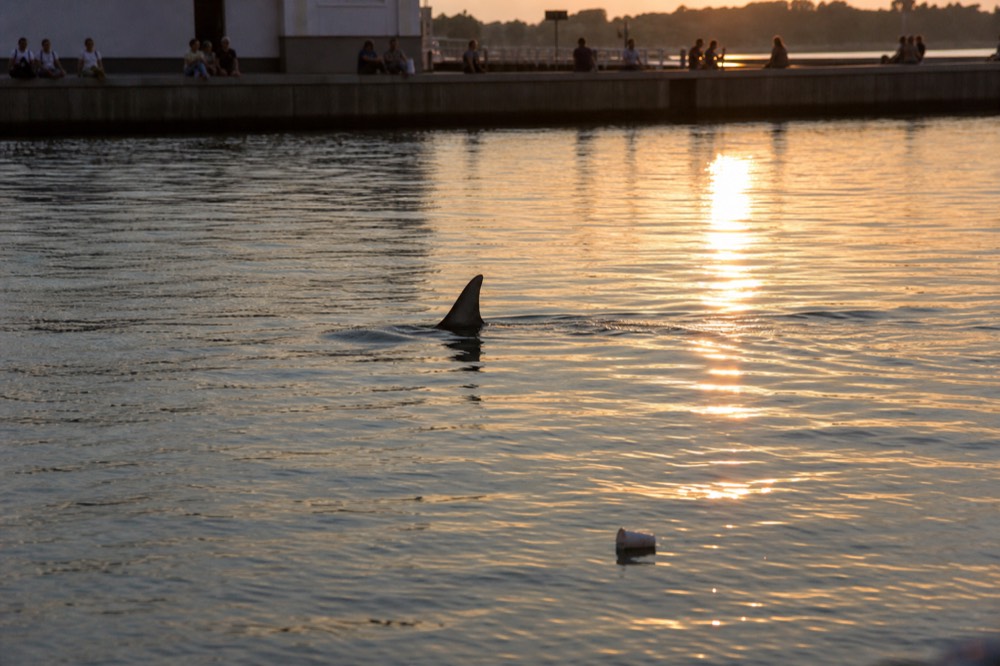
For a deeper dive into the biology and the timing question, including the April 2026 community count that logged 150 dolphin sightings with 541 volunteers, see when you can see dolphins in the harbor.
What does dolphin watching look like on a 90-minute trip?
A 90-minute dolphin cruise is not a chase: the boat holds a legal distance, the captain narrates the harbor's landmarks and wildlife, and dolphins typically appear as dorsal fins, surfacing arcs and occasional breaches, often in groups of two to six, several times across the trip. Sightings are frequent on these waters but never guaranteed by any honest operator.
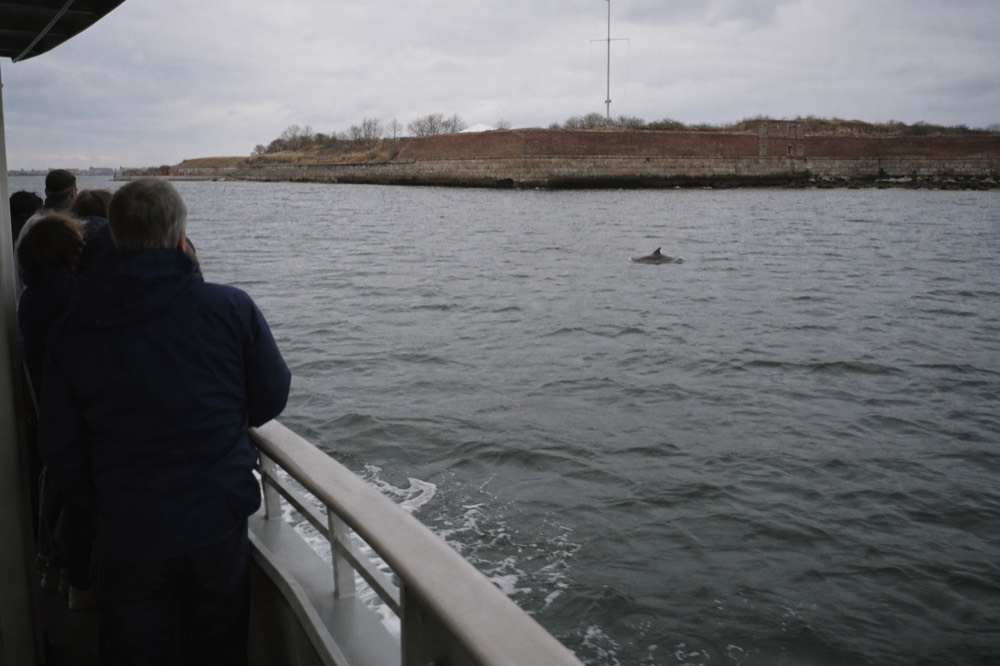
Set expectations honestly. These are wild, resident dolphins in a working harbor and estuary, not trained animals. What you will see, on most trips, is a dorsal fin slicing the surface, a surfacing sequence of three or four arcs, sometimes a mother and calf pair, and occasionally a full breach. On the harbor trips the dolphins often approach the boat's general area on their own, because resident animals are curious and accustomed to vessel traffic. On the Folly Beach creek trip, the water is shallow enough that feeding behavior, herding fish against the creek banks, is visible in detail.
The narration matters more than first-time bookers expect. On the schooner trips the crew covers the harbor's landmarks, Fort Sumter, the Battery, the Ravenel Bridge, alongside the wildlife, so a trip with no dolphins in view is still a sightseeing cruise. The hands-on sailing experience adds the sail-hoisting element, which gives the trip a participatory rhythm between sightings. Bring binoculars if you have them; the legal viewing distance means dolphins are often closer to a football field away than to the rail.
Weather shapes the experience too. Summer afternoons can build chop and afternoon thunderstorms, which is another reason morning and late-afternoon slots are the calmest. If a trip is rescheduled for weather, that is normal hurricane-season practice from June 1 to November 30, not a red flag about the operator.
Why can't you swim with dolphins in Charleston?
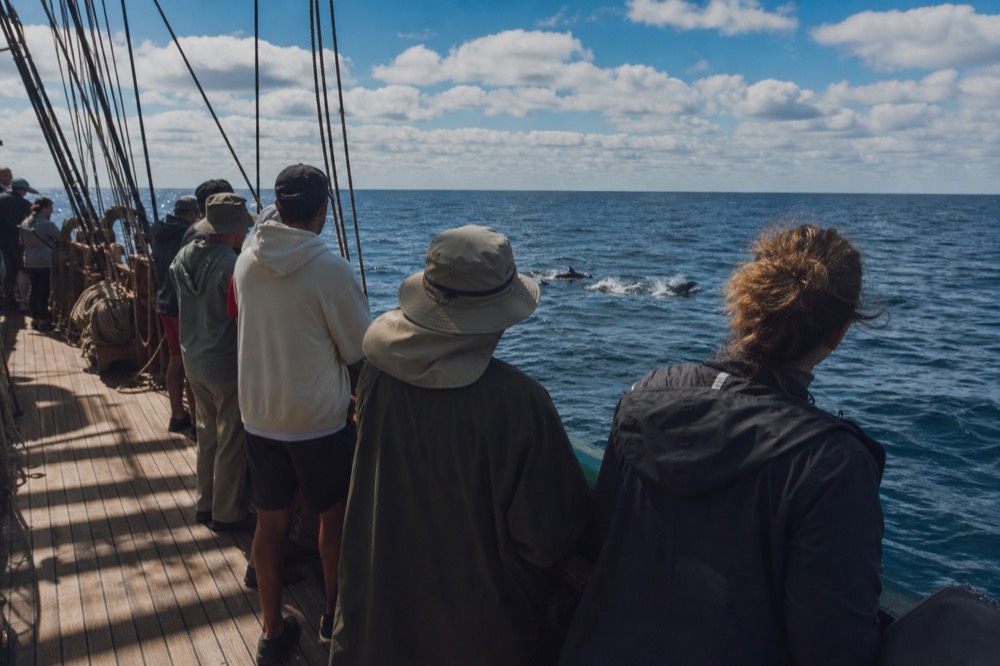
You cannot swim with dolphins in Charleston because the federal Marine Mammal Protection Act requires boaters to stay at least 50 yards, or 150 feet, from dolphins, and swimming with, feeding or harassing wild dolphins is illegal under the same law. No lawful tour in the United States offers in-water dolphin encounters with wild animals.
The 50-yard distance rule is enforced and actively promoted by the Lowcountry Marine Mammal Network and NOAA in areas like Shem Creek and the Folly River, precisely because the Charleston population is heavily watched. The law protects the resident dolphins from harassment, feeding and disturbance, and it also protects people: wild dolphins are large, fast predators. The resident population here even includes a rare tail-less dolphin named Koa, monitored by LMMN since reports began in March 2025, one of only about seven such wild cases recorded worldwide, a good illustration of how closely this small population is studied.
This is also why the dolphin tours on this site are observation trips, full stop. The boats hold distance, the captains narrate, and the dolphins decide how close to come. Any product promising touch, feed or swim encounters with wild dolphins should be treated as a red flag anywhere in US waters. If the question you arrived with is whether an observation-only cruise is still worth the fare, the honest answer is yes for most visitors: the sighting data here is genuinely elite, and the value case is covered in detail elsewhere on this site.
Where are the best places to see dolphins around Charleston?
The strongest dolphin waters around Charleston are the tidal creeks and inlets behind Folly Beach and around Isle of Palms, ranked second and fourth nationally for bottlenose sightings among 356 US coastal locations, with the harbor itself and Shem Creek close behind thanks to a resident population of roughly 300 animals.
The BoatBooker analysis of OBIS-SEAMAP data, the Duke University and NOAA sighting partnership, put Isle of Palms at number two nationally with 16,588 dolphins documented across 2,446 events, and Folly Beach at number four with 14,443 across 3,161 events. That is the single best piece of information on this page, and it is not something the booking listings tell you: two of the top five dolphin-sighting locations in the entire country are within 15 miles of downtown Charleston.
What that means for choosing a tour is simple. The Folly Beach excursion puts you inside the top-ranked waters, in shallow creeks where feeding behavior is visible. The harbor-based tours trade a little of that intimacy for the skyline, the bridge and Fort Sumter, and the resident harbor dolphins reliably appear anyway, which is why the crossover sunset product can honestly advertise dolphin spotting. The best place to see dolphins in Charleston question gets its own full treatment if you want the land-based viewing options too, including Shem Creek's boardwalk, where dolphins chase baitfish past the restaurant docks.
How do the dolphin cruise reviews compare?
The review picture favors the afternoon schooner cruise on volume, 4.5 stars from 787 reviews with free cancellation, while the Folly Beach excursion holds a perfect 5.0 from a small sample of 17 reviews and the budget sunset crossover has only 8 reviews with no star average yet, so the strongest statistical signal in this category is the schooner's.
Be honest with thin data. A 5.0 from 17 reviews is encouraging but not a reliable average; a single month of trips could move it substantially. The schooner's 4.5 from 787 is the number you can plan around, and it comes with two practical perks: free cancellation and a "likely to sell out" flag on the live listing, which tells you demand is real. The hands-on sailing experience has genuinely conflicting rating reads, so its figures live on the listing itself rather than here.
| Tour | Rating signal | Sample size | Cancellation | Practical read |
|---|---|---|---|---|
| Afternoon schooner dolphin cruise | 4.5 stars | 787 reviews | Free cancellation | The volume-backed pick |
| Folly Beach dolphin excursion | 5.0 stars | 17 reviews | Not stated | Promising, small sample |
| Schooner sailing experience | On the live listing | Conflicting reads | Not stated | Judge on the listing |
| Sunset crossover cruise | No average yet | 8 reviews | Not stated | Cheapest entry, unproven |
| Private sail (Mystique) | 5.0 stars | 59 reviews | Free up to 24h | Strong private option |
| Private BYOB yacht | 5.0 stars | 44 reviews | Not stated | Strong private option |
Review content across the category is consistent about one thing: crews and sightings draw praise, and the rare complaints cluster on weather-driven reschedules and crowded decks on the bigger boats. If a quiet deck matters to you, that is the strongest argument for the small-boat Folly trip or a private charter over a full tall ship.
What should you bring, and what should you skip?
Bring sunscreen, a hat, sunglasses, water and binoculars, wear non-slip shoes, and leave behind drones, feed for the animals and any expectation of touching a dolphin; BYOB applies only where a tour explicitly says so, and the private charters and the Folly Beach party-boat format are the ones that permit it.
South Carolina's open-container statutes apply to motor vehicles on public roads, not to vessels on the water, so BYOB on a chartered boat is genuinely legal, and several tours on this site lean into it. The private charters are BYOB by design. On public dolphin tours, check the individual listing before packing a cooler, because policies differ by operator and some run onboard bars instead. Operating a boat under the influence remains illegal and enforced at 0.08% BAC, with the same penalties as DUI, which is the actual law that matters on the water.
For sighting success, binoculars are the most underrated item on the list. The 50-yard rule means dolphins are often at a distance, and a decent pair turns a distant fin into a watchable animal. Morning trips want a light layer; summer afternoon trips want more water than you think. And since these are 1.5-hour trips, motion sickness is rarely a problem on the protected harbor, but the Folly Beach creek trip can bump across wakes, so sensitive stomachs should take the usual precautions.
| Item | Bring it? | Why |
|---|---|---|
| Binoculars | Yes | The 50-yard rule keeps dolphins at distance; glass turns a fin into a watchable animal |
| Sunscreen and hat | Yes | Open decks, low glare off the water, 90 minutes of exposure |
| Non-slip shoes | Yes | Wet decks on schooners and small boats alike |
| Water bottle | Yes | Afternoon summer trips dehydrate faster than expected |
| Cooler with alcohol | Only if the listing says BYOB | Private charters and party-boat formats allow it; public tours vary |
| Drone | No | Wildlife disturbance rules and harbor airspace restrictions |
| Food to toss to dolphins | Never | Feeding wild dolphins is federally illegal under the MMPA |
How do you choose the right dolphin cruise for your trip?
Choose the Folly Beach excursion for the closest wildlife encounter at the lowest fare, the afternoon schooner for the best-reviewed all-around harbor experience, the hands-on sailing trip for participation, the sunset crossover for a budget golden-hour trip, and a private charter for a group of up to six that wants dolphins without strangers aboard.
Match the product to the person. Families with young kids tend to do best on the schooner, where the tall ship itself is half the entertainment and a dolphin-less stretch still feels like an event. Photographers and wildlife-focused travelers should take the Folly Beach creek trip, where shallow water and feeding behavior produce the best shots. Couples celebrating something should price the private charters first, because at $525 to $599 per group split across four to six people, the gap to a public tour shrinks fast. And if your trip is short and your evening is free, the sunset crossover at from $58 is a legitimate two-for-one.
Booking mechanics are simple across the category. Every tour on this page is booked through the operator's live listing, prices and schedules are confirmed at checkout, and the two flagged free-cancellation products, the schooner and the Mystique charter, let you lock a date early without full commitment. The schooner's sell-out flag is the one genuine urgency signal in this category; everything else can usually be booked a few days ahead outside peak weekends. If you are building a full water itinerary, the boat tours for every occasion guide maps the whole roster by trip type, and Charleston Harbor Cruises keeps the full category pages for sunset, dinner and history trips alongside this one.
The resident dolphins are here in every season, the national sighting data says this is one of the best places in the country to watch them, and the entry price is under $60. The only real decision is which water you want to see them from.
The short answers: a dolphin cruise here costs $52 to $65 per adult, the afternoon schooner is the strongest review-backed pick, swimming with dolphins is federally illegal, and sightings are frequent but never guaranteed. The details below cover each question in full.
Common questions about dolphin cruises in Charleston
Most dolphin cruises in Charleston last about 90 minutes to two hours, depart from the downtown harbor area, and cost roughly $25 to $50 per adult, with discounts for children. Tours run year-round, though mornings often offer calmer water and better sightings. Boats range from large vessels to small craft, and most operators allow you to book online or by phone in advance.
What is the best dolphin cruise in Charleston?
On review volume, the afternoon schooner sightseeing and dolphin cruise is the strongest pick: 4.5 stars from 787 reviews, free cancellation, and an 84ft tall ship. For wildlife intimacy, the Folly Beach excursion reaches the creek waters ranked among the best dolphin-sighting areas in the country.
Can you swim with dolphins in Charleston?
No. The Marine Mammal Protection Act requires boats to stay at least 50 yards from dolphins, and swimming with, feeding or harassing wild dolphins is federally illegal. All lawful tours in Charleston are observation trips.
When is the best time to see dolphins in Charleston?
Dolphins are resident year-round, with population activity peaking in summer when migratory animals join the locals. Morning and late-afternoon departures have the calmest water, and strand feeding near Folly Beach peaks July through September at low to mid-tide.
Are dolphin sightings guaranteed?
No honest operator guarantees sightings. With roughly 300 resident dolphins in the inland waters and two top-five national sighting locations nearby, encounters are frequent on these trips, but the animals are wild and uncontracted.
Do you get wet on a dolphin cruise?
Usually not. These are 1.5-hour trips on protected waters, and spray is occasional rather than constant. Light splash is likelier on the small-boat Folly Beach creek trip than on the larger schooners.