Where is the best place to see dolphins in Charleston?
Folly Beach and Isle of Palms rank among the best dolphin sighting spots in America. Here is where to look from shore, and when a boat tour is worth it.
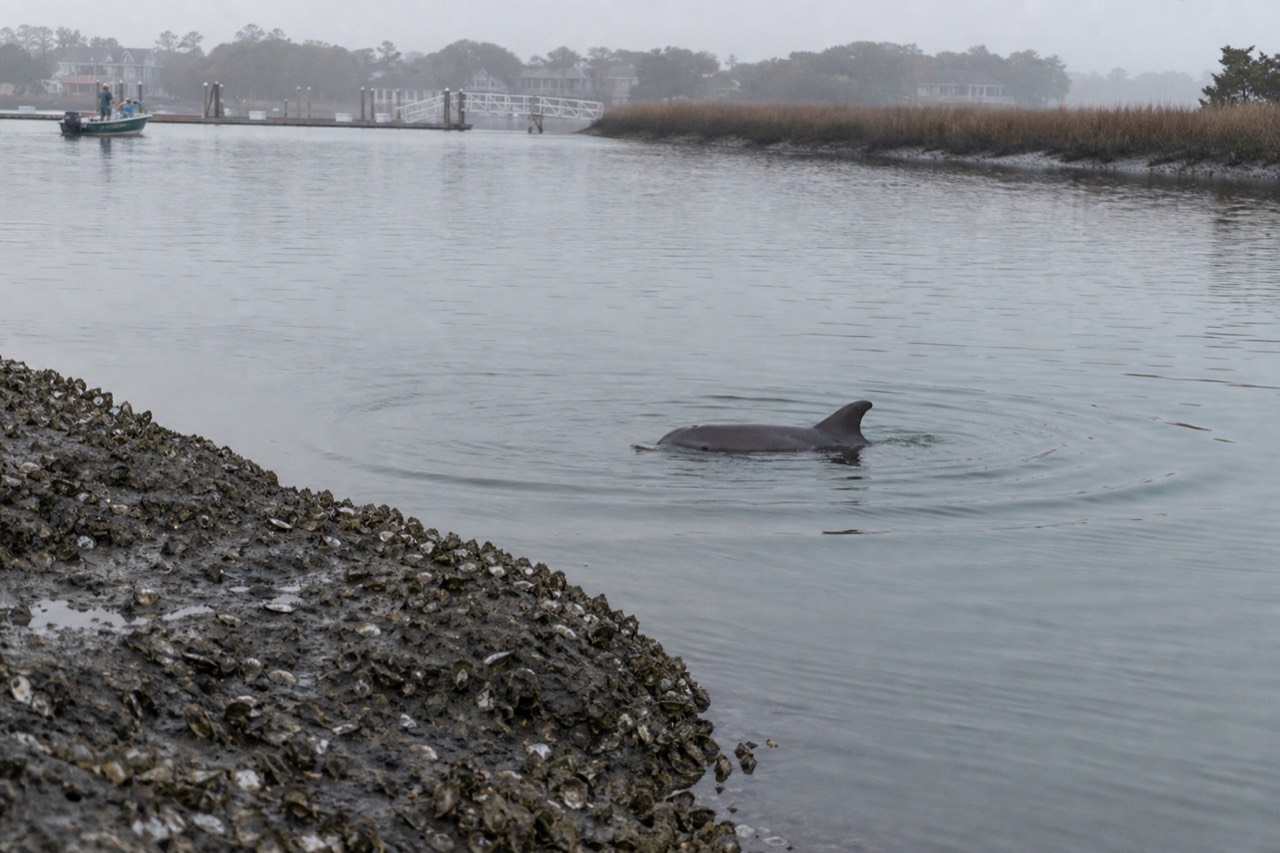
Where is the best place to see dolphins in Charleston?
The best places to see dolphins in Charleston are the waters around Folly Beach and Isle of Palms, which rank #4 and #2 nationally for bottlenose dolphin sightings among 356 US coastal locations in a BoatBooker analysis of OBIS-SEAMAP data. Shem Creek in Mount Pleasant is the strongest free, shore-based option, and a guided dolphin cruise from the harbor gives the most consistent sightings of all.
That national ranking is not local boosterism. It comes from an analysis of OBIS-SEAMAP, the Duke University and NOAA sighting database, which documented 16,588 dolphins across 2,446 events at Isle of Palms and 14,443 dolphins across 3,161 events at Folly Beach. Few places on the US Atlantic coast come close. The reason is structural rather than lucky: Charleston's estuary is a maze of tidal creeks, mudflats and spartina marsh that holds enormous schools of mullet and menhaden, and about 300 dolphins live in these inland waters year-round according to the Lowcountry Marine Mammal Network. Resident dolphins do not migrate away, so the sightings keep coming in every season.
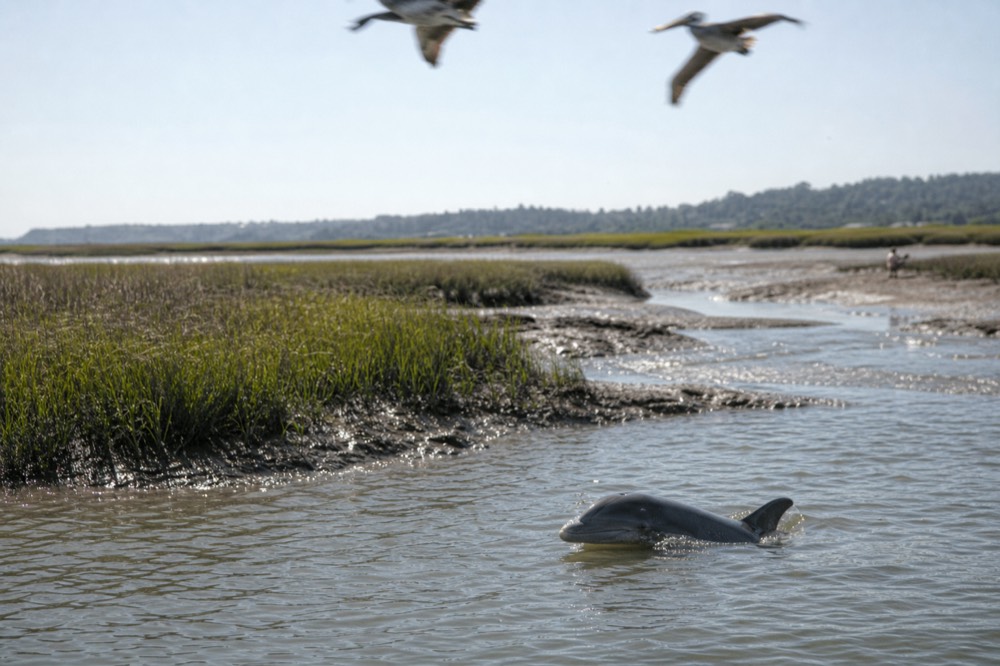
The practical question is where to position yourself, because "around Charleston" covers a lot of water. The spots below are the ones with a real track record, whether you are standing on a dock with binoculars or riding a boat through the creeks. For the fuller picture on seasonal timing, the companion piece on Charleston's dolphin season, month by month breaks it down.
| Spot | Type | What you see | Cost from shore |
|---|---|---|---|
| Folly Beach | Boat or shoreline | Dolphins in tidal creeks, Morris Island Lighthouse, occasional strand feeding | Free from shore |
| Isle of Palms | Boat or shoreline | The #2 ranked sighting location in the country, inlet feeding | Free from shore |
| Shem Creek, Mount Pleasant | Shoreline and kayak | Dolphins hunting in the creek, especially on moving tides | Free |
| Charleston Harbor cruise routes | Guided boat | Dolphins along the Battery, Fort Sumter and the shipping channel | From $52 per person |
If you want the highest odds on a single outing, a boat tour is the strongest play, and these three cover the range: a creek-focused dolphin excursion at Folly Beach, a tall-ship sail that watches for dolphins between the harbor landmarks, and a budget sunset run that doubles as a dolphin trip.
Why do Folly Beach and Isle of Palms rank so high for dolphin sightings?
Folly Beach and Isle of Palms rank high because they sit at the mouths of rich tidal estuaries where resident dolphins hunt in shallow, narrow creeks, concentrating sightings in a small, visible area. The OBIS-SEAMAP data behind the ranking logged thousands of dolphin events at each beach, numbers driven by resident Tamanend's bottlenose dolphins that stay in these waters year-round.
The Lowcountry Marine Mammal Network, the region's main stranding and research organization, puts the resident population at about 300 dolphins in Charleston's inland waters. These are not passing ocean animals. They are estuarine specialists, and the species itself was recently split out as Tamanend's bottlenose dolphin, distinct from the larger Atlantic bottlenose that migrates along the coast. Summer adds migratory pods to the resident base, which is one reason the counts at Isle of Palms and Folly Beach climb so high: both resident and visiting animals funnel through the same inlets and creek mouths.
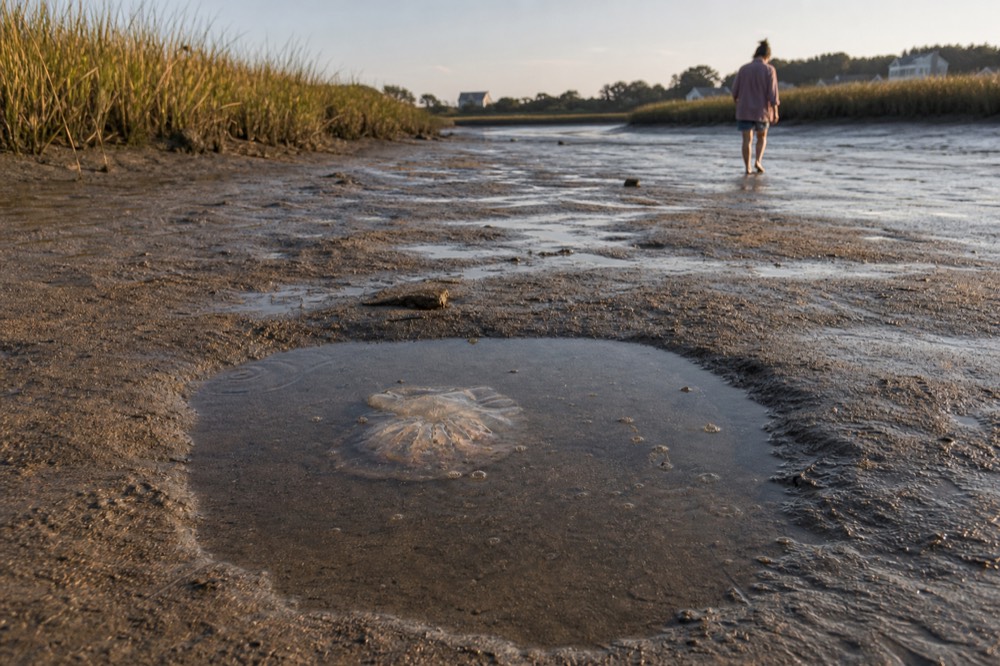
Folly Beach has one more claim to fame, and it is the most exciting thing a dolphin watcher can hope to see. The creeks behind Folly are one of the few places in the United States where dolphins strand feed, a learned behavior in which they charge fish onto mud banks and briefly beach themselves to catch them. It has been documented in South Carolina and Georgia salt marshes since 1971 and is rare almost everywhere else on the Atlantic coast. A 2026 peer-reviewed paper in Marine Mammal Science examined the behavior specifically at Captain Sams Inlet, just south of the Charleston area, and found groups of three dolphins to be the most common strand-feeding party size.
That behavior is why the Folly Beach Dolphin Viewing Boat Excursion is the tour this site features for dolphin content. It is the one trip in the roster that leaves from Folly Beach itself rather than a Charleston Harbor marina, and it runs 1.5 hours through the tidal creeks toward Morris Island Lighthouse, exactly the water where strand feeding happens. It holds a 5.0-star average from 17 reviews, a small sample but a spotless one, and it starts from $52 per person.
Whether a dolphin cruise is worth the ticket is a fair question, and the honest answer is that a boat puts you inside the hunting grounds rather than at the edge of them. The shore view at Folly or the Isle of Palms is free, but you are watching from a fixed point and hoping the dolphins come close. A boat can follow the tide into the creeks where the fish actually are.
Can you see dolphins from shore at Shem Creek for free?
Yes, Shem Creek in Mount Pleasant is the best free, shore-based dolphin watching spot in the Charleston area. Dolphins hunt up the creek on rising tides, and the waterfront boardwalk at Shem Creek Park puts you directly over the water where they feed, with no ticket and no boat required.
Shem Creek is a working waterway with real history. The town of Mount Pleasant records that Captain C. Magwood first brought ocean shrimp into the creek in 1930, and in their heyday seventy shrimp trawlers operated off its docks. Today the creek is better known for its restaurant row and the boardwalk at Shem Creek Park on Shrimp Boat Lane, but the dolphins never left. On a moving tide, especially mid rising, resident dolphins push baitfish up the narrow creek and surface within yards of the boardwalk. Kayakers share the same water, and it is one of the few places in the country where you can watch dolphins hunt while eating lunch.
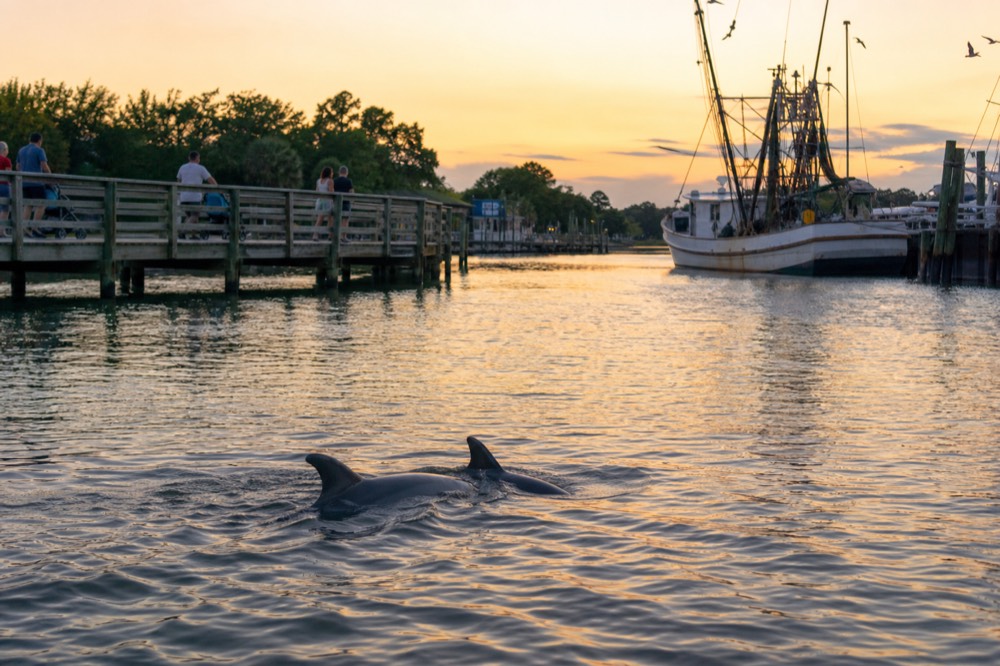
The catch is consistency. A shore spot gives you one fixed angle on one stretch of water, and dolphins move with the tide and the fish. On a slow afternoon you may see nothing at all. Boats that depart from Shem Creek itself, such as the sunset runs described in the comparison of Charleston's sunset cruise options, work the same creek and then push out toward the harbor, which raises the odds considerably.
There is also a rule every dolphin watcher here should know. Federal law under the Marine Mammal Protection Act requires boats to stay at least 50 yards, or 150 feet, from dolphins, a distance the Lowcountry Marine Mammal Network and NOAA actively enforce through education and patrols in spots like Shem Creek and the Folly River. Licensed tour captains operate inside that law; a rented boat is your responsibility. That single fact is one of the quiet arguments for taking a guided trip rather than piloting your own craft, and it is covered in more detail in the guide to dolphin cruises and prices in Charleston.
Why does a boat tour beat standing on the bank?
A boat tour beats the bank because dolphins follow tides and baitfish through a moving system, and a boat can follow them into the creeks, inlets and channel edges where they actually feed. Shore watching is free but static; a boat covers several habitats in 90 minutes, and a captain who reads the water daily knows where the pods were yesterday.
The difference shows up most in the numbers. The 84ft tall ship used by the Afternoon Schooner Sightseeing and Dolphin Cruise carries a 4.5-star average from 787 reviews and runs from $56 per person with free cancellation, and it is flagged as likely to sell out on the live listing. That is a large, consistent review base for a dolphin trip, and it reflects the simple fact that a boat working the harbor day after day finds animals that a shore watcher would never know were there. The same logic applies to the harbor's other dolphin formats, including the schooner sail where guests help hoist the sails while the crew watches for dolphins.
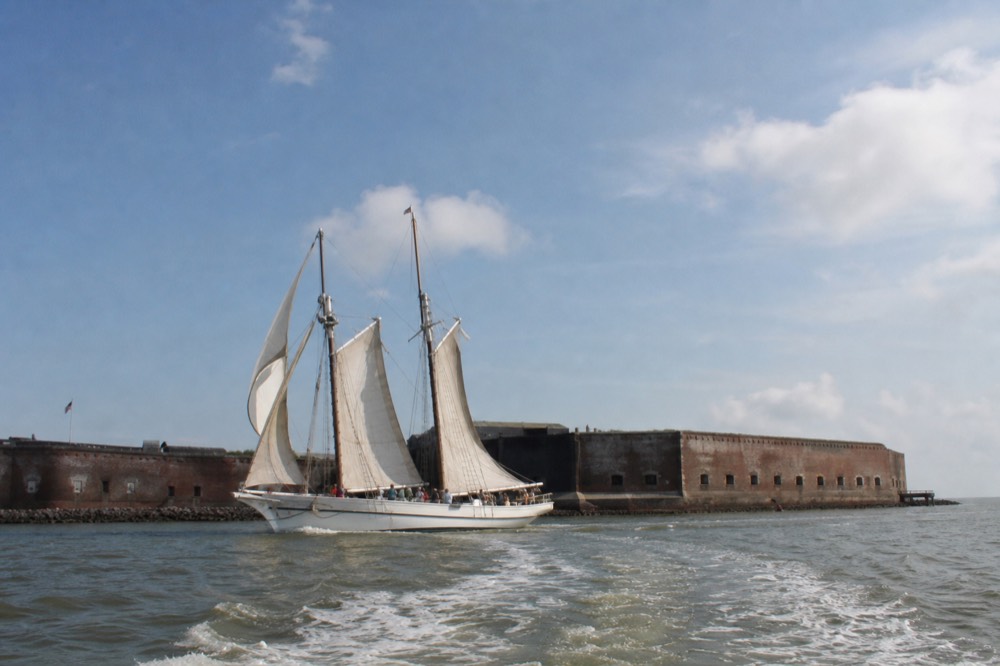
The captain's local knowledge is the part that never shows up in a listing. Water temperature, tide stage, bait movement and even recent strand-feeding activity all shift where dolphins will be on a given afternoon, and a guide who runs the same water daily adjusts the route accordingly. A boardwalk cannot. The trade-off is honest and worth stating plainly: shore watching costs nothing and occasionally delivers a spectacular close pass, while a boat costs money and delivers consistency. Most visitors who care about dolphins pick the boat, and most who are merely curious pick the boardwalk.
What is the best time of day to see dolphins in Charleston?
The best time of day to see dolphins in Charleston is the two hours around a moving tide, with early morning and late afternoon the strongest windows because winds are light, glare is low, and dolphins hunt actively in the calm shallows. For strand feeding specifically, plan for low to mid tide between July and September behind Folly Beach.
Tide matters more than the clock here. Dolphins in an estuary work the water column as it floods and drains, pushing baitfish through creek mouths and over mudflats, so a mid-tide afternoon can outperform a calm dawn if the fish are moving. That said, morning and late-afternoon departures do get the calmest surface conditions on the harbor, which makes dolphins easier to spot at a distance. The detailed breakdown lives in the companion piece on the best time of day to see dolphins in Charleston, including the tide-first logic that most visitors miss.
Seasonally, summer adds migratory Atlantic bottlenose dolphins to the resident Tamanend's population, so total numbers in the water peak in warm months. Fall and spring are the sweet spot for comfortable watching: the pods are still feeding hard, the heat has broken, and the boat traffic thins. If strand feeding is the goal, the window is narrow and specific: July through September, low to mid tide, in the creeks behind Folly Beach, which is precisely where the Folly Beach excursion above spends its 90 minutes.
| Window | Conditions | Odds of sightings |
|---|---|---|
| Early morning | Calmest water, lowest glare, active feeding | High |
| Mid rising tide at Shem Creek | Bait pushed up the creek | High from the boardwalk |
| Late afternoon and sunset | Calm again, dolphins feeding before dusk | High |
| Slack low tide in open harbor | Less concentrated feeding | Moderate |
For travelers who want dolphins and a golden-hour view in one ticket, the crossover option is the 1.5-hour sunset cruise with dolphin spotting that departs Mount Pleasant from $58 per person, the cheapest sunset trip on this site's roster. It carries only 8 reviews with no star average yet, so the sample is thin, but the route logic is sound: the same channel edges where dolphins feed in late afternoon are the ones lit up at sunset.
Whichever window you choose, book the dolphin-focused trips early. The Folly Beach excursion is a small-boat operation, and the tall-ship dolphin cruise is flagged as likely to sell out, so same-day availability is never a safe assumption in a city that drew a record 7.9 million visitors in 2025. If your dates are flexible, aim for a weekday with a moving tide in the late afternoon, and you will have the best of every variable at once. This site, Charleston Harbor Cruises, keeps the full dolphin trip roster side by side so you can compare routes, prices and departure points in one place.
If you are still weighing which trip fits your plans, these three dolphin options cover the range from a creek expedition to a budget sunset run.
These are the questions dolphin watchers ask most about Charleston's waters, answered with the same research and roster figures used throughout this page, from the national sighting rankings to the federal distance rule.
Common questions about seeing dolphins in Charleston
Dolphin sightings are one of the most common questions visitors ask about Charleston, and the short answer is yes, you can see them here. These playful marine mammals are frequently spotted in the area's coastal waters, especially on boat tours and from certain vantage points along the shore. The questions below cover the details travelers ask about most often, from when and where to look to what kind of tours offer the best chances of an up-close encounter.
Can you see dolphins from shore in Charleston without a tour?
Yes. The Shem Creek boardwalk in Mount Pleasant puts you directly over water where dolphins hunt on rising tides, and the beaches at Folly and Isle of Palms both have visible creek mouths and inlets. Sightings from shore are less consistent than from a boat.
What is strand feeding and where can you see it?
Strand feeding is a learned behavior in which dolphins rush fish onto mud banks and briefly beach themselves to catch them. It is documented in South Carolina and Georgia salt marshes since 1971, and around Charleston it peaks July through September on low to mid tide in the creeks behind Folly Beach.
How close can a boat get to dolphins in Charleston?
Federal law under the Marine Mammal Protection Act requires boats to stay at least 50 yards, or 150 feet, from dolphins. Licensed tour captains operate within that rule, and it applies equally to rented boats and kayaks.
What time of day are dolphins most active in Charleston Harbor?
Early morning and late afternoon are the strongest windows, with calm water and active feeding. Tide stage matters as much as the clock, so a moving mid tide often beats a flat calm dawn.
How many dolphins live in Charleston's waters?
Approximately 300 resident bottlenose dolphins live in Charleston's inland waters year-round, per the Lowcountry Marine Mammal Network, with migratory pods adding to the count in summer.