Best Months to Book a Charleston Harbor Cruise: A Season-by-Season Guide
Charleston's harbor is runnable nearly all year, but the experience changes sharply with the seasons. Here is what each month actually delivers on the water, and why fall keeps coming up as the sweet spot.
Short answer
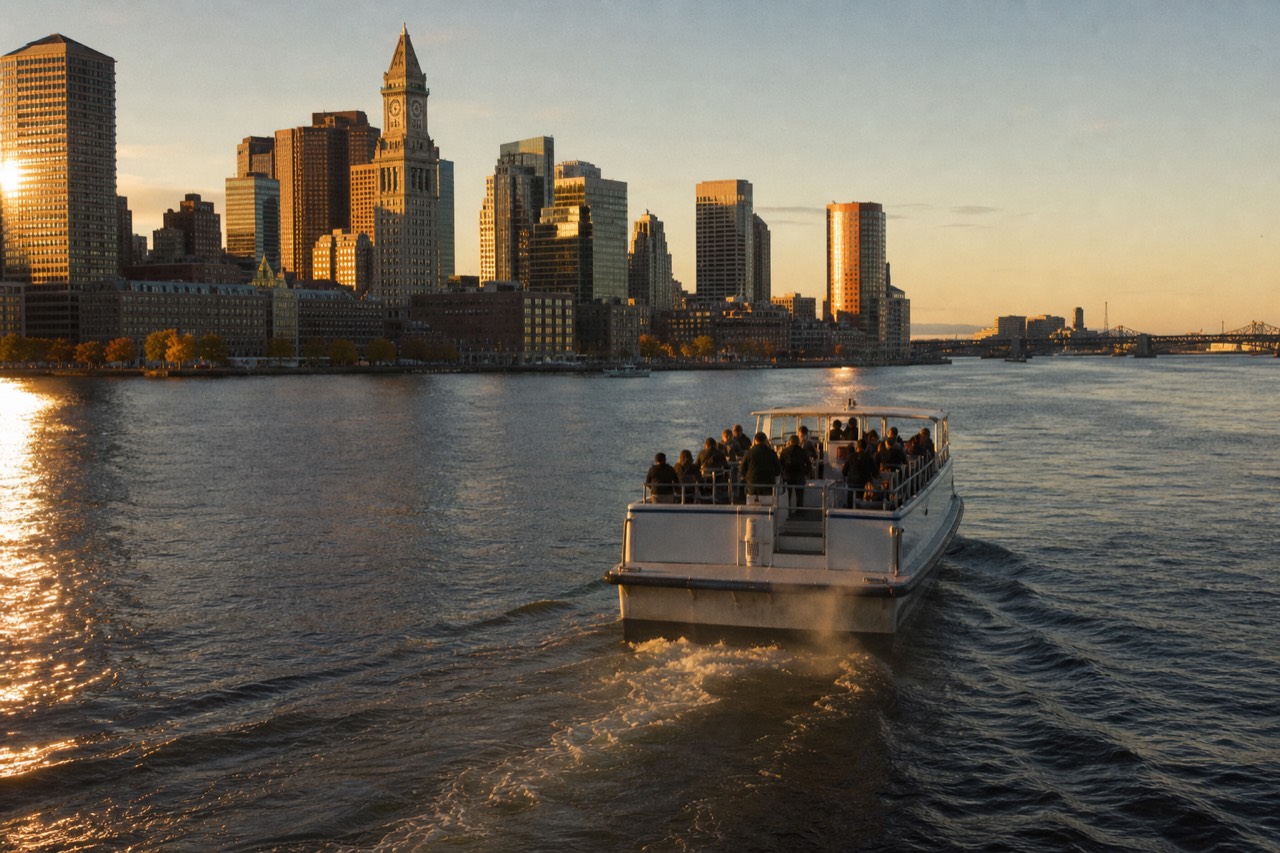
Fall, roughly September through November, is the most cited best window for a Charleston harbor cruise: mid-70s daytime temperatures in September, thinner summer crowds and calmer water. Public sunset cruises typically run $52-66 per adult, and narrated history cruises from $45, so the season matters more for comfort than for price.
Charleston drew a record 7.9 million visitors in 2025, and a large share of them wanted the same thing: time on the water looking back at the city. That demand is not spread evenly across the year. It surges from March through July, dips hard from November into January, and leaves a genuinely pleasant gap in early fall when the weather is arguably at its best. Timing, in other words, is the single biggest lever you control.
This guide walks through the calendar month by month, explains why fall is repeatedly named the best season, and covers the practical mechanics most first-timers underestimate: hurricane-season risk, sunset drift, and what actually happens when a boat operator reschedules you for weather. The short version is that there is no bad month to be on this harbor, only months that require more planning than others.
What is the best month to book a boat tour on this harbor?
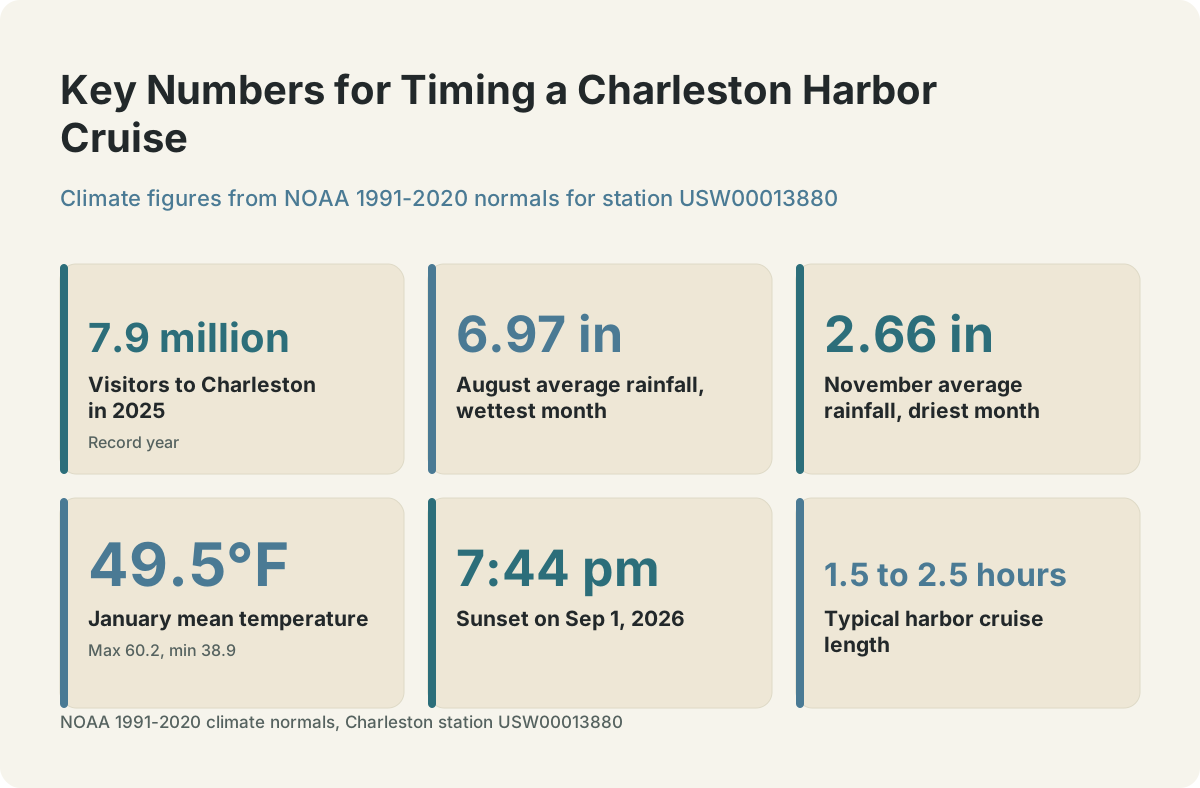
September through early November is the strongest answer, and it is not a close call: daytime highs slide from the mid-70s in September toward the 60s by November, boat traffic thins after the summer peak, and the water is at its calmest in the morning and late afternoon. September also delivers sunsets near 7:44 pm at the start of the month, late enough for a relaxed dinner beforehand.
Fall's reputation here is not folklore. Operator Sandlapper Water Tours says it plainly on its own blog: cooling temperatures, clearer days, reduced boat traffic and peaceful conditions make September through November the best time to be out on the harbor. That is a boat company voluntarily steering you away from its own busiest season, which is about as honest a signal as you will get in this industry.
The second-best window is spring, roughly late March through May. The trade is crowds: spring is when the visitor wave starts building, and the harbor gets correspondingly busier. Summer gives you the most daylight and the most dolphins, but also the most heat, the most thunderstorm scrub-outs and the most competition for seats. Winter is the quietest and cheapest-feeling season, with some of the clearest air of the year, provided you dress for a boat moving across 50-degree water.
If you want help weighing the experience itself rather than the calendar, our Charleston harbor cruise worth-it breakdown covers who gets the most from these trips and who should spend the money elsewhere.
How does each month actually feel on the water?
The year splits into four distinct stretches on this harbor: the cool, quiet trough of November through February; the fast-building spring season of March through May; the hot, storm-prone, dolphin-rich peak of June through August; and the fall sweet spot of September through October, when heat breaks, crowds thin and the water calms. Each stretch changes what you should book and when you should depart.
The hard numbers come from NOAA's 1991-2020 climate normals for Charleston's official station (USW00013880). January averages a mean temperature of 49.5 degrees with a maximum of 60.2 and a minimum of 38.9, plus 3.37 inches of precipitation. August is the wettest month of the year at 6.97 inches on average, and November is the driest at 2.66 inches. That single contrast, wettest August against driest November, explains a large part of fall's advantage: the month with the best light and thinnest crowds is also statistically the least rainy.
Here is the month-by-month picture, using the NOAA figures where they exist and honest qualitative description where a month-by-month breakdown has not been published:
| Month | Temperature picture | Rainfall picture | Sunset and light | Crowds and notes |
|---|---|---|---|---|
| January | Mean 49.5°F, max 60.2, min 38.9 (NOAA normals) | 3.37 in average | Early sunsets, roughly 5:30 pm | Quietest month; dress in layers |
| February | Similar to January, slowly warming | Moderate | Sunsets creeping later | Still trough season; easy walk-up bookings |
| March | Warming into spring | Moderate | Daylight saving returns, later golden hour | Spring season begins; bookings climb |
| April | Pleasant daytime warmth | Moderate | Long evenings | Charleston Race Week fills the harbor with sailboats in late April |
| May | Warm, approaching summer | Increasing | Late sunsets | Busy; book ahead |
| June | Summer heat and humidity arrive | Summer pattern builds | Latest sunsets of the year | SC250 Parade of Sail drew a huge harbor procession on June 27, 2026 |
| July | Peak summer heat | Frequent afternoon storms | Latest sunsets | Peak family travel; dolphins most active |
| August | Peak heat continues | Wettest month, 6.97 in average (NOAA normals) | Sunsets easing earlier | Thunderstorm scrub-outs most common |
| September | Mid-70s daytime, cooling evenings | Rainfall declining | 7:44 pm on Sep 1 to 7:05 pm on Sep 30, 2026 | Best-cited month; Lowcountry Jazz Festival weekend adds demand |
| October | Continued cooling toward the 60s | Declining | Noticeably earlier | Prime fall window; thinning crowds |
| November | Cool, crisp | Driest month, 2.66 in average (NOAA normals) | Early sunsets, around 5:30 pm | Quiet; excellent air clarity |
| December | Cool, variable | Moderate | Earliest sunsets | Holiday-season quiet on the water |
The pattern that matters most for planning is the asymmetry between rainfall and visitation. August is both one of the busiest months on the water and the wettest, which is why summer bookings carry the highest reschedule odds of the year. November inverts that completely: the driest air of the year arrives exactly as the visitor wave collapses.
If you are matching the season to a specific kind of trip rather than a general one, our comparison of sunset, dinner and harbor tour formats explains which style suits which traveler, and the calendar above tells you when each one shines.
Whichever month you land on, these three tours cover the main ways people use the harbor, from a music-led sunset sail to a seated dinner to the big narrated history cruise:
How do weather reschedules actually work?
When conditions force a cancellation, operators typically move you to the next available departure rather than simply refunding and sending you home; the exact policy lives on each live listing, and tours that show free cancellation give you a no-questions exit if the new slot does not fit your trip. Read the cancellation terms before booking, not after a storm rolls in.
The mechanics are simpler than most people expect. A harbor cruise is a short, close-in trip, usually 1.5 to 2.5 hours, so operators can make go or no-go calls the same day, often within hours of departure. Thunderstorms in Charleston's summer are typically brief and localized, which is why a scrubbed 5 pm sailing often re-books cleanly onto a 7 pm one. The trips most exposed to rescheduling are the long-format dinner cruises, simply because there are fewer departures to move you onto.
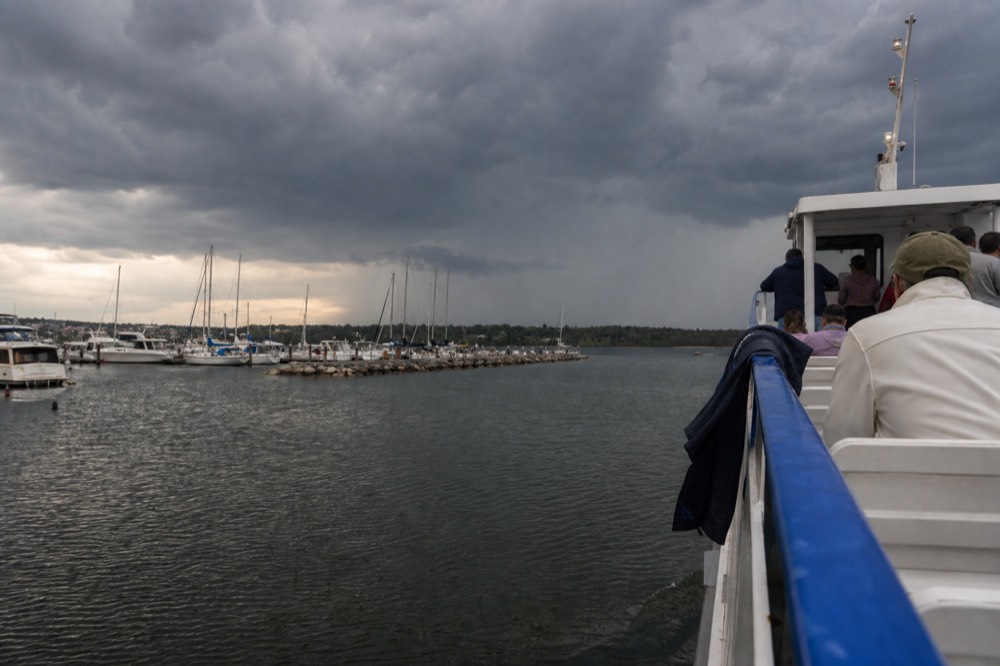
The seasonal logic follows directly from the rainfall table above. Book in August and you should build slack into your itinerary: leave a backup evening free in case the operator moves you. Book in October or November and reschedules become rare enough that you can plan a tight trip around a single evening. The featured sunset cruise on this site, a 2-hour Sandlapper Water Tours trip from the Charleston Maritime Center, runs from $60 per person with free cancellation up to 24 hours before, which is exactly the kind of flexibility that makes a storm-prone summer booking low-stakes.
One planning note worth internalizing: the free-cancellation windows on these listings are typically measured in hours before departure, not days of notice. If your travel dates are firm, the right move is to book the tour early for the slot you want and let the cancellation window protect you, rather than waiting to see the weather forecast and finding the good slots gone.
| Reschedule factor | What it means for you |
|---|---|
| Same-day weather calls | Operators decide close to departure; keep your phone reachable |
| Short trip length | 1.5-2.5 hour trips re-book onto later departures easily |
| Free cancellation windows | Commonly 24 hours before departure where offered; check the listing |
| Summer thunderstorms | Brief and localized; evening slots often clear after a scrubbed afternoon |
| Dinner cruise formats | Fewer departures, so a moved booking can slip a full day |
Should hurricane season change your plans?
Hurricane season runs June 1 through November 30, and it is a real factor here, but it affects harbor cruises differently than beach trips: actual named storms pause operations for days at most, while the routine effect is higher odds of a same-day reschedule. Book with free cancellation in this window and the risk is fully refundable.
The National Weather Service's own framing gives the baseline: on average, 14 tropical storms form over the Atlantic each season, of which about 7 become hurricanes, and over a typical 2-year period the U.S. coastline is struck by an average of 3 hurricanes, one of them major. Those are Atlantic-basin numbers, not Charleston-specific odds, and the overwhelming majority of hurricane-season days on this harbor are perfectly ordinary boating days.
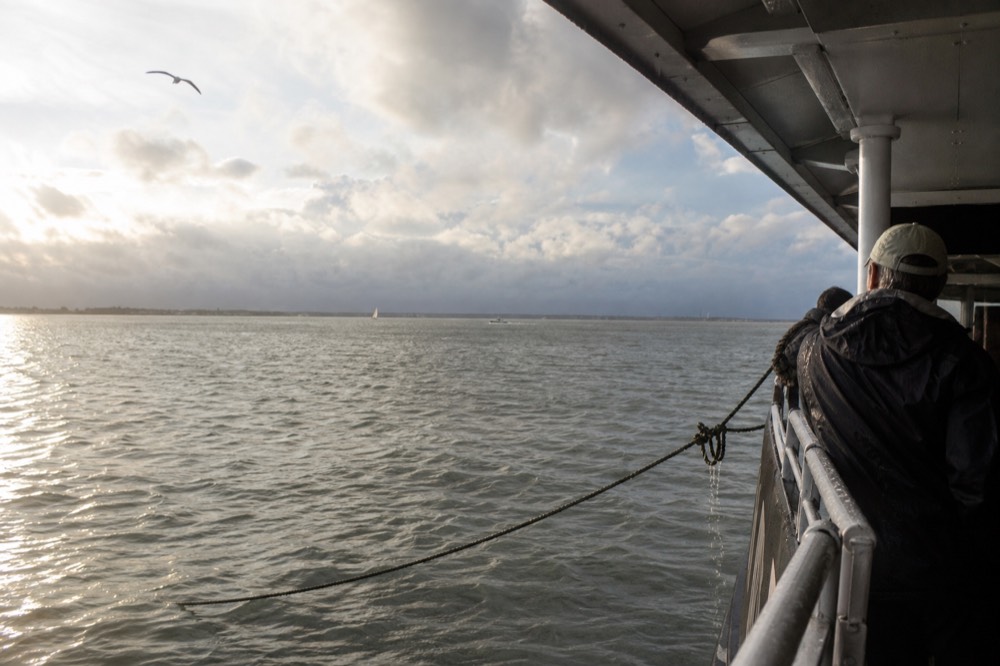
The practical takeaway is not "avoid summer." It is "book refundable in summer." A named storm approaching the South Carolina coast will shut harbor operations down, and no operator sails in its vicinity, but those events are visible days in advance and operators communicate cancellations proactively. The narrated history cruise on this site, a 1.5-hour trip on the 80-foot Carolina Belle, runs from $45 per person with free cancellation and is flagged as likely to sell out on the live listing, which captures the whole summer calculus in one product: refundable protection, but real competition for seats.
For a fuller look at what these trips cost across the year and across formats, see our Charleston harbor cruise price guide.
How much do sunset times shift across the year?
Sunset in Charleston swings by roughly two hours across the calendar, from around 5:30 pm in early winter to past 8 pm at the summer peak, and in September 2026 it runs from about 7:44 pm on the 1st to 7:05 pm on the 30th. That drift changes what a sunset cruise actually is: a summer one starts in full daylight, a November one starts in the dark.
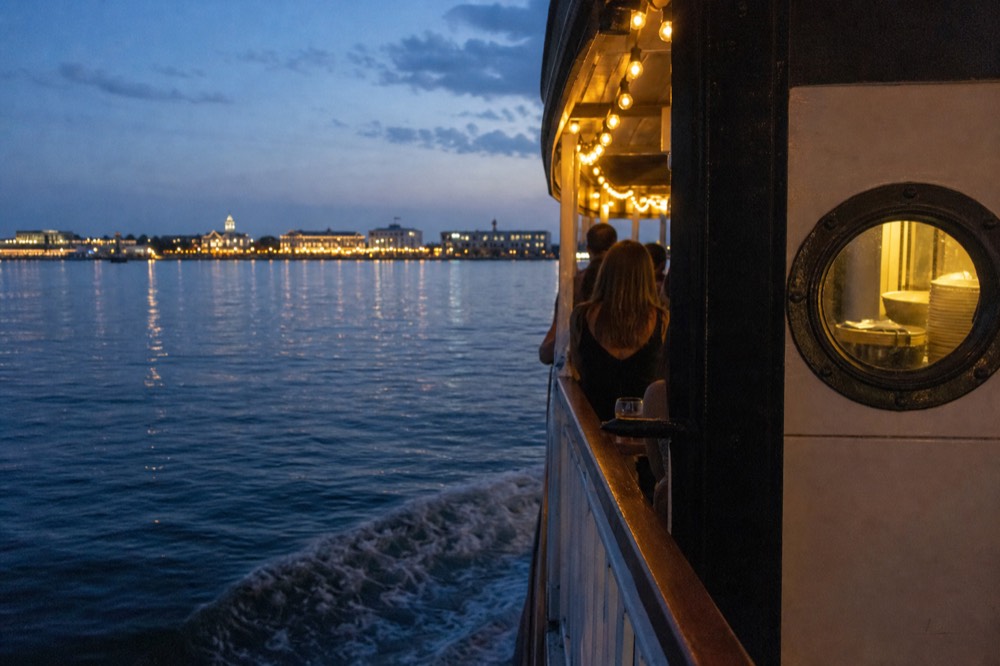
This is the planning detail people miss most often. A sunset cruise in late June departs in bright evening light and finishes at dusk, which suits families and photographers who want the golden hour on the water. The same cruise in late November is a nighttime trip in everything but name: the sun is already low when you board, and you are watching the city lights come on over the harbor within the first half hour.
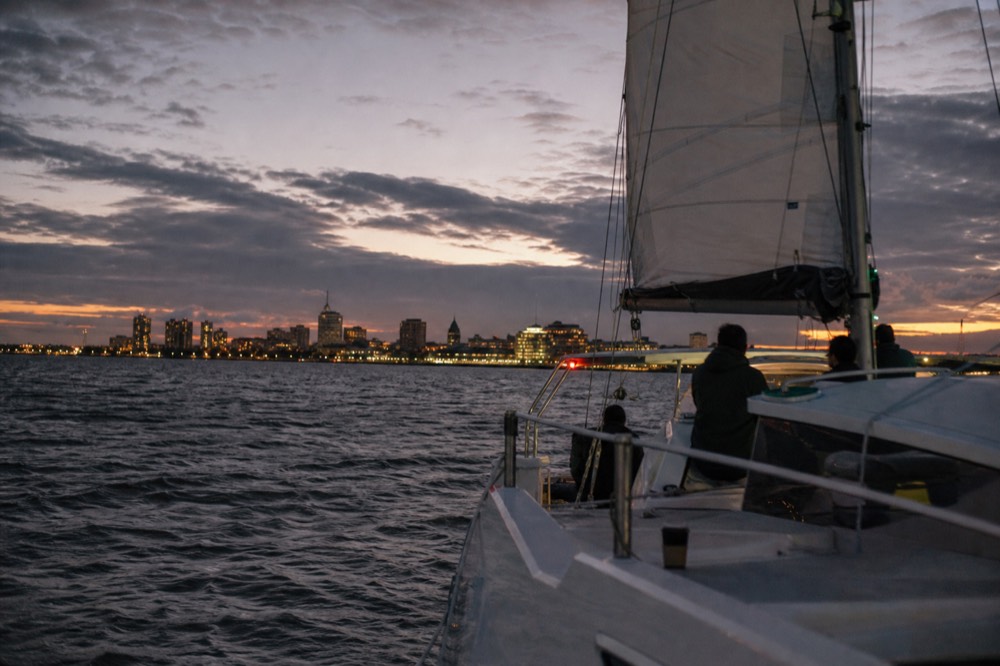
Neither version is wrong, but they are different products, and the month you choose picks the version for you. Fall sits in the transition: early September still gives you a 7:40 pm sunset with warm air, while late October hands you a departure around 6:30 pm with crisp conditions. If a late golden hour is the whole point of your trip, target June through mid-September. If you would rather watch the skyline light up, the shoulder and winter months deliver that.
The sunset cruise with live music and an onboard cash bar from Palmetto Breeze Charters runs 2 hours from $65 per person, and it holds 4.7 stars across 117 reviews. It is a good example of a trip whose character changes completely with the calendar: the summer version is a daylight party sail, the November version is a coats-and-drinks night on the water.
When is the harbor busiest, and which weeks should you avoid?
The visitor wave builds from March and peaks from June through August, while the quietest water sits in January, February and the weeks between Thanksgiving and mid-December. Event weekends matter too: late April's Charleston Race Week fills the harbor with hundreds of sailboats, and festival weekends in September spike demand for sunset departures.
Charleston's record 7.9 million visitors in 2025, generating a record $14.3 billion economic impact per the College of Charleston's Office of Tourism Analysis, did not arrive evenly. The March-through-July peak shows up on the water as fuller boats, earlier sell-outs and more competition for the best departure times. The November-through-January trough shows up as walk-up availability and emptier decks.
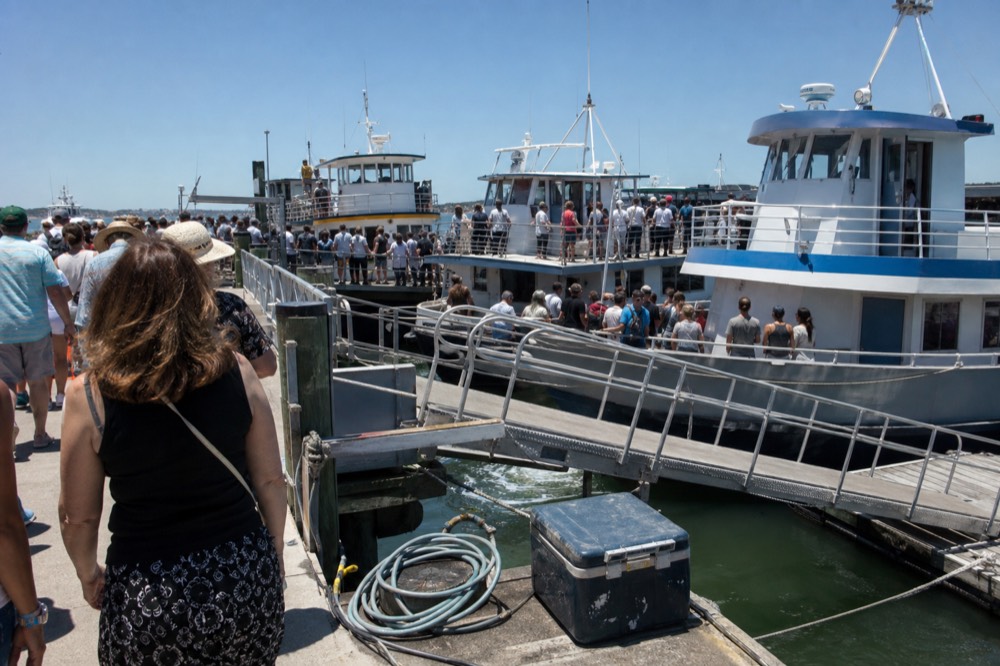
The event calendar is worth a minute of your time. Charleston Race Week in late April draws hundreds of boats to the harbor, which is a spectacle if you like sailboats and a congestion factor if you do not. The SC250 CORA Parade of Sail on June 27, 2026 drew a massive one-time harbor procession for America's 250th anniversary. The Lowcountry Jazz Festival ran September 4 through 6, 2026 over Labor Day weekend, and weekends like that reliably tighten sunset-cruise availability even in the otherwise calm fall window.
Here is how the four seasonal stretches compare on the factors that shape a booking decision:
| Season | Weather character | Crowd level | Reschedule odds | Best booking move |
|---|---|---|---|---|
| Winter (Nov-Feb trough) | Cool, crisp, driest air in November | Lowest; walk-up availability common | Lowest of the year | Book close to the date; watch the forecast |
| Spring (Mar-May) | Warming, pleasant, building rain | Rising fast from March | Low to moderate | Book 2-3 weeks ahead; avoid Race Week if you want calm water |
| Summer (Jun-Aug) | Hot, humid, wettest in August | Peak; prime slots sell out | Highest; brief storms scrub afternoons | Book early and refundable; keep a backup evening free |
| Fall (Sep-Oct) | Mid-70s sliding to 60s, clear days | Thinning after Labor Day | Low | Book the best-reviewed trips early; weekdays are quietest |
The honest crowd-avoidance playbook is therefore: target mid-September through late October on a weekday, avoid holiday weekends, and book the most-reviewed trips early no matter the month. The Sandlapper sunset cruise, the most-reviewed sunset trip on this site at 4.8 stars across 1,102 reviews, from $60 per person, sells on its reputation year-round, and quiet-season availability on it is a genuine fall perk.
What time of day is calmest, in any month?
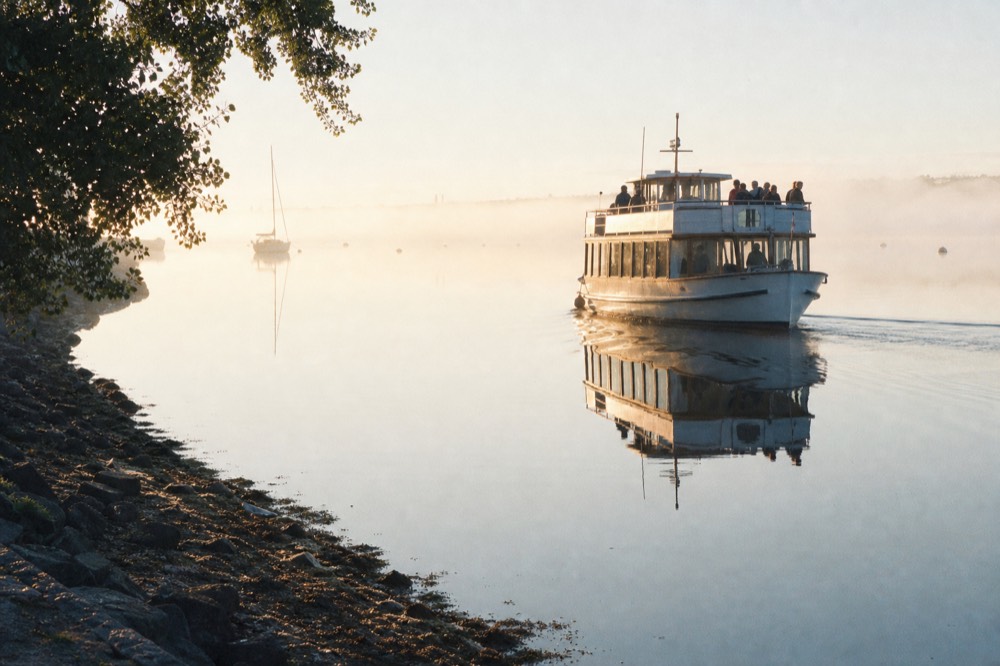
Morning and late-afternoon departures see the calmest water in every season, because wind and glare are lowest in those windows; midday trips in summer combine peak heat with peak chop, while a morning fall cruise offers glass-flat conditions, cool air and some of the best dolphin activity of the day.
The harbor itself helps you here. Charleston Harbor is relatively protected compared with open ocean, and local guidance consistently points to slack tide and early morning for the smoothest rides. If anyone in your group is nervous about motion on the water, the answer is a morning departure in October or November, not a bigger boat in July at 2 pm.
Dolphin watchers get a bonus from this timing logic. Roughly 300 dolphins live in Charleston's inland waters year-round per the Lowcountry Marine Mammal Network, and summer brings migratory pods on top of the residents, so the peak-season odds are genuinely better. But the calm-water windows, early morning and late afternoon, are also when dolphin activity is easiest to spot from a slow-moving boat.
The practical booking rule: in summer, choose morning departures to dodge both heat and storms. In fall and winter, the afternoon golden-hour trips are comfortable and the water is usually cooperative. In spring, either works, but book early because the calendar fills faster than the weather warms.
Does the month you book change the price?
Less than you might think: public sunset cruises in Charleston typically run $52-66 per adult for 1.5-2 hour trips across the year, and the narrated history format commonly lands in the $37-45 range, so the season mainly changes availability and comfort rather than the fare itself. The bigger price variable is the format you choose, not the month.
The dinner cruises make this clearest. The luxury dinner cruise with live music from Patriots Point runs 2.5 hours from $117 per person, at 4.1 stars across 713 reviews with free cancellation. The Blues and BBQ buffet option runs from $72 per person, the cheapest dinner format, at 3.6 stars across 194 reviews, the weakest rating on this site, with free cancellation. Those are format differences measured in tens of dollars; the month-to-month differences on the same tour are usually measured in whether seats exist at all.
What the month does change is your flexibility. In the November-through-February trough, popular trips have open seats days out, and you can afford to wait for a forecast. In the June-through-August peak, the best-reviewed trips sell their prime slots well ahead, and waiting costs you the departure you actually wanted. The narrated history cruise from the Maritime Center, the biggest review base on this site at 4.4 stars across 3,229 reviews, from $45 per person, is flagged as likely to sell out, and that flag does not take a winter vacation.
So the real seasonal strategy is a booking strategy: pick fall for the best conditions, book summer early and refundable, and let the trough season reward spontaneity. The prices barely move; the availability moves a lot.
If you are still weighing formats against each other, our side-by-side comparison of the best harbor tours covers the field, and Charleston Harbor Cruises keeps the full calendar of departures in one place.
Ready to pick your window? These three cover the sunset, dinner and history formats across every month on the calendar:
The calendar questions readers ask most come down to five answers: fall is the best window, hurricane season is manageable with refundable bookings, prices barely move by month, sunsets swing by roughly two hours, and the quietest water sits in the winter trough. Here are the specifics behind each of those answers.
Common questions about booking by month
The best approach to booking a Charleston harbor cruise is to plan around the month you intend to visit, since seasonal demand, weather, and cruise schedules shift throughout the year. Booking early helps during busy periods, while shoulder months often offer more flexibility with departure times and availability.