Why can't you swim with dolphins anymore?
Swimming with wild dolphins was never broadly legal in US waters. Here is what the Marine Mammal Protection Act actually covers, and how Charleston tours stay compliant.
Why can't you swim with dolphins anymore?
You cannot swim with dolphins in US waters because the Marine Mammal Protection Act makes it illegal to harass a wild dolphin, and swimming with one is legally defined as harassment. The law requires boaters and swimmers to stay at least 50 yards, or 150 feet, away, and it has been on the books for decades. Nothing changed recently except awareness.
The question usually arrives with a note of nostalgia, as if there was once a golden era when you could slip into the water beside a wild bottlenose dolphin and everything was fine. That era mostly did not exist, at least not legally. The Marine Mammal Protection Act prohibited "taking" marine mammals, a term that includes hunting, killing, capturing, and, importantly, harassing them. Swimming with a wild dolphin fits the definition of harassment because it disrupts the animal's natural behavior, and the National Oceanic and Atmospheric Administration has said so plainly in its published guidance for decades.
What did change is the market. In earlier decades, a handful of swim-with-dolphins programs operated in US waters, and some tour operators in places like Florida and Hawaii advertised in-water encounters with wild pods. Enforcement was thin, guidelines were murky, and a permissive culture took hold. NOAA tightened its interpretation, the agency and advocacy groups like the Lowcountry Marine Mammal Network began public education campaigns, and operators who kept offering in-water wild encounters were warned, fined, or shut down. Today the only legal in-water dolphin experiences in the United States are in facilities with captive animals under separate permits, not in open water with wild pods.
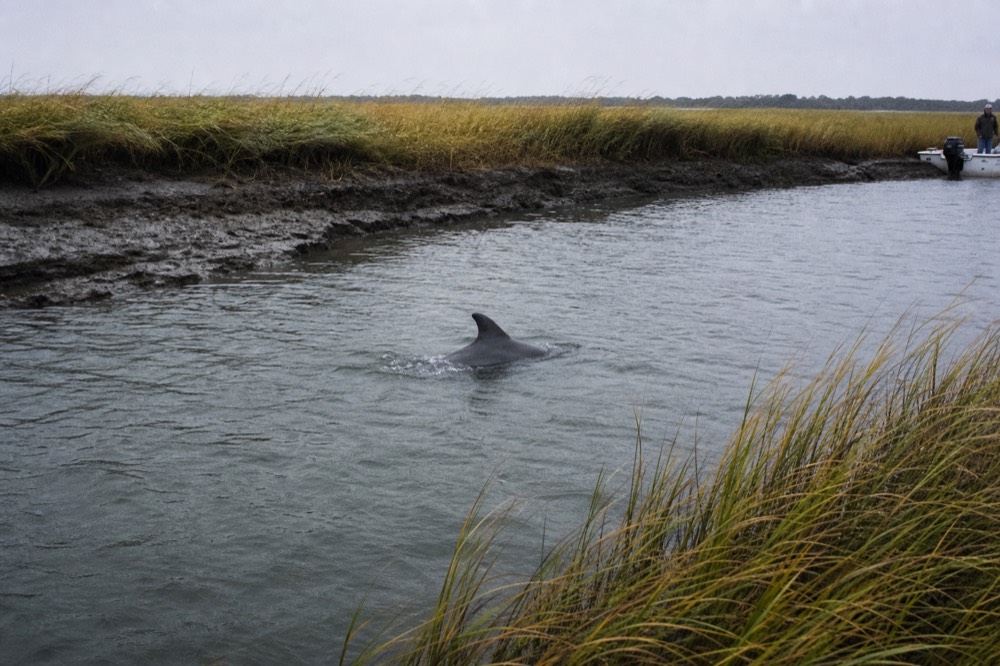
The distinction matters for Charleston specifically. Roughly 300 dolphins live year-round in the Charleston area's inland waters, according to the Lowcountry Marine Mammal Network, and the region ranks among the best places in the country to see them from a boat. Isle of Palms and Folly Beach ranked second and fourth nationally for bottlenose dolphin sightings among 356 US coastal locations in a recent analysis of sighting data. The dolphins are here, they are close, and they are protected, which is exactly why the viewing tours here are built around watching rather than touching.
If you want to see them, the compliant options are genuinely good, and the three below are the ones this site highlights most often.
What the Marine Mammal Protection Act actually covers
The act prohibits any act of pursuit, torment, or annoyance that has the potential to injure a marine mammal or disrupt its behavioral patterns, including migration, breathing, nursing, breeding, feeding, or sheltering. Feeding wild dolphins is separately banned, the 50-yard approach rule applies to boaters, and violations carry civil penalties and, for serious cases, criminal ones.
The word that does the heavy lifting is "harassment." Under the act, harassment does not require intent to harm. If your action has the potential to disturb a dolphin's feeding, resting, nursing, or travel, it qualifies. That is why swimming toward a dolphin, circling a pod with a boat, or chasing one through a creek can all count even if the dolphins seem unbothered, and even if they approach you first. A dolphin that swims over to your boat has not consented to anything in the eyes of the law; your obligation to hold your position or back away still applies.
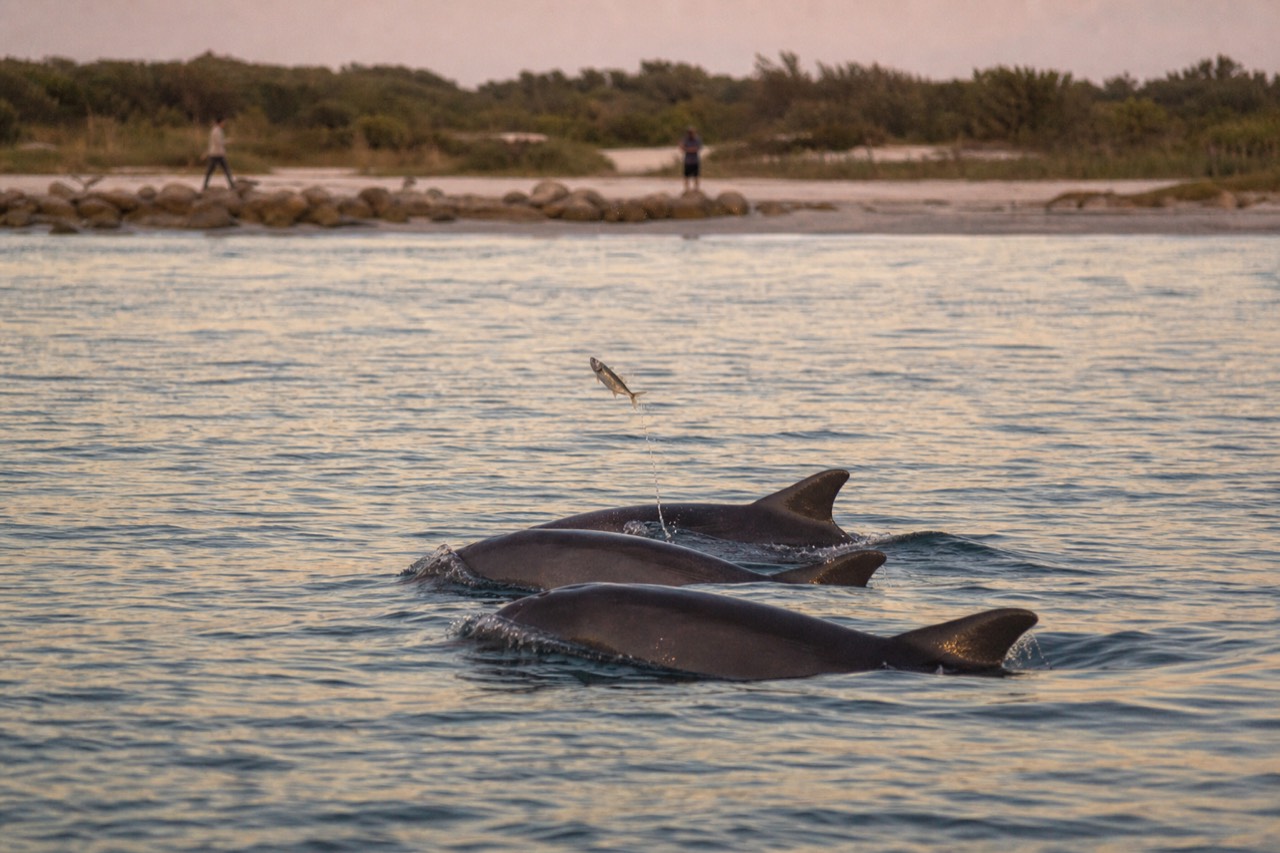
Feeding is the prohibition people find most surprising. Tossing fish to a wild dolphin is illegal on its own, separate from harassment, because fed dolphins change their behavior in dangerous ways. NOAA's own case files document dolphins that learned to beg near boats, took bait from fishing lines, and ended up injured by propellers or entangled in gear. A fed dolphin is, in the agency's framing, a dead dolphin walking, or rather swimming. The behavior change also puts people at risk: a dolphin that associates humans with food may nudge, bump, or bite swimmers who have nothing to offer.
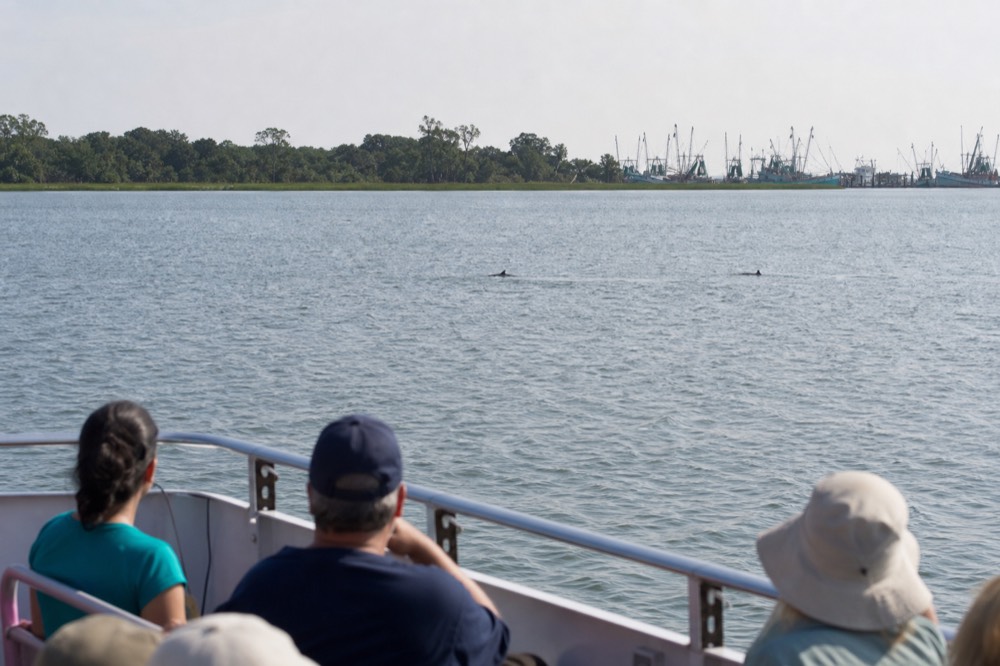
The 50-yard distance rule is the one that governs tour boats and private boaters alike. Federal guidance requires staying at least 50 yards, or 150 feet, from dolphins, a rule that Lowcountry Marine Mammal Network and NOAA both emphasize in areas like Shem Creek and the Folly River, where recreational boat traffic and dolphin habitat overlap heavily. There is a good plain-language summary of how advocates pushed boating safety and marine-life protection in the Lowcountry in a July 2026 local report.
Here is the practical version of the law, distilled:
| Activity | Legal status | Why |
|---|---|---|
| Watching dolphins from a boat at 50+ yards | Legal | No potential to disrupt behavior at distance |
| Dolphin approaches your anchored or drifting boat | Legal, if you hold position | You are not pursuing or encircling the animal |
| Steering your boat toward or around a pod | Illegal | Counts as pursuit and harassment |
| Swimming toward or with wild dolphins | Illegal | In-water approach is defined as harassment |
| Feeding a wild dolphin | Illegal, separately banned | Alters foraging and creates dangerous dependency |
| Touching a wild dolphin | Illegal | Contact is a textbook take under the act |
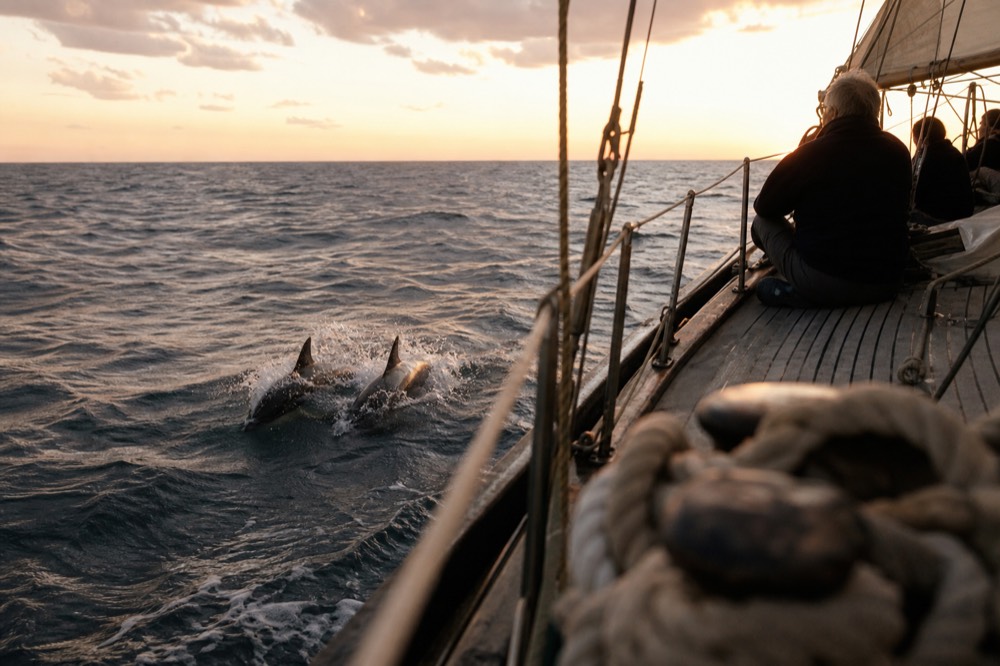
One honest nuance: the act regulates people, not dolphins. If a dolphin chooses to bow-ride your boat or swim alongside a kayak, you have not broken the law, provided you did not chase, encircle, or corner it. The line the law draws is between an encounter the animal initiates and one you engineer.
Was swimming with wild dolphins ever legal in US waters?
For the general public, no, not in living memory. The act has covered harassment of wild dolphins for decades, so the popular memory of a legal swim-with-wild-dolphins era is mostly a misconception built on thin enforcement, a handful of gray-area commercial programs, and confusion with captive facilities or with countries that never had an equivalent law.
The misconception has three real sources. The first is enforcement lag. A federal prohibition is only as visible as its enforcement, and in the act's early decades, NOAA's Office of Law Enforcement was small, citations for dolphin harassment were rare, and word of the rule traveled slowly. People who swam with dolphins in that era and suffered no consequence reasonably concluded it was allowed. It was not; it was unpoliced.
The second source is the captive industry. Swim-with-dolphins programs at marine parks and dolphinariums have operated legally in the United States for decades, because captive animals fall under a different permitting framework, and the public transferred that image to the open ocean. A visitor who paid to swim with dolphins at a facility in Florida or the Caribbean, where several countries still permit it, may genuinely believe the same activity was once sanctioned off the beach. The legal reality is that wild and captive dolphins have never been treated the same way under US law.
The third source is the gray-market tour trade of the late twentieth century. Some operators advertised "wild dolphin swims" that were, on paper, snorkeling trips where dolphins sometimes appeared. Those operations drew increasing scrutiny precisely because the line between happening upon a dolphin and steering a boatload of swimmers toward one is thin, and NOAA's guidance closed the gap by making any in-water approach to wild dolphins a harassment concern. The compliant remnant of that industry is today's dolphin-watching cruise: same animals, same waters, no swimmers in the water.
Charleston never had much of a swim-with-dolphins trade to lose, which is part of why the question lands differently here. The local tradition is viewing from the deck, and the local dolphins, a resident population of Tamanend's bottlenose dolphins, are studied rather than serviced. The Lowcountry Marine Mammal Network has even tracked a rare tail-less dolphin nicknamed Koa in Charleston-area waters since reports began in 2025, one of only a handful of comparable wild cases recorded anywhere in the world. That is the register this region keeps dolphins in: research subjects and neighbors, not props.
How Charleston tour operators structure trips to stay compliant
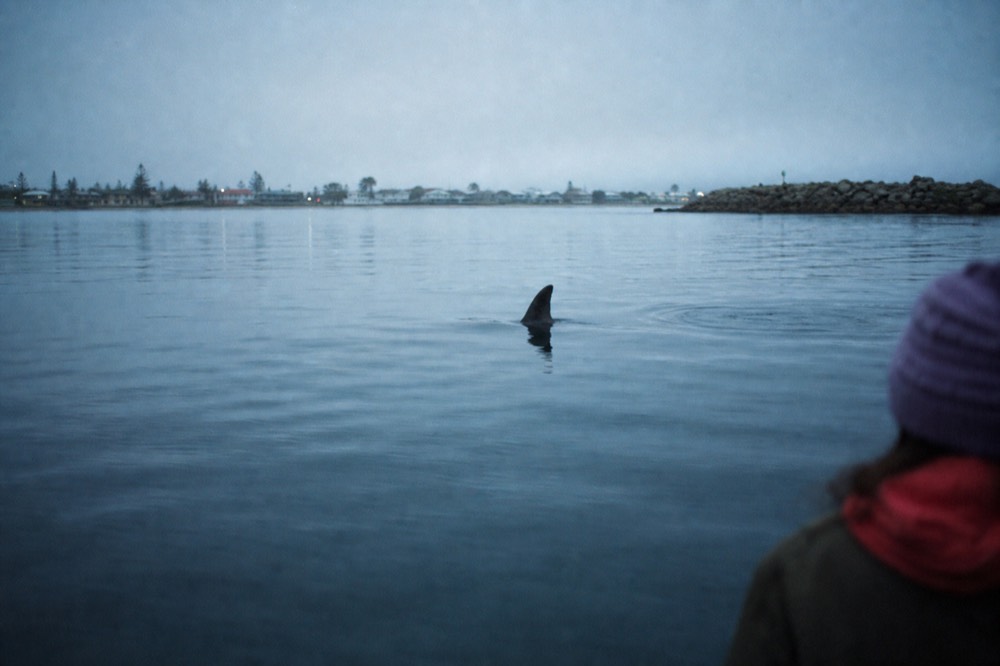
Compliant dolphin tours in Charleston are built as passive viewing: boats hold or reduce speed near pods, maintain the 50-yard buffer, never circle or pursue, and let dolphins choose to approach, which resident dolphins often do. Narration focuses on natural history and behavior, and crew will tell passengers not to throw anything in the water near dolphins.
The mechanics are more deliberate than they look from the deck. A licensed captain who sees a pod ahead will typically slow to a no-wake speed, hold a steady heading rather than turning toward the animals, and let the dolphins' own movement decide the encounter. Bottlenose dolphins are curious and energetic, and in the Charleston estuary they frequently bow-ride, surface alongside slow vessels, and work the shallows for fish within easy view of passengers. The tour gets its show; the dolphins retain full control of the encounter.
The Folly Beach dolphin excursion run by Castaway Island Excursions illustrates the approach in a specific habitat. It explores the tidal creeks behind Folly Beach toward the Morris Island Lighthouse, shallow water where dolphins hunt on the tide, and it is the tour this site features for strand feeding, the rare behavior where dolphins deliberately beach themselves to catch fish. Strand feeding has been documented in South Carolina and Georgia salt marshes since 1971, peaks around July through September on low to mid tide, and was the subject of a 2026 peer-reviewed paper in Marine Mammal Science focused on Captain Sams Inlet. Watching that behavior from a boat is lawful and extraordinary. Wading toward the fish trap to get closer is not.
The schooner options work the same principle with a sailing twist. On the schooner sailing experience from Charleston Harbor Tours, which departs Aquarium Wharf, passengers can help hoist the sails, and the vessel's quiet movement under canvas tends to read as unthreatening to wildlife; dolphins and pelicans are regular companions on that trip. The afternoon schooner dolphin cruise, an 84-foot tall ship, runs 1.5 hours from $56 per person, carries a 4.5-star rating across 787 reviews, offers free cancellation, and is marked likely to sell out on the live listing. The crew's job during an encounter is navigation and distance management, and the passengers' job is cameras down at the rail.
What happens if you get too close to a dolphin
Approaching within 50 yards, feeding, or swimming toward a wild dolphin is a federal violation, and NOAA can assess civil penalties per violation, with criminal charges possible for knowing or repeated offenses. In practice, most first incidents draw warnings, but enforcement in busy Lowcountry waterways has visibly stepped up as dolphin-boat conflicts have made local news.
The penalty structure is worth understanding because it surprises people. The act authorizes civil penalties for each violation, and a single afternoon of circling a pod, feeding, and swimming with dolphins can be charged as multiple separate counts. Criminal liability attaches where the conduct was knowing, and NOAA's enforcement history includes cases against tour operators who repeatedly ran illegal in-water programs, with fines that ended those businesses. For a private boater or a swimmer, the realistic first outcome is a warning or a citation, but the legal exposure is real, and it is entirely avoidable.
The enforcement climate in the Lowcountry has tightened for a concrete reason: the dolphins and the boats keep meeting. The Lowcountry Marine Mammal Network's April 2026 community dolphin count logged 150 dolphin sightings across Charleston-area sites with 541 community scientists participating, and the same waters host heavy recreational traffic, especially around Shem Creek and the Folly River. Advocates used that backdrop in 2026 to push boating-safety and marine-life-protection messaging, and the 50-yard rule is the centerpiece of it. The resident population is also scientifically precious: NOAA researchers found microplastics in the gastrointestinal tracts of all 47 stranded Charleston-estuary dolphins sampled between 2015 and 2024, evidence that human pressure on these animals reaches them before they are even born.
There is a behavioral argument stacked on the legal one. Dolphins that get fed or closely interacted with change fast, and changed dolphins die young. The ones that learn to beg at boat sterns get hit by propellers, take hooks and bait, and teach the trick to their calves. The law's distance requirement is not bureaucratic caution; it is the minimum buffer that keeps a resident population of roughly 300 animals behaving like wild dolphins. When a cruise passenger asks why nobody just jumps in, the honest answer is that the water is the one place the whole experience is designed to keep you out of.
Legal ways to see dolphins in Charleston
The lawful menu is bigger than people expect: narrated dolphin-watching cruises, sailing trips where dolphins ride alongside, eco-excursions into the tidal creeks behind Folly Beach, and simply watching from shore at spots where dolphins hunt within view. Every option shares one rule, keep 50 yards and let the dolphins close the distance, and every one of them can outperform a swim anyway.
From shore, the viewing is free and often excellent. The creek mouths and marsh edges around Folly Beach and the Isle of Palms are among the most productive dolphin-watching shoreline in the country, and the strand-feeding season from late summer into fall can put a full beaching hunt within binocular range. Timing helps: if you are planning around behavior rather than luck, this site's guide to when you can see dolphins in Charleston covers the seasonal patterns, and the piece on the best places to see dolphins in Charleston maps the shore spots.
From the water, pick the format that matches what you want from the encounter:
| Tour | Format | Price | Rating | Notes |
|---|---|---|---|---|
| Afternoon schooner dolphin cruise | 84ft tall ship, 1.5 hrs | From $56/person | 4.5 stars, 787 reviews | Free cancellation; marked likely to sell out |
| Folly Beach dolphin excursion | Small boat, tidal creeks, 1.5 hrs | From $52/person | 5.0 stars, 17 reviews, a small sample | Only tour here not departing a harbor marina |
| Schooner sailing experience | Sail-assisted cruise, 1.5 hrs | From $56/person | Ratings are on the live listing | Passengers can help hoist sails |
The comparison point worth holding onto is that a lawful viewing trip and an illegal swim produce the same photograph of a dolphin, but only one of them leaves the dolphin wild. A resident dolphin surfacing three feet off the rail of a slow schooner, on its own initiative, is a better story than a staged encounter, and it is the version Charleston's operators are built to deliver. For a fuller rundown of options and prices, the site's guide to dolphin cruises and prices goes deeper than a single article can.
The through-line of all of it: Charleston Harbor Cruises and the operators it covers run on the watching model because the swimming model was never lawful here and never will be again. The dolphins do not seem to mind. If anything, the resident pods' willingness to approach quiet, slow vessels suggests the arrangement suits them, which is the only endorsement that counts.
Swimming with wild dolphins is illegal under the Marine Mammal Protection Act, which defines any in-water approach as harassment, and the same law bans feeding and touching them. The questions below cover the distance rules, the penalty risks, and the legal ways Charleston visitors still get remarkably close to resident dolphins.
Common questions about swimming with dolphins
Swimming with wild dolphins is prohibited in US waters, so in Charleston the only option is watching them from a boat, the tour operator, and your own comfort in open water. Wild dolphin encounters carry more unpredictability than captive programs, so choose reputable operators, check safety briefings, and know your swimming ability before booking any dolphin experience.
Can you swim with dolphins in Charleston SC?
No. Swimming with wild dolphins is illegal in all US waters, including Charleston Harbor and the creeks around Folly Beach. The legal alternative is a viewing cruise, where boats hold at least 50 yards and let dolphins approach on their own terms.
Is it illegal to touch a wild dolphin?
Yes. Touching a wild dolphin is a violation of the Marine Mammal Protection Act, as is feeding one or pursuing one in the water. Even a dolphin that approaches you does not make contact lawful.
How close can a boat get to dolphins?
Federal guidance requires boaters to stay at least 50 yards, or 150 feet, from dolphins. Slowing down and holding a steady heading when dolphins appear is the compliant practice; steering toward or circling a pod is not.
Why is feeding dolphins illegal?
Fed dolphins stop hunting normally, learn to beg near boats, and end up injured by propellers and fishing gear. The behavior is also passed to calves, so one fed dolphin can damage a whole resident pod, which is why the ban exists separately from the harassment rules.
Can dolphins come to you on a cruise?
Yes, and they often do. Resident Charleston dolphins frequently bow-ride and surface beside slow vessels. As long as the boat did not chase or encircle them, the encounter is legal, and it is the closest look the law allows.