When can you see dolphins in Charleston?
Dolphins live in Charleston's waters year-round, with a summer peak. Here is when sightings are most likely, month by month, and which cruises give you the best odds.
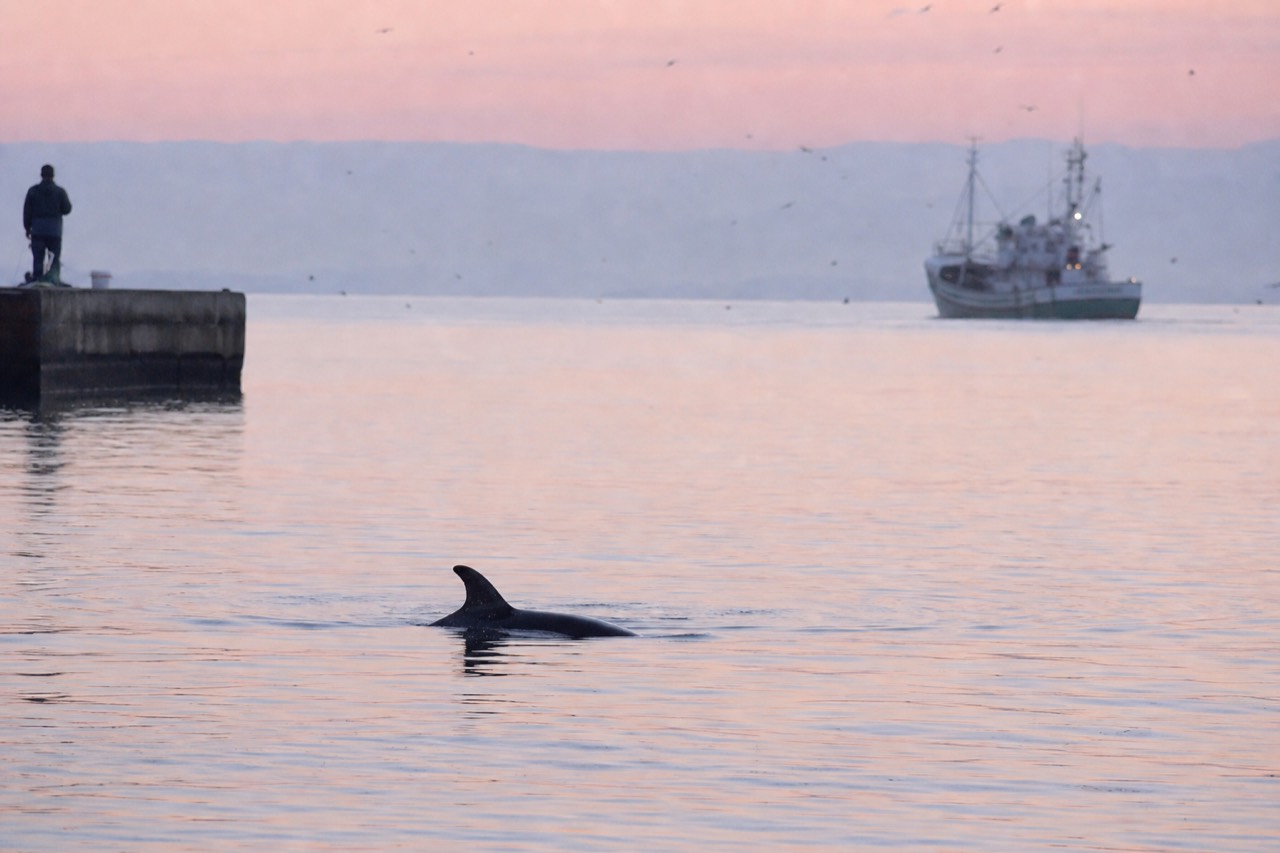
When can you see dolphins in Charleston?
You can see dolphins in Charleston in every month of the year, because roughly 300 bottlenose dolphins are permanent residents of the area's inland waters according to the Lowcountry Marine Mammal Network. The peak window runs late spring through early fall, when migratory pods join the residents and sightings multiply, and July through September adds the bonus of strand feeding near Folly Beach.
That year-round baseline is the single most useful fact for anyone planning a trip, and it surprises people who assume dolphin watching is a seasonal lottery. The dolphins here are not passing through on the way somewhere else. They are estuarine bottlenose dolphins, a population that lives, breeds, and feeds in the rivers, creeks, and harbor channels of the Lowcountry full time. What changes through the year is not whether dolphins are present, it is how many there are, how active they are, and how easy they are to find from a boat.
The scale of Charleston's dolphin population is genuinely unusual. A 2026 analysis of OBIS-SEAMAP sighting data, the marine mammal mapping partnership run by Duke University and NOAA, ranked Isle of Palms second and Folly Beach fourth among 356 US coastal locations for bottlenose dolphin sightings. Isle of Palms logged 16,588 dolphins across 2,446 documented events, and Folly Beach logged 14,443 across 3,161 events. Very few stretches of American coastline can match those numbers, and both hotspots sit within easy reach of the boats departing Charleston's marinas.
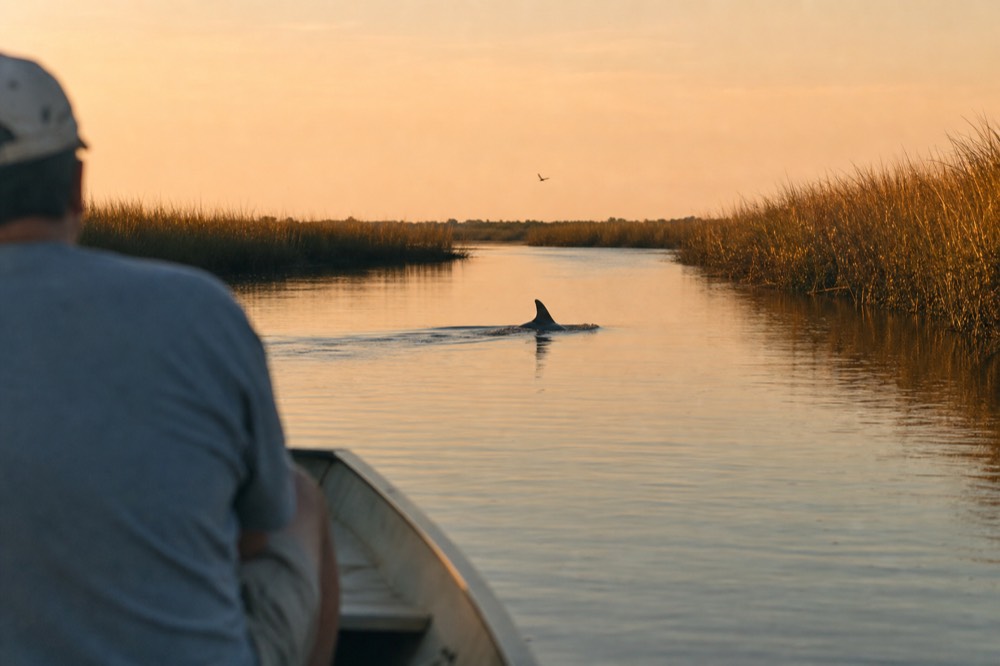
Summer is when the population roughly doubles in visibility. Resident dolphins, now classified by researchers as Tamanend's bottlenose dolphins, are joined from warmer months onward by seasonal and migratory Atlantic bottlenose dolphins moving through the South Carolina coast. More dolphins in the water means more dorsal fins, more feeding activity, and more chances that a cruise passes within viewing range of a pod. Fall and spring are also strong, since migratory pods pass through during those transitions and the resident groups remain as active as ever.
Winter is the quiet season, but quiet is relative. The 300 or so residents do not leave, and on calm winter days they are often easier to spot because boat traffic thins out and the water flattens. Tour operators run fewer departures in the coldest months, so the constraint is usually schedule, not dolphins. If you are visiting in January or February and a dolphin cruise is running, the odds of seeing dolphins remain good.
For readers who want the full spot-by-spot breakdown, waterways, departure points, and which creeks hold dolphins at which tides, the companion guide on where dolphins gather in Charleston goes deeper on locations than this timing-focused piece. The short version for planning: the dolphins are here now, and the question worth asking is when during your visit they are most catchable.
What time of day are dolphins most active in the harbor?
Dolphins in Charleston feed most actively in the early morning and again in the late afternoon, and those two windows line up neatly with the calmest water on the harbor. Tour boats that depart in the morning or in the couple of hours before sunset consistently report the best sighting conditions, and low to mid tide concentrates feeding in the shallows.
Dolphins are not clock-watching animals, but their food is tide-following. Mullet, menhaden, and other prey fish move with the water, and dolphins track them. On a receding or low tide, fish get pushed out of the safety of the marsh grass and into the shallow creek mouths and channel edges, which is exactly where dolphins concentrate their hunting. That is why experienced local captains pay as much attention to the tide table as to the departure schedule, and why the same stretch of creek can be empty at high tide and busy with feeding dolphins two hours later.
Morning and late afternoon also deliver the flattest water. Charleston Harbor is relatively protected compared with the open ocean, but afternoon sea breezes still ruffle the surface, and glare becomes a real obstacle to spotting dorsal fins in the middle of the day. Early morning slack tide and the pre-sunset hours offer lower wind, softer light, and a surface that shows every ripple a dolphin makes. This is also when most photography happens, for the same reasons.
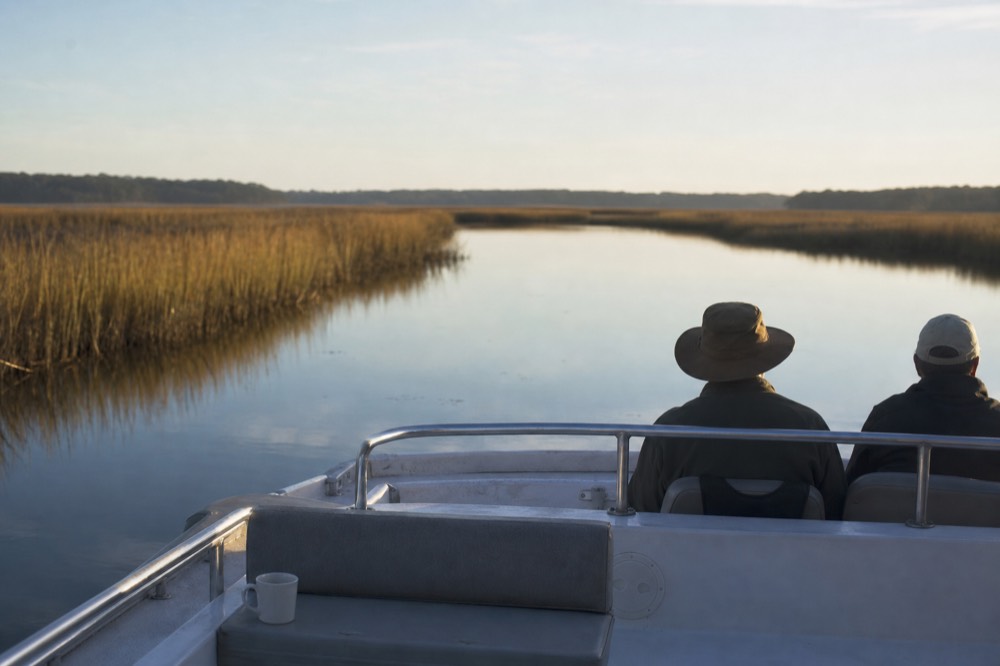
The practical takeaway is simple: if you have a choice of departure times, take the first morning trip or a late-afternoon one. The Folly Beach dolphin viewing excursion, a 1.5-hour trip through the tidal creeks behind Folly Beach from $52 per person, is a good example of a tour whose route is built around exactly this feeding pattern, and it passes the Morris Island Lighthouse on the way. For more on how the time of day interacts with tides and seasons, the companion piece on the best time of day to see dolphins in Charleston works through that question in detail.
A quick note on booking this one before we move on: the Folly Beach excursion is the only trip on this site's roster that departs outside the harbor marinas, so factor in the short drive over the bridge from downtown, roughly ten minutes in normal traffic. The creek route also means the operator watches the tide tables closely when setting departure times, so the scheduled slot you book is usually already aligned with good feeding conditions. If the weather turns, the trip can shift a day, which is one more reason to book it early in your stay rather than at the end.
One timing note that catches visitors off guard: dolphins here are wild animals with federal protection, and the rules shape the experience. Under the Marine Mammal Protection Act, boats must stay at least 50 yards, about 150 feet, from dolphins, a distance marine life advocates in the Lowcountry actively promote. Good captains hold that distance and let the dolphins come to the boat, which resident pods routinely do out of curiosity. A sighting at 50 yards is still a very good sighting, these are large animals, but no responsible operator will chase or circle a pod to close the gap.
When is dolphin strand feeding season near Folly Beach?
Strand feeding, the behavior where dolphins deliberately beach themselves to catch fish, peaks July through September near Folly Beach and is most often seen on a receding or low to mid tide. It has been documented in South Carolina and Georgia salt marshes since 1971 and is rare almost everywhere else on the US Atlantic coast.
Strand feeding is the most dramatic thing a Charleston dolphin can show you, and it is the behavior that draws wildlife watchers back year after year. A dolphin herds a school of fish onto a mud bank, launches itself out of the water after them, gulps down what it caught, then wriggles back into the creek. It is a learned behavior, passed from mothers to calves, and only a handful of populations worldwide do it. A 2026 peer-reviewed paper in Marine Mammal Science documented the behavior specifically at Captain Sams Inlet, South Carolina, confirming what local guides have long described: this stretch of coast is one of the best places on Earth to witness it.
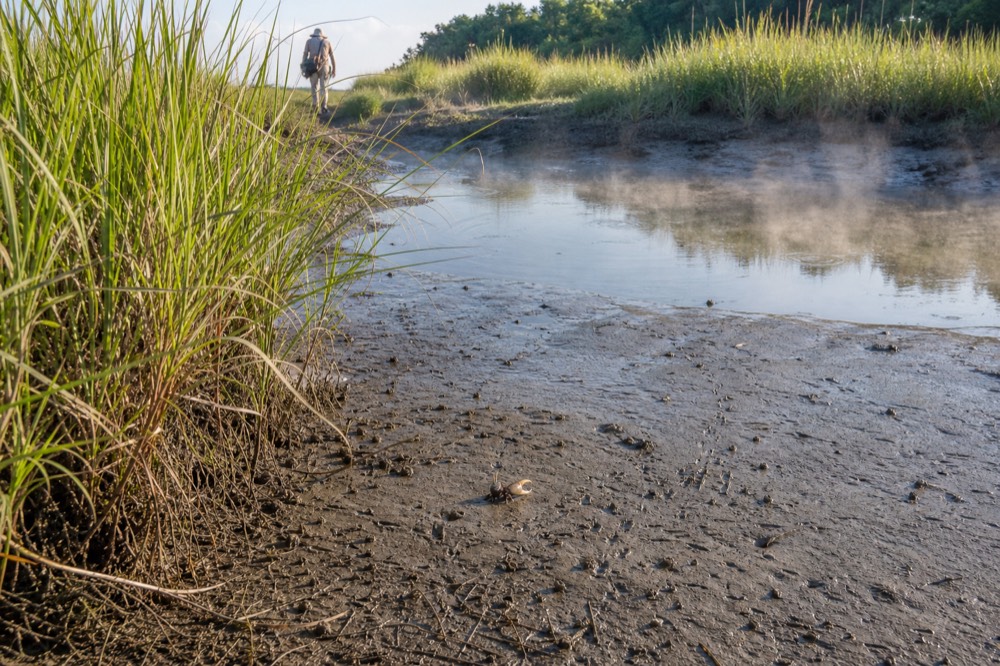
The season matters because the behavior follows the fish. Late summer into fall coincides with the active mullet migration through Lowcountry waters, which concentrates prey in the shallows and triggers more strand feeding attempts. July through September is the window most cited by researchers and guides, with sightings continuing into November in good mullet years. Tide matters as much as month: the shallows that make the maneuver possible only exist on a receding or low tide, when the fish have been pushed out of the grass.
If seeing strand feeding is the goal, the Folly River and the creek systems behind Folly Beach are the places to position yourself, and a small-boat tour is the way to reach them. The timing overlap is why the summer peak and the strand feeding peak stack: more dolphins, more fish, more feeding behavior, all in the same window.
What does month-by-month dolphin sighting likelihood look like?
Every month in Charleston carries a realistic chance of seeing dolphins, but the likelihood climbs from a solid winter baseline to a summer peak, then eases through fall as migratory pods move on. The table below rates each month's typical sighting conditions for the harbor and its surrounding creeks, based on the seasonal patterns researchers and local operators describe.
| Month | Sighting likelihood | What's happening with the dolphins |
|---|---|---|
| January | Good | Resident pods of roughly 300 animals stay put; fewer boats on the water can make spotting easier |
| February | Good | Residents feed in creeks on winter tides; tour schedules run lighter than summer |
| March | Good to very good | Spring warming begins; migratory pods start passing through |
| April | Very good | Spring migration overlap; LMMN's April 2026 community count logged 150 dolphin sightings in a single day |
| May | Very good | Water warms, baitfish arrive, feeding activity picks up |
| June | Excellent | Summer buildup begins; migratory dolphins join the residents |
| July | Excellent | Peak season; strand feeding window opens near Folly Beach |
| August | Excellent | Peak population and peak feeding; mullet runs concentrate prey |
| September | Excellent | Late mullet migration; strand feeding still active; thinner crowds |
| October | Very good | Migratory pods linger; resident feeding stays strong |
| November | Very good | Fall transition; clear, calm days help visibility |
| December | Good | Residents only; quiet water and low winter light |
Two patterns in that table deserve a second look. First, the April community count is worth taking seriously as a data point: on April 25, 2026, the Lowcountry Marine Mammal Network's volunteer count recorded 150 dolphin sightings across Charleston-area sites with 541 community scientists participating, in a single coordinated effort. That is spring, not summer, and the dolphins were plainly not hard to find.
Second, September deserves more attention than it gets. The migratory population is still near its peak, the strand feeding window is still open, and the crowds of high summer have thinned. Operators themselves consistently point to fall as the best season for time on the water here, with mid-70s daytime temperatures and calmer, clearer conditions. For a dolphin-focused trip, early September may be the single best week of the year to be on a boat in Charleston.
Which dolphin cruise gives you the best odds?
For pure sighting odds, the Folly Beach dolphin viewing excursion is the strongest pick on this site's roster: 5.0 stars from 17 reviews, a small sample but a perfect one, from $52 per person, through the tidal creeks where dolphins concentrate to feed. The 84ft tall-ship afternoon dolphin cruise at 4.5 stars from 787 reviews, from $56 per person, is the high-volume alternative.
The difference between the two is the difference between a creek trip and a harbor trip. The Folly Beach excursion is the only tour on this site that does not depart from a Charleston Harbor marina, and that is precisely its advantage: it goes straight into the tidal creek system behind Folly Beach, the shallow, food-rich water where dolphins do most of their hunting, and it passes the Morris Island Lighthouse on the route. If the goal is dolphins rather than skyline, that routing matters.
The harbor-based options trade a bit of that focus for scale and reliability. The afternoon schooner dolphin cruise, from $56 per person, carries 4.5 stars across 787 reviews with free cancellation, and it is marked "Likely to sell out" on the live listing, which is a genuine signal of demand rather than marketing pressure. The schooner sailing experience with dolphin watching, also from $56 per person, adds the novelty of helping hoist the sails; its ratings are on the live listing rather than quoted here, since the review figures for that trip did not verify cleanly. All three are 1.5-hour trips, so the choice is about water type and vessel, not duration.
Whichever you choose, book the dolphin cruise early in your visit rather than on the last day. Weather moves trips, especially the small-boat creek excursions, and having a spare day gives you a fallback if the operator reschedules. The sell-out flags on the popular afternoon departures are another reason not to leave it late. For readers weighing whether the experience justifies the ticket, the piece on whether a dolphin cruise is worth it works through that question with real reviewer sentiment.
One last planning note: Charleston Harbor Cruises and the operators it lists run within the federal 50-yard distance rule as a matter of course, and the resident dolphins' curiosity usually closes the gap on their own terms. Bring binoculars anyway. A dorsal fin at 150 feet reads as a dark flicker to the naked eye, and as an unmistakable bottlenose dolphin through glass.
Dolphins are present in Charleston's waters during all twelve months of the year thanks to a resident population of roughly 300 animals, with the strongest sighting odds from late spring through early fall and the added spectacle of strand feeding near Folly Beach between July and September. These are the questions readers ask most often about timing a dolphin encounter around Charleston, answered with the same seasonal and tidal patterns covered above.
Common questions about seeing dolphins in Charleston
Dolphins are frequently seen in Charleston's waters, especially around the harbor, the Cooper and Ashley rivers, and nearby estuaries like Shem Creek. Sightings are common year-round, though many people spot them from boat tours, kayaks, or the shoreline. Wild dolphins in the area are typically bottlenose dolphins, and they can often be seen feeding, swimming, and surfacing close to shore.
What time of day is best for dolphin sightings in Charleston?
Early morning and late afternoon, when dolphins feed most actively and the water is calmest. Tide matters as much as clock time: a receding or low to mid tide pushes fish out of the marsh grass and concentrates feeding in the shallows.
Can you see dolphins in Charleston in winter?
Yes. The resident population stays year-round, and calm winter days with light boat traffic can make spotting easier. The constraint in winter is tour schedules, not dolphin presence, since operators run fewer departures.
What is strand feeding and when can you see it?
Strand feeding is a learned behavior where dolphins deliberately beach themselves to catch fish, documented in South Carolina and Georgia salt marshes since 1971. It peaks July through September near Folly Beach, most often on a receding or low to mid tide.
How close can boats get to dolphins in Charleston?
Federal law under the Marine Mammal Protection Act requires boats to stay at least 50 yards, about 150 feet, from dolphins. Responsible tour operators hold that distance, and curious resident dolphins often approach the boat on their own.
Which tour has the best dolphin sighting odds?
The Folly Beach dolphin viewing excursion, which runs through the tidal creeks where dolphins concentrate to feed. It holds a 5.0-star average from a small sample of 17 reviews and runs from $52 per person.