What is the best time of day to see dolphins in Charleston?
Morning, afternoon or sunset: how dolphin activity, tide state and boat comfort compare across Charleston dolphin cruises, with the tide-dependent feeding facts most guides skip.
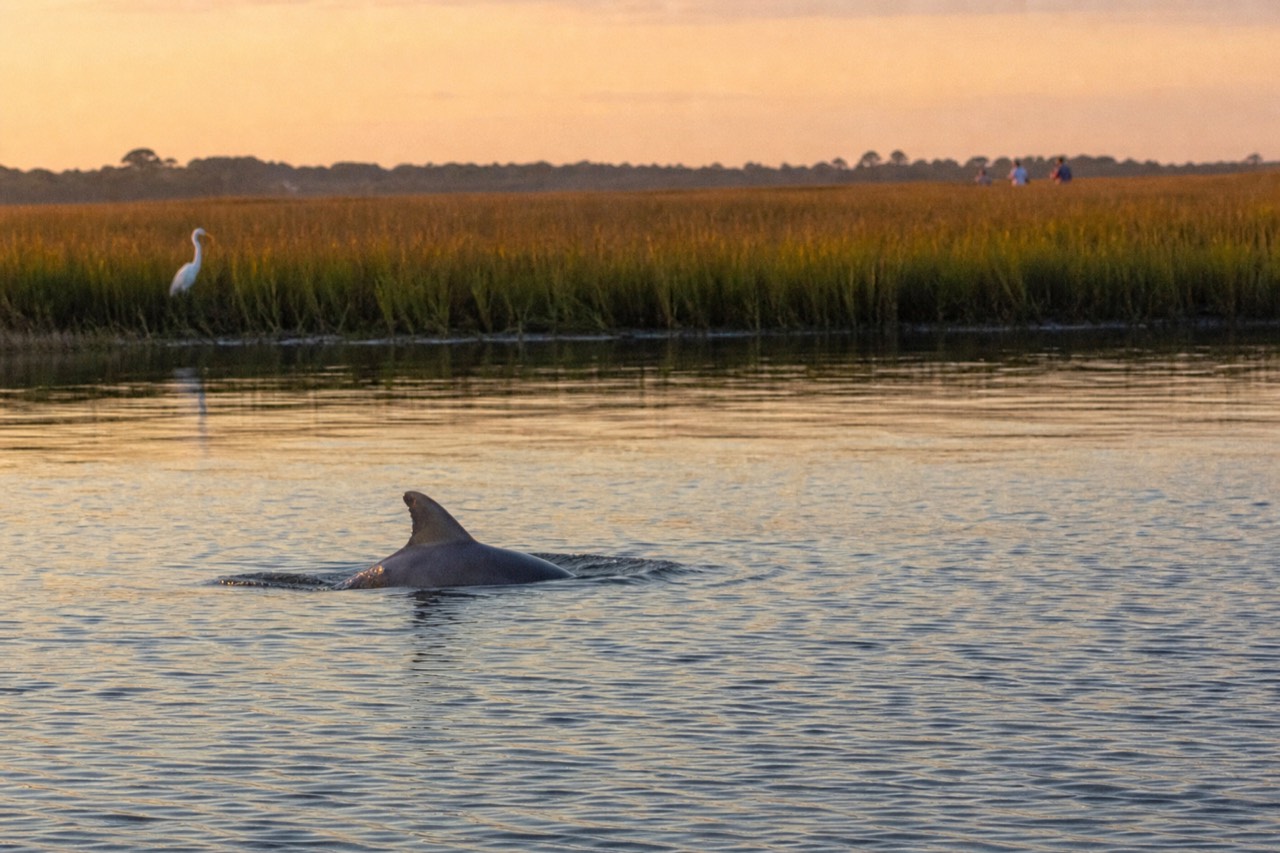
What is the best time of day to see dolphins in Charleston?
The best time of day to see dolphins in Charleston is mid-morning through late afternoon, roughly 10am to 5pm, when feeding activity is steady and the wind stays light; the single biggest factor is not the clock but the tide, because dolphins hunt the shallows most actively on a falling low-to-mid tide. Morning departures usually get the calmest water and the lowest glare, while late-afternoon and sunset trips add the golden-hour backdrop that makes Charleston photography famous. If your schedule allows only one choice, pick a departure that overlaps the second half of the falling tide, whatever hour that lands on.
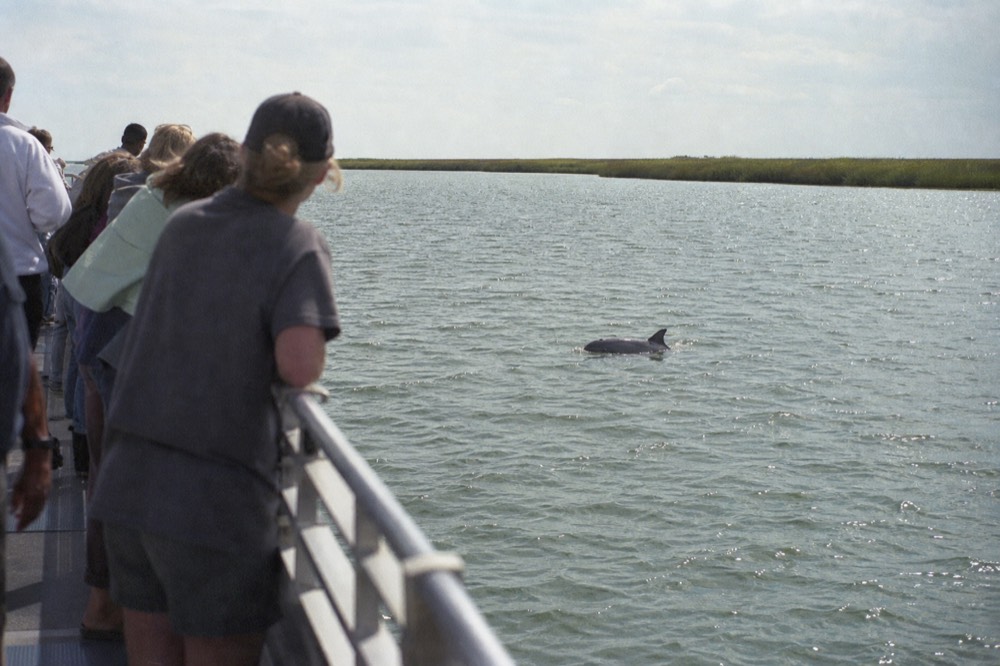
Charleston's resident population is unusually reliable. The Lowcountry Marine Mammal Network estimates about 300 dolphins live in the area's inland waters, and a national analysis of OBIS-SEAMAP sighting data ranked Isle of Palms second and Folly Beach fourth among 356 US coastal locations for bottlenose dolphin sightings. Those numbers explain why dolphin-focused boat tours here rarely come back empty. What varies is how close, how active and how photogenic the animals are, and that comes down to a mix of tide, season, light and boat type.
The practical takeaway for planning: check a tide chart for the day you want to go out, then match it to a departure slot. A trip leaving two hours before low tide, especially between July and September, lines up with the conditions under which dolphins push baitfish onto the mudbanks. Any other time of day still produces sightings, but you are more likely to see traveling and breathing rather than hunting behavior. Tide tables for the Charleston area are published by NOAA and take under a minute to read once you know the pattern: find the day's low tide, count back two to three hours, and that is your target boarding window.
If you want a shortcut, these three tours cover the strongest timing windows:
For a wider look at the seasonal side of the question, our piece on when dolphin season runs in Charleston breaks down month-by-month patterns, and the dolphin cruise prices and tour comparison guide lists every option on this site side by side. This article, like everything else at Charleston Harbor Cruises, is built around the same idea: the harbor's wildlife rewards a little planning far more than it rewards luck.
Does the tide matter more than the time of day?
Yes, in Charleston the tide matters more than the time of day: strand feeding, the dramatic behavior where dolphins intentionally beach themselves to catch fish, happens almost exclusively on a falling low-to-mid tide between July and September, so a noon trip at the right tide beats a dawn trip at slack high water. This is the detail most general travel content misses, because it requires reading tide tables rather than recommending "early morning" as a blanket rule.
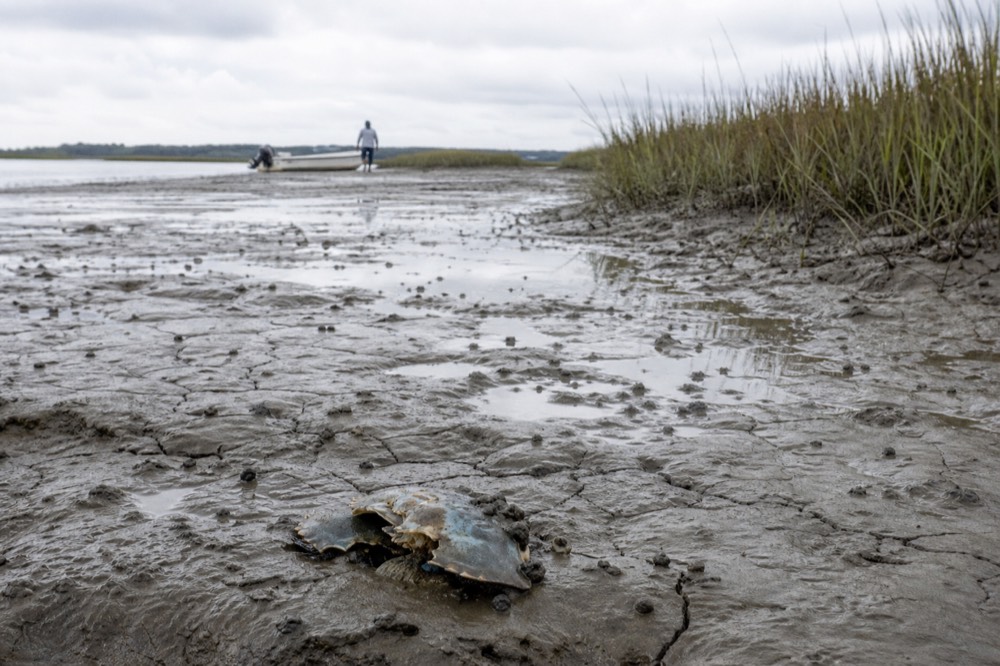
Strand feeding is the information-gain anchor here, and it is worth understanding before you book. Dolphins in South Carolina and Georgia salt marshes have been documented doing this since 1971, and it remains rare almost everywhere else on the US Atlantic coast. The behavior is learned and passed from mothers to calves, which is why it clusters in specific spots: the tidal creeks behind Folly Beach, the Folly River and inlets like Captain Sams further down the coast. A 2026 peer-reviewed paper in Marine Mammal Science examined strand feeding at Captain Sams Inlet specifically, confirming how localized and tide-dependent it is. Researchers found that groups of three dolphins are the most common party size for the behavior, so if you see two or three dorsal fins working a mudbank together, you are watching a coordinated hunting unit rather than a random gathering.
One rule shapes every legitimate tour's behavior on the water: the Marine Mammal Protection Act requires boaters to keep at least 50 yards, or 150 feet, from dolphins. Good captains position the boat ahead of where a pod is traveling and let the animals come to the vessel. That is why an experienced local operator with tide knowledge consistently outperforms a generic sightseeing loop for dolphin encounters, and why creek-focused tours from the Folly Beach side see different behavior than open-water harbor routes. It also means a responsible captain will sometimes idle at a distance while a pod decides whether to come closer, which can feel slow in the moment but is exactly what the law and good wildlife practice demand.
The one tour on this site built specifically around the tidal creeks where strand feeding happens is the Folly Beach excursion, which explores the creeks behind Folly Beach and passes Morris Island Lighthouse. It runs 1.5 hours from $52 per person, and its 5.0-star rating comes from a small sample of 17 reviews, too few to treat as a settled average but a genuinely strong early signal.
A practical way to use this: check the Folly River tide table for the day you plan to go, and look for a window roughly two hours before low tide. That falling-water period is when mudbanks start to expose and fish get pushed into the narrowing channels, which is precisely the setup strand feeders exploit. If the falling tide lands midday or early afternoon in July, August, or September, that is genuinely the best slot of the day, even though conventional wildlife-watching advice points at dawn. Slack high water, by contrast, leaves the banks submerged and spreads the fish out, so dolphins tend to travel rather than feed along the edges.
It also helps to set expectations about what you might see. Strand feeding itself is never guaranteed, and responsible operators will not promise it, because the law prevents maneuvering close to make it happen. What you can reasonably expect on a creek-focused trip during the right tide window is sustained viewing of pods traveling, foraging, and surfacing in narrow water, where the animals often pass close to the boat on their own terms. Some trips also include a stop or slow pass near Morris Island, where passengers can look for shells and sharks' teeth, a nice bonus if you are traveling with kids who want more than dorsal fins.
One last planning note: because the behavior is learned and passed down within specific matrilineal groups, the same few creeks produce sightings again and again. If you strike out on the tide window once, a second attempt in the same area a day or two later during another falling tide is a far better bet than switching to a generic harbor cruise, which covers open water where the tide-dependent feeding behavior is far less likely to appear.
What are morning dolphin cruises like?
Morning dolphin cruises in Charleston offer the calmest water and the lowest glare of the day, typically 8am to 11am departures, which makes them the best pick for motion-sensitive riders and photographers who want clean, even light; the trade-off is that morning tide phases are hit-or-miss, so feeding activity depends entirely on where the tide falls that day. Wind in this estuary builds through the afternoon, so an early boat genuinely rides flatter water.
The calm-water advantage is real and consistent. Local operators and harbor guides repeatedly note that morning and late-afternoon departures see the smoothest conditions because wind and glare are both lower, and Charleston Harbor itself is relatively protected compared with the open ocean. For families with young children or anyone prone to seasickness, that difference matters more than a marginal change in sighting odds. Dolphins breathe and travel all morning; they simply may not be hunting. If your goal is simply to see a dorsal fin and a blow, morning delivers that reliably, and the flatter surface makes surfacing dolphins easier to spot at distance.
Photographers should think about light direction, too. Morning sun comes from behind the eastern shoreline, which means dolphins surfacing between the boat and the marsh are backlit, while the water itself reads dark and glassy. Some shooters love that look. If you want warm color on the animals themselves, afternoon and sunset win, covered in the next section.
The main limitation of a morning booking is schedule rigidity: tide times shift roughly 50 minutes later each day, so a morning departure that overlaps a falling tide on Monday will miss it entirely by Thursday. If morning is your only window, look up the day's low tide first, then pick a departure two to three hours ahead of it. And keep an eye on the season: in summer, afternoon thunderstorms can push operators toward morning slots anyway, so an early booking doubles as weather insurance.
What about afternoon and sunset departures?
Afternoon and sunset departures, roughly 2pm to 7pm depending on season, pair reliable dolphin sightings with the best light and the warmest air of the day, and in late summer they also catch the tail of the afternoon falling tide, the prime strand-feeding window; the trade-off is choppier water as afternoon wind picks up, especially on open harbor routes. For most visitors this slot is the best overall balance.
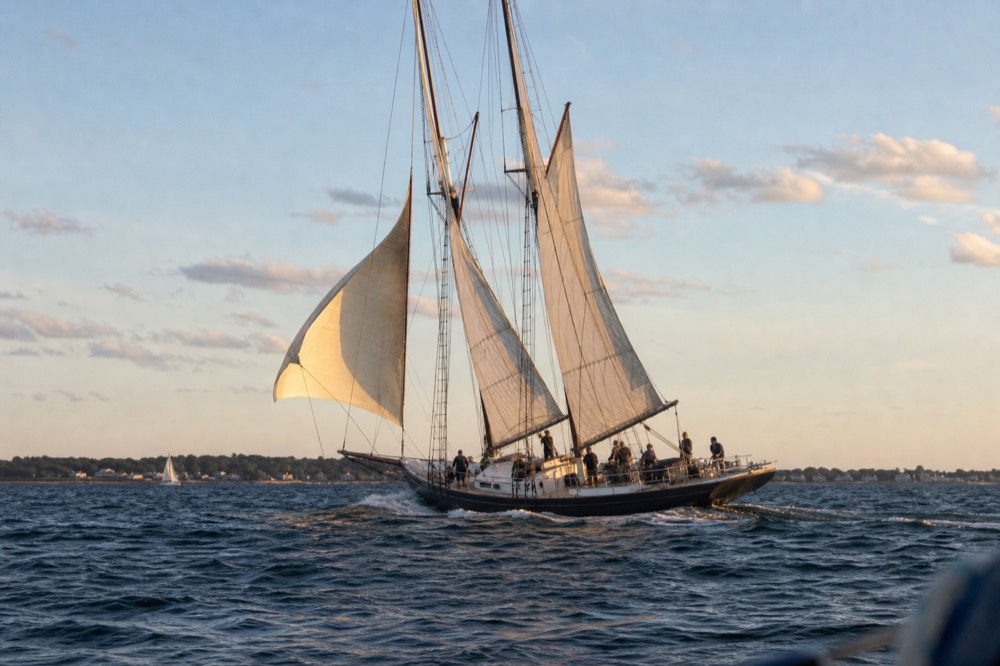
The afternoon slot is where the related tour on this page shines. The afternoon schooner dolphin cruise puts you on an 84-foot tall ship for 1.5 hours, rated 4.5 stars across 787 reviews, from $56 per person, with free cancellation and a "likely to sell out" flag on the live listing that reflects real demand rather than marketing pressure. Sailing under canvas rather than motoring makes it feel like a genuine sailing trip rather than a ferry ride. Because it is an afternoon departure, it consistently lands in the light window photographers want, and its free-cancellation policy gives you room to rebook if the weather or the tide table looks wrong.
Sunset adds one more layer: dolphins become more visibly active as the day cools, and the low sun turns every surfacing into a silhouette against gold water. The sunset-plus-dolphin cruise from Mount Pleasant is the crossover option, 1.5 hours from $58 per person. It carries no star average and only 8 reviews so far, a genuinely thin sample, so judge it on route and price rather than a rating that does not exist yet.
Here is how the main departure windows compare for a dolphin-focused trip:
| Departure window | Water conditions | Light for photos | Tide overlap | Best for |
|---|---|---|---|---|
| Early morning (8-11am) | Calmest of the day, low wind | Even, cool light; backlit subjects | Depends on the day's tide cycle | Motion-sensitive riders, families |
| Midday (11am-2pm) | Moderate, building breeze | Harsh overhead light | Often overlaps falling tide in summer | Feeding-behavior seekers |
| Afternoon (2-5pm) | Moderate chop possible | Warm, directional, improving | Late-summer falling tide window | Balanced sighting plus photo quality |
| Sunset (5-8pm, seasonal) | Calming again late | Best color of the day | Variable | Photographers, couples |
Note that sunset departure times shift with the season: in September 2026, sunset in Charleston runs from about 7:44pm on the first of the month to 7:05pm on the last, so a "sunset cruise" that leaves at 6pm in July leaves closer to 5pm by October. Always confirm the actual departure time on the operator's live listing for your date rather than assuming last month's schedule.
Which tour should you actually book for dolphin sightings?
For the best single dolphin-focused booking in Charleston, choose the afternoon schooner sightseeing dolphin cruise for the combination of a proven 4.5-star record across 787 reviews, a $56 fare and a departure slot that hits the best light; choose the Folly Beach excursion instead if seeing tidal-creek feeding behavior matters more than open-water sailing. The two tours are not really competitors, they are different answers to different priorities.
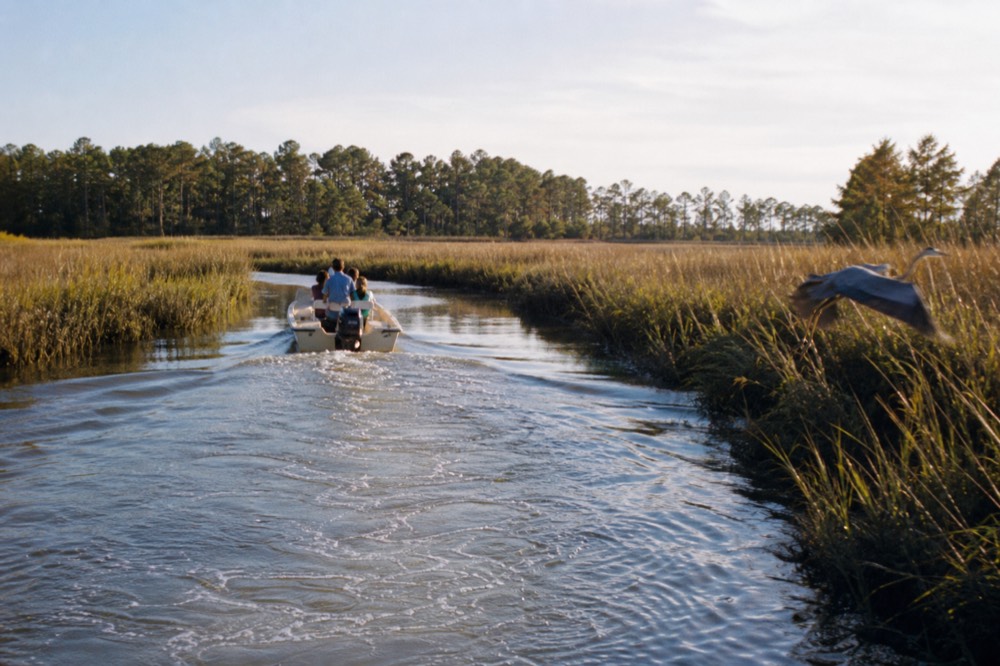
The Folly Beach dolphin excursion is the only tour on this site that does not depart from a Charleston Harbor marina, and that is precisely the point. It launches from Folly Beach into the tidal creeks and channels behind the island, the habitat where strand feeding is documented, and passes Morris Island Lighthouse on the way. At 1.5 hours and from $52 per person, it is also one of the more affordable dolphin options, and its 5.0-star average rests on just 17 reviews, a small sample worth stating plainly rather than dressing up.
For readers planning a fuller Charleston trip, the timing logic here also feeds into bigger decisions. Our best months to book a harbor cruise guide covers the seasonal layer, including why fall is repeatedly cited as the strongest season on the water, with cooler air, clearer skies and thinner boat traffic than the summer peak. Pair that with the tide-first approach above and you have both axes of the decision covered: the month sets the odds, the tide sets the drama.
Whichever slot you pick, the honest summary is this: dolphins are here in numbers that make sightings likely on almost any departure, the tide decides how dramatic those sightings are, and the time of day decides how comfortable and how photogenic the whole experience feels. A tall-ship afternoon sail, a creek run from Folly Beach and a sunset crossover trip all sit within a few dollars of each other, so the real choice is about habitat and light, not price.
If you are still weighing options, the three tours below cover the full spread of timing windows and habitats, from the afternoon tall ship to the Folly Beach creeks and the sunset crossover.
The short answers: mid-morning through late afternoon is the strongest daily window, the falling tide matters more than the hour, strand feeding peaks July through September, boats must stay 50 yards away by federal law, and sunset departures remain a solid dolphin option despite thinner review data. Each question below unpacks one of those points in detail.
Common questions about dolphin timing in Charleston
Dolphins can be spotted in Charleston year-round, but the best viewing tends to be in warmer months when they are more active and easier to see near shore. Early morning and late afternoon are often good times to watch, and tours, kayaking, and waterfront spots around the harbor all offer reliable chances to see them.