Can I swim with dolphins in Charleston, SC?
A clear, honest no: federal law keeps swimmers 50 yards from wild dolphins in Charleston. Here is why that rule exists and what a legitimate dolphin-watching trip offers instead.
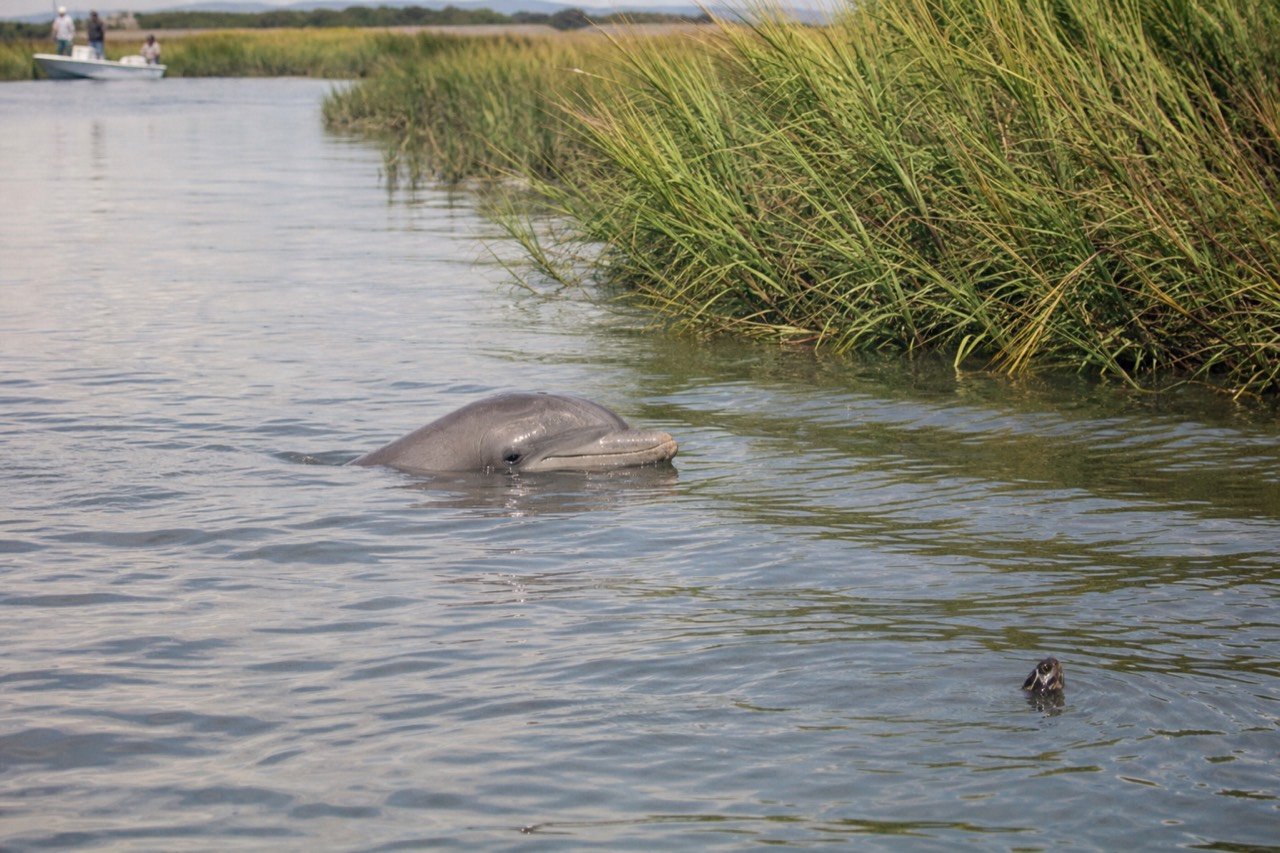
Can I swim with dolphins in Charleston, SC?
No, you cannot legally swim with dolphins in Charleston, and no licensed operator here will offer it. The federal Marine Mammal Protection Act makes it unlawful to harass, feed, touch, or swim with wild marine mammals, and it requires boats to keep at least 50 yards, or 150 feet, away. Any business advertising swim-with-dolphins sessions in South Carolina waters is either operating illegally or misleading you.
The 50-yard distance rule is not a guideline. It is federal law, and it applies to kayakers, paddleboarders, swimmers, and powered vessels alike. Advocates in the Lowcountry, including the Lowcountry Marine Mammal Network and NOAA, highlighted exactly this rule in July 2026 when pushing boater education around Shem Creek and the Folly River, two of the busiest dolphin corridors in the area. You can read the reporting on that push at Live 5 News.
That legal reality surprises visitors for a understandable reason. Swim-with-dolphins programs exist in a handful of places, most famously in Florida and the Caribbean, so the assumption is that a coastal city like Charleston must offer something similar. Those programs, where they legally operate, involve captive animals in enclosed facilities, not wild dolphins in open water. There is no such facility in Charleston, and the wild population here is protected precisely because it is wild.
The good news is that the alternative is genuinely good. Charleston's inland waters hold roughly 300 resident bottlenose dolphins year-round, according to the Lowcountry Marine Mammal Network, and a well-run dolphin-watching boat puts you close enough to see them hunt, breach, and even strand feed without breaking the law. If you want to understand when sightings peak, our piece on dolphin timing in Charleston covers the seasonal patterns.
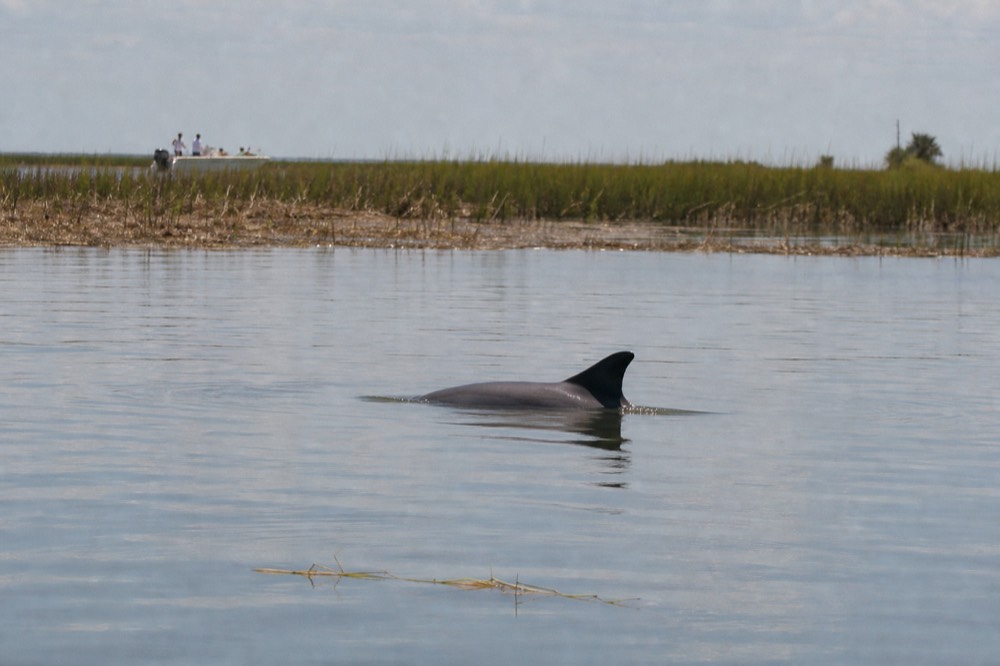
Why is swimming with wild dolphins illegal?
The Marine Mammal Protection Act bans harassing, feeding, hunting, or capturing wild marine mammals, and "harassment" legally includes any act that has the potential to disturb them, so swimming toward dolphins or touching them qualifies. The 50-yard approach limit exists because close human contact changes how dolphins feed, rest, and raise calves, sometimes with fatal consequences. The law protects the animals, not the tourists.
Feeding is the sharpest edge of this. A dolphin that learns to associate boats or people with handouts stops teaching its calves to hunt live fish, and fed dolphins in the southeastern US have been documented begging at propellers, which ends in propeller strikes and entanglement. A mother dolphin that is repeatedly approached by swimmers may be driven away from a nursing area, and calf mortality in disturbed populations rises. These are the outcomes federal wildlife managers point to when they enforce the rule.
The population here is small enough that individual dolphins are known by name. The Lowcountry Marine Mammal Network has tracked a rare tail-less bottlenose dolphin called Koa in Charleston-area waters since reports began in March 2025, one of only about seven comparable wild cases recorded worldwide. When a population of roughly 300 animals carries individually recognizable members, every careless interaction matters. Reporting on the roughly 300 resident dolphins comes from the Post and Courier.
There is also a health angle that cuts both ways. NOAA researchers found microplastics in the gastrointestinal tracts of all 47 stranded bottlenose dolphins sampled from the Charleston estuary between 2015 and 2024, including in newborns and a milk-fed calf. The same waters that expose dolphins to pollutants are not waters you want to be swallowing on a swim anyway, and Charleston Harbor itself is not promoted as a swimming destination, a point we cover in detail in can you swim in Charleston Harbor.
What can you do instead of swimming with dolphins?
A lawful dolphin-watching cruise gets you within viewing distance of wild dolphins while the boat's captain keeps the legal 50-yard buffer, and in Charleston that means guided boat tours from $52 to $56 per person. Options range from a small-boat creek excursion behind Folly Beach to sailing trips on an 84-foot tall ship where guests can help hoist the sails. Watching from a boat is the intended way to see these animals.
The distinction matters: a responsible captain does not chase dolphins. Instead, they position the boat along known feeding routes and let the dolphins come into view on their own terms, which they routinely do, because the resident population hunts the same creeks and harbor channels every day. Dolphins frequently approach stationary or slow-moving vessels on their own, and that is legal, since the law governs your conduct, not the dolphin's curiosity.
The Folly Beach Dolphin Viewing Boat Excursion from Castaway Island Excursions is the strongest pick for this. It is the only tour on this site that does not depart a Charleston Harbor marina: it leaves from Folly Beach and spends 1.5 hours in the tidal creeks behind the island, past Morris Island Lighthouse. It runs from $52 per person and holds a 5.0-star average, though from a small sample of just 17 reviews, too few to treat as a settled rating. The creeks it works are exactly where strand feeding, the behavior where dolphins deliberately beach themselves to catch fish, is most often seen.
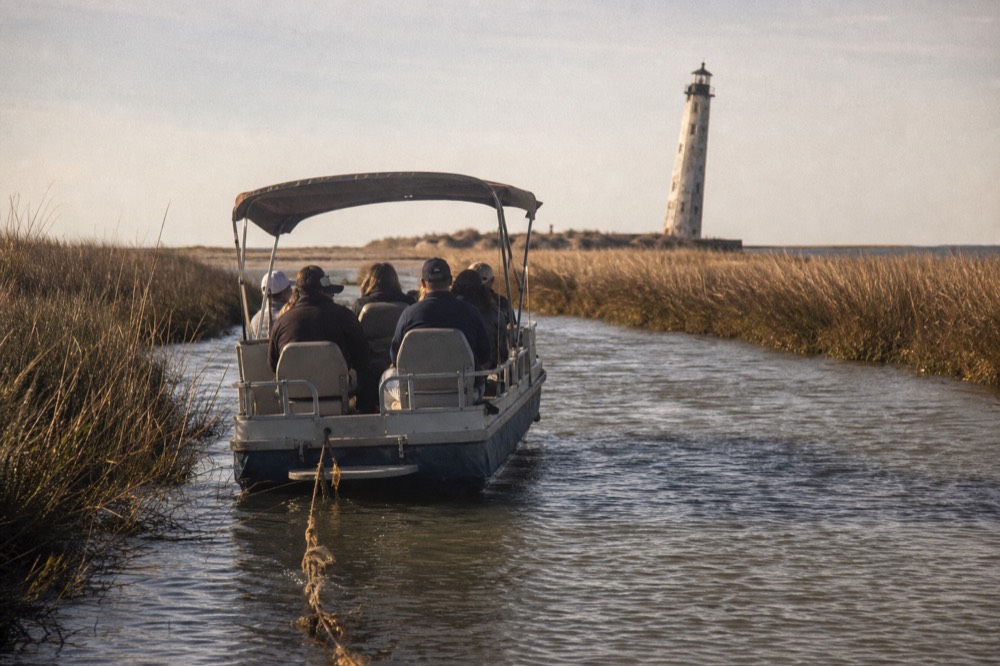
Where is the best place to see dolphins near Charleston?
Folly Beach and the Isle of Palms rank fourth and second nationally for bottlenose dolphin sightings among 356 US coastal locations in an OBIS-SEAMAP data analysis, which is why the Folly Creek and harbor-channel trips see dolphins so reliably. Charleston Harbor itself, Shem Creek, and the Stono and Folly river systems all hold resident dolphins year-round. The geography, not any single operator, is the advantage.
That national ranking, based on Duke University and NOAA's shared OBIS-SEAMAP sighting database, documented 16,588 dolphins across 2,446 sighting events at the Isle of Palms and 14,443 across 3,161 events at Folly Beach. For a visitor, the practical takeaway is simple: you do not need a lucky day, you need to be on the water in the right corridor at the right tide. Our longer guide to the best places to see dolphins in Charleston maps the specific spots.
Here is how the main lawful options compare:
| Trip | Departure point | Duration | Price | Rating |
|---|---|---|---|---|
| Folly Beach Dolphin Viewing Boat Excursion | Folly Beach | 1.5 hours | From $52/person | 5.0 stars, 17 reviews, a small sample |
| Afternoon Schooner Sightseeing Dolphin Cruise | Not stated, check the live listing | 1.5 hours | From $56/person | 4.5 stars, 787 reviews |
| Schooner Sailing Experience Dolphin Watch | Aquarium Wharf | 1.5 hours | From $56/person | Ratings are on the live listing |
| Sunset cruise options with dolphin crossover | Charleston Maritime Center and Mount Pleasant | 1.5-2 hours | From $58-$60/person | 4.7-4.8 stars on the site's roster |
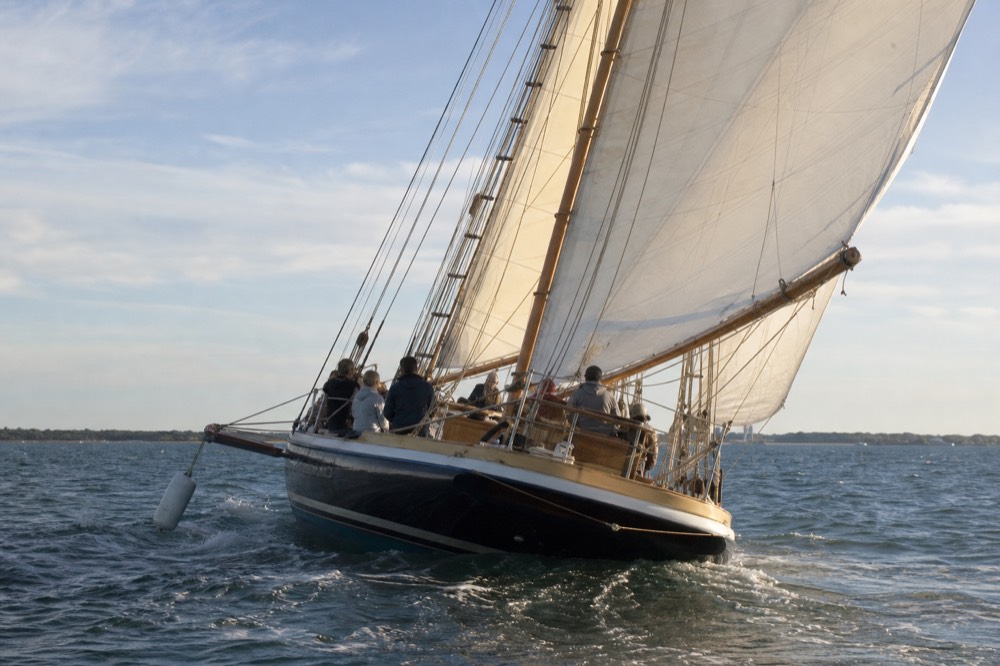
The Afternoon Schooner Sightseeing Dolphin Cruise deserves its own note. It runs on an 84-foot tall ship, holds a 4.5-star average from 787 reviews, includes free cancellation, and is marked "likely to sell out" on the live listing, which is a real flag rather than marketing pressure. The Schooner Sailing Experience Dolphin Watch, departing Aquarium Wharf, lets guests help hoist the sails, and its ratings are on the live listing because independent reads disagreed.
What is strand feeding, and can you see it from a boat?
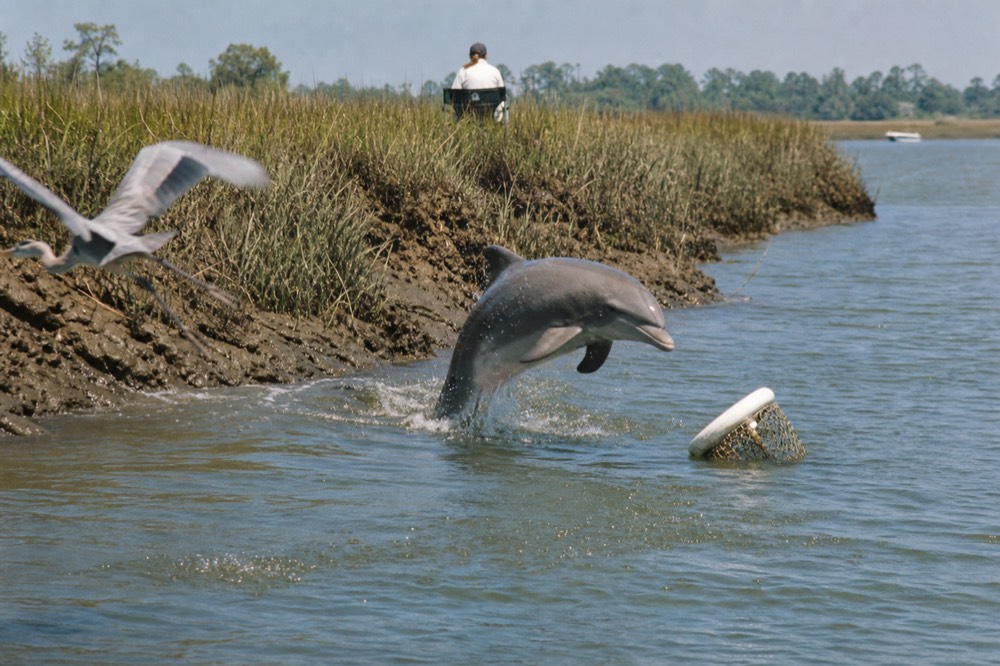
Strand feeding is a rare learned behavior in which a dolphin deliberately drives itself onto a mudbank to snatch a fish, then wriggles back into the water. It is documented in South Carolina and Georgia salt marshes since 1971 and almost nowhere else on the US Atlantic coast. Around Charleston it peaks July through September on a low to mid tide, and the Folly Beach creek trips are the ones positioned to see it.
The behavior is passed from mothers to calves, which is why it stays geographically clustered. A 2026 peer-reviewed paper in Marine Mammal Science by Lauren B. Rust of the Lowcountry Marine Mammal Network and Wayne McFee of NOAA examined strand feeding specifically at Captain Sams Inlet, South Carolina, and found groups of three dolphins to be the most common participants. Some observers stretch the best window into late August through November, when the mullet migration concentrates prey in the shallows.
Seeing it from a boat is a matter of tide timing and patience, not proximity. A captain who knows the banks will hold position at a respectful distance and let the feeding sequence unfold, which is precisely what the 50-yard rule is designed to allow. A swimmer or kayak charging toward a feeding bank would scatter the fish and end the behavior, which is one more reason the law is written the way it is. For the timing question in detail, our guide on the best time of day to see dolphins in Charleston has the fuller breakdown.
Are there any legal ways to get close to dolphins?
Legally, closeness happens on the dolphin's terms: if a dolphin approaches your anchored boat or crosses your bow while the captain holds course, that is allowed. What is never allowed is feeding, touching, chasing, circling, or swimming toward them, and the 50-yard rule still applies to your own actions. Kayakers and paddleboarders are bound by the same law as powerboats.
This is worth stating plainly because the gray areas trip people up. A dolphin surfacing ten feet from a drifting tour boat is a lawful encounter. Jumping off that same boat to swim over to the dolphin is a federal violation, and so is reaching out to touch one that comes alongside. The National Oceanic and Atmospheric Administration treats repeated or deliberate close approach as harassment, and penalties are real, not theoretical.
For visitors who want a hands-on wildlife experience that is genuinely legal, the honest answer is that Charleston's dolphin offerings are all observation-based, and that is a feature. The same waters hold pelicans, herons, osprey, and the occasional sea turtle, and a good naturalist-guided trip delivers far more of the ecosystem than a swim session ever could. If your interest is broader than dolphins, our overview of dolphin cruises and prices in Charleston compares every option on the roster.
One practical note on planning: dolphin-watching trips here are short, mostly 1.5 hours, so they pair easily with a morning on Folly Beach or a walk on the Ravenel Bridge. The Charleston Harbor Cruises roster exists for exactly this kind of half-day planning, and the dolphin category is one of its deepest.
Do dolphin-watching tours in Charleston actually see dolphins?
Nothing is guaranteed with wild animals, but the odds here are unusually strong: a resident population of roughly 300 dolphins works these waters daily, and the area's two beach zones rank in the national top five for sightings. Reviews of the site's dolphin trips consistently report sightings, and no lawful operator promises a rate. Treat any "guaranteed dolphins" claim as a red flag.
The honest framing is that a guarantee would itself be a violation of good practice, because a captain who guaranteed sightings would face pressure to break the 50-yard rule on a slow day. The operators who last in this business are the ones who let the dolphins come to the boat. Recent guest reviews of Charleston dolphin trips call them "enjoyable and worth the price," and reviewers of the Folly Beach creek excursion in particular describe close passes by curious dolphins, exactly the kind of encounter the law is built around.
Season and tide still shape your odds. Summer brings migratory Atlantic bottlenose dolphins joining the resident Tamanend's bottlenose population, so June through September sees the highest density, and the same window overlaps peak strand feeding. A low-to-mid tide departure through the creeks is the single best combination you can book.
The short answers: swimming with, touching, or feeding wild dolphins in Charleston is a federal violation under the Marine Mammal Protection Act, which requires everyone to keep at least 50 yards away. There is no captive dolphin facility here, so no lawful swim program exists. The legal alternative is a dolphin-watching boat tour, which the questions below cover in detail, along with when and where sightings are most likely.
Common questions about swimming with dolphins in Charleston
No, you cannot swim with wild dolphins near Charleston; federal law protects them, so the legal alternative is watching from a boat. Instead, Charleston offers dolphin tours and kayak adventures where wild dolphins frequently swim alongside boats and through the creeks and rivers around Charleston Harbor, giving visitors an up-close experience with these animals in their natural habitat.
Can you touch a dolphin if it swims up to your boat?
No. If a dolphin approaches your boat on its own, observing is legal, but reaching out to touch it is harassment under federal law. The rule governs your conduct, not the dolphin's curiosity.
Are there captive dolphin facilities near Charleston?
No. The swim-with-dolphins programs that exist elsewhere in the country involve captive animals in enclosed facilities, and there is no such facility in Charleston. South Carolina's dolphins are a wild, protected population.
How close can a boat legally get to dolphins?
Federal law requires boats, kayaks, and swimmers to stay at least 50 yards, or 150 feet, from dolphins. Responsible tour captains hold that buffer and let dolphins approach on their own terms.
What is the best legal way to see dolphins in Charleston?
A dolphin-watching boat tour. The Folly Beach Dolphin Viewing Boat Excursion runs 1.5 hours through the tidal creeks behind Folly Beach from $52 per person, and harbor schooner trips run from $56.
When are you most likely to see dolphins in Charleston?
Year-round, since roughly 300 dolphins are resident, but density peaks in summer when migratory dolphins join them, and strand feeding around Folly Beach peaks July through September on a low to mid tide.