Is the Fort Sumter tour worth it?
Honest verdict on whether the Fort Sumter ferry tour is worth your time and money, with a comparison to narrated harbor cruises that pass the fort without landing.
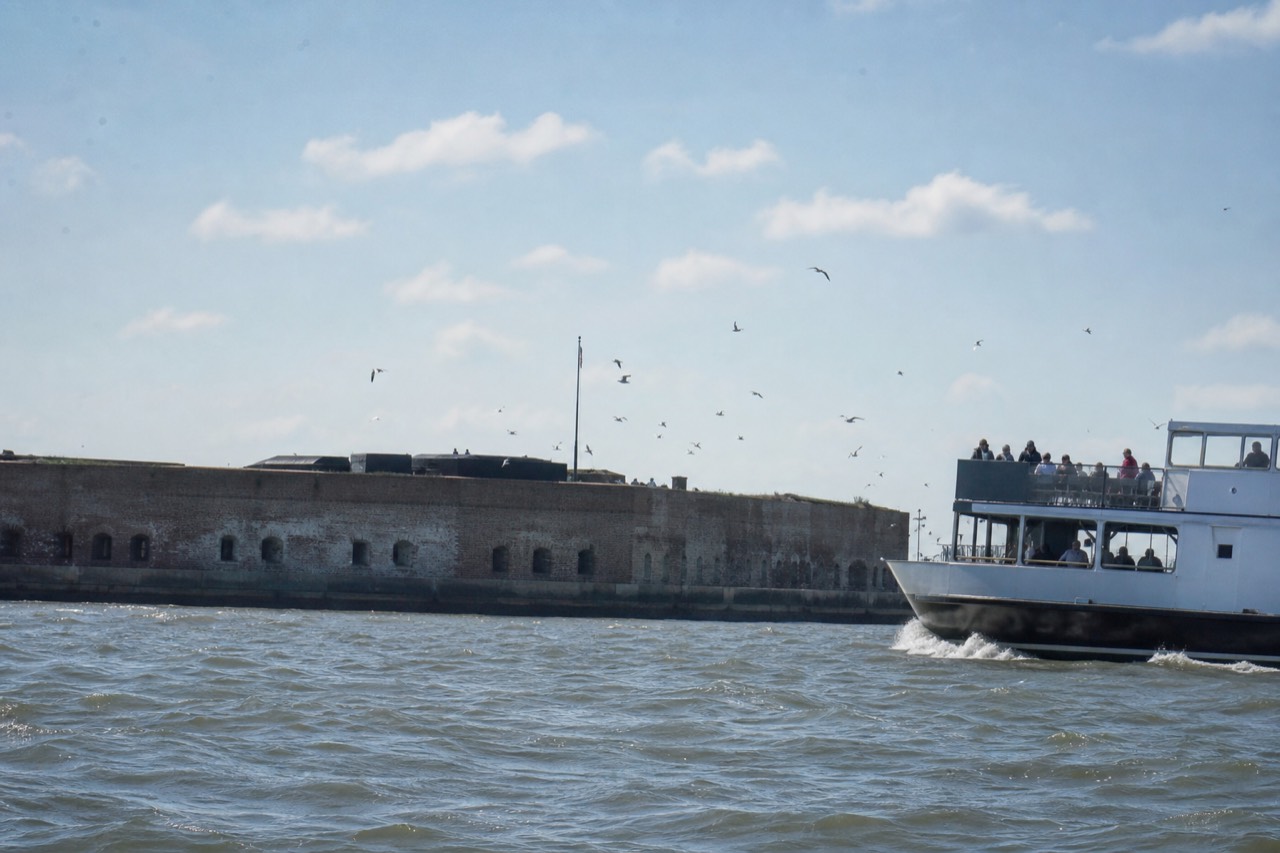
Fort Sumter's first shots rang out at 4:30 a.m. on April 12, 1861, a 34-hour bombardment that opened the Civil War. Today, the fort draws over 800,000 visitors a year, but the ferry tour that lands on the island isn't the only way to experience it. While Charleston Harbor Cruises doesn't sell the Fort Sumter ferry itself, the site's historic harbor tours offer a narrated pass-by that many visitors find a great alternative. So is the ferry worth the time and ticket price, or should you stay on the water and see the fort from a different angle? This guide compares both options honestly, using real visitor feedback and current facts, so you can decide what fits your trip.
Is the Fort Sumter tour worth it?
For anyone who wants to stand on the actual ground where the Civil War began, the Fort Sumter ferry tour is worth it, but if you're on a tight schedule or budget, a narrated harbor cruise that passes the fort without landing gives you the same views and historical commentary for less money and no need to commit to a 2-hour-plus ferry schedule. The ferry, operated by a National Park Service concessioner, is the only way to set foot on the fort, and that alone makes it a bucket-list item for history buffs. However, the experience isn't cheap, and the fixed departure times can eat into a short Charleston visit.
The ferry ride itself is part of the draw: a 30-minute narrated cruise each way, with views of Rainbow Row, the Battery, and the Ravenel Bridge, plus about 60 minutes ashore at the fort to explore the museum, ranger talks, and the parade ground. Total time is roughly 2 hours 15 minutes. Tickets sell out on busy days, so booking ahead is wise. If you're more interested in the harbor scenery and the fort's silhouette than actually walking inside, the historic harbor cruises on this site deliver a live-narrated loop that covers Fort Sumter and 75+ other landmarks in just 1.5 hours, often at a lower price point. Our full historic harbor cruise guide breaks down the narration, landmarks, and departure details.
If you'd rather stay on the water and see Fort Sumter alongside other landmarks, these three narrated cruises offer a flexible alternative:
What's the difference between the Fort Sumter ferry and a harbor cruise?
The ferry lands you on the fort for a self-guided or ranger-led tour, while a harbor cruise stays on the water and passes the fort as part of a broader narrated route that also covers the Battery, Ravenel Bridge, and Charleston's skyline; the ferry takes about 2 hours 15 minutes round-trip, while most harbor cruises run 1.5 hours and are often cheaper. The choice comes down to whether you need to step onto the island or are content with a close-up view from the deck. Both include live narration, but the harbor cruise's commentary runs the full trip, not just the transit legs.
Here's a side-by-side look at the key differences:
| Feature | Fort Sumter Ferry | Narrated Harbor Cruise (this site) |
|---|---|---|
| Lands on Fort Sumter | Yes | No (passes by with commentary) |
| Duration | ~2 hours 15 minutes total | 1.5 hours |
| Narration | 30-minute segments each way | Full 1.5-hour live narration |
| Typical price | Check the NPS concessioner's listing | From $45–$54 per adult |
| Flexibility | Fixed schedule, limited departures | Multiple daytime and sunset departures |
| What you see | Fort Sumter interior, museum, harbor views | 75+ landmarks, Fort Sumter, dolphins, skyline |
The ferry's ashore time is the main draw, but the harbor cruises cover more ground and let you pair the fort with dolphins, the Battery mansions, and the USS Yorktown. For many visitors, the decision hinges on how much time they have and whether they want to physically walk the fort's ramparts. The National Park Service recorded 814,658 recreation visits to Fort Sumter and Fort Moultrie National Historical Park in 2025, so the ferry is clearly a high-demand experience. But if you're visiting during peak season, the boat can feel packed, and the fixed schedule means you're locked into a specific window. A harbor cruise, by contrast, gives you multiple departure times and a more relaxed pace.
What do recent visitors say about the Fort Sumter tour?
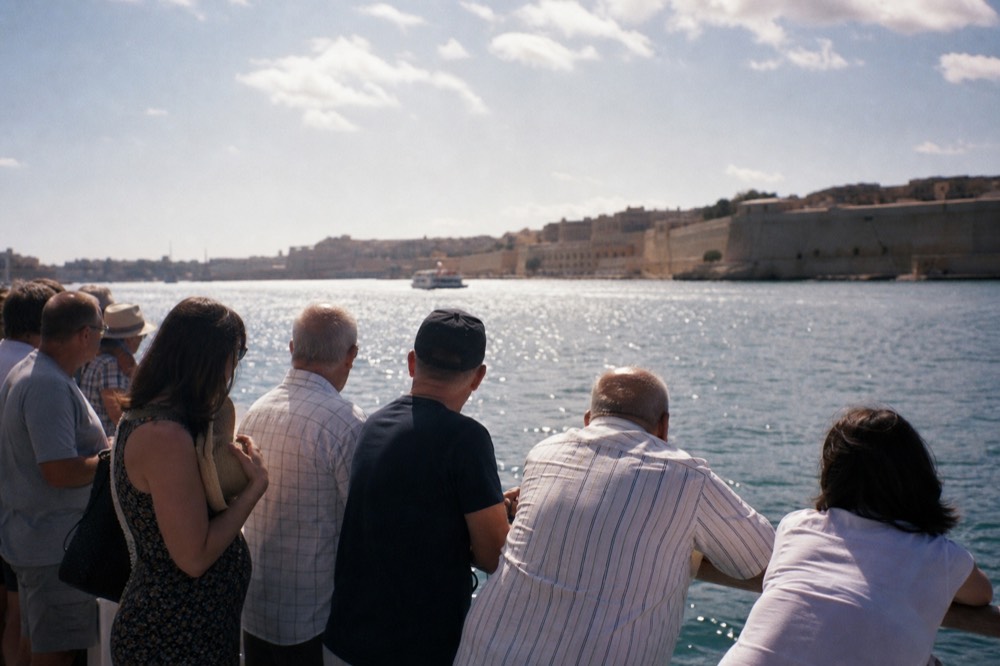
Many reviewers call the ferry ride scenic and the fort visit educational, with ranger talks adding depth, but some note that the ferry can feel crowded and the narration can be hard to hear; overall, the experience is consistently described as worthwhile for history buffs. A 2026 guest review called it "great" and "worthwhile," while another praised the "scenic" narrated harbor cruise portion and the chance to see dolphins along the way. The fort's museum and the dramatic story of the 1861 bombardment resonate strongly with visitors.
That said, not every review is glowing. Some passengers mention that large groups or bachelorette parties can make it tough to hear the guide, and a few reviews describe the boats as showing their age. These complaints are more about crowd control than the destination itself, but they're worth weighing if you prefer a quieter experience. The historic harbor cruises on this site, with their smaller groups and dedicated narration, often avoid those issues. One recent review on the live listing noted that the captain's storytelling kept everyone engaged even when the boat was full, while another remarked that the sunset timing made the fort's silhouette unforgettable.
For a narrated cruise with the largest review base on the site, the Charleston Harbor Live Narrated History Cruise has 3,229 reviews and a 4.4-star average, and it's marked "Likely to sell out" on the live listing.
When is the best time to take the Fort Sumter tour?
Fall (September through November) offers the calmest water, clearest skies, and thinner crowds, but the ferry runs year-round; morning departures tend to be less crowded and have smoother conditions, while sunset cruises that pass the fort are a popular alternative for photographers. Charleston's peak tourism season runs from spring through summer, so a fall visit means shorter ticket lines and more elbow room on the ferry. Hurricane season technically lasts through November, but operators monitor conditions closely and reschedule if needed.
Morning and late-afternoon departures see the calmest water, with lower winds and less glare. If you're taking a harbor cruise that passes the fort, the golden-hour light around sunset turns the fort's brick walls a warm orange, making it a favorite time for photos. A sunset cruise won't land you on the island, but the visual payoff is real. The ferry's schedule is fixed, so if you want that ashore time, you'll need to plan around the limited departures. For a more flexible option, the historic harbor tours on this site run multiple times a day and let you pair Fort Sumter with other landmarks like the Battery and Ravenel Bridge.
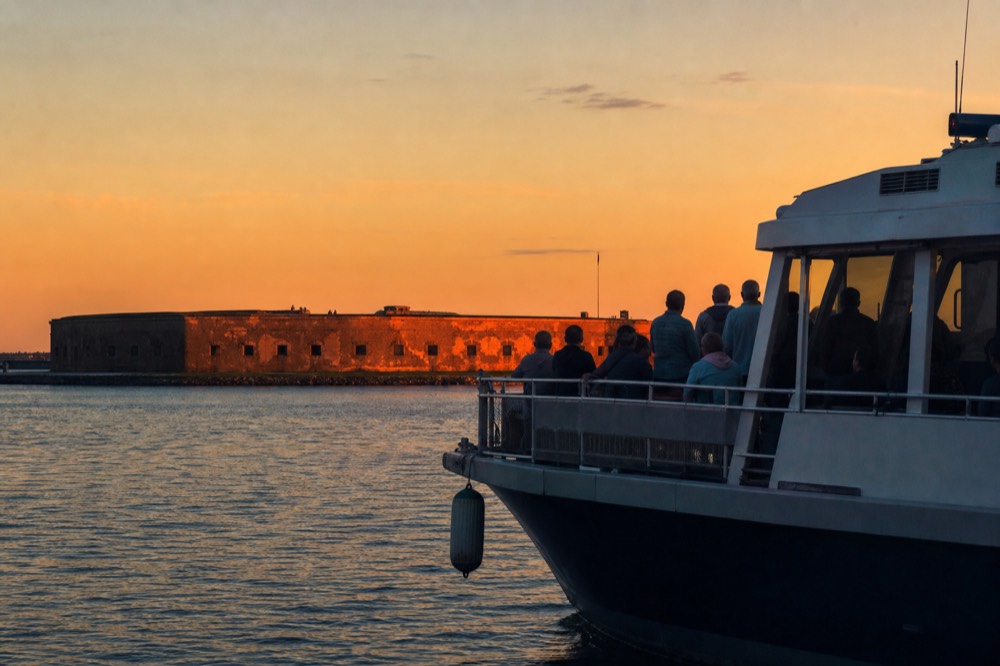
The historic harbor tour that passes Fort Sumter from the water is the site's featured pick, with 4.5 stars from over 1,400 reviews and departures throughout the day.
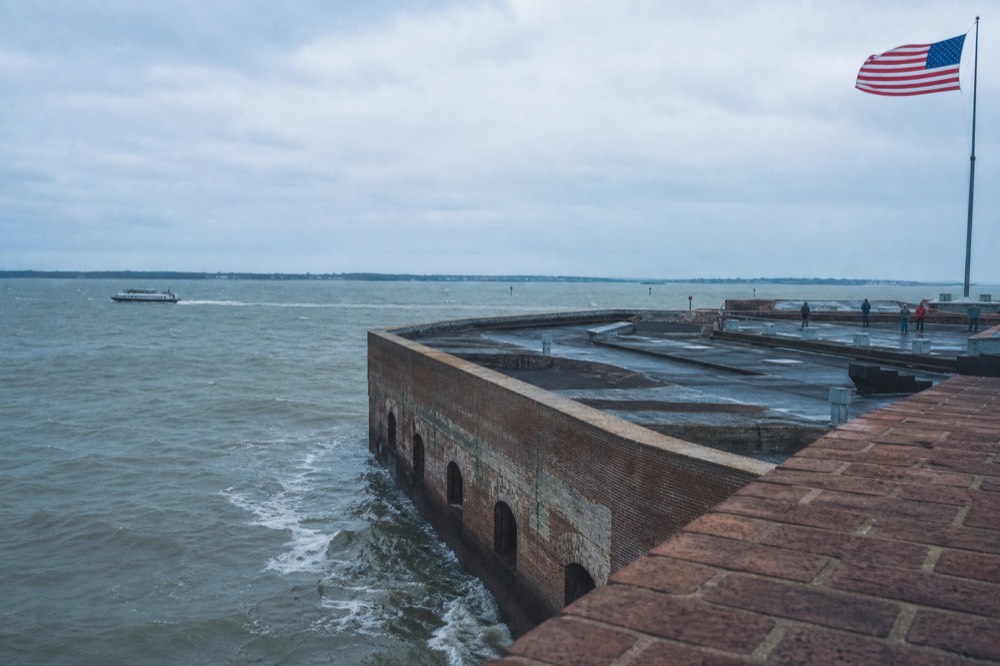
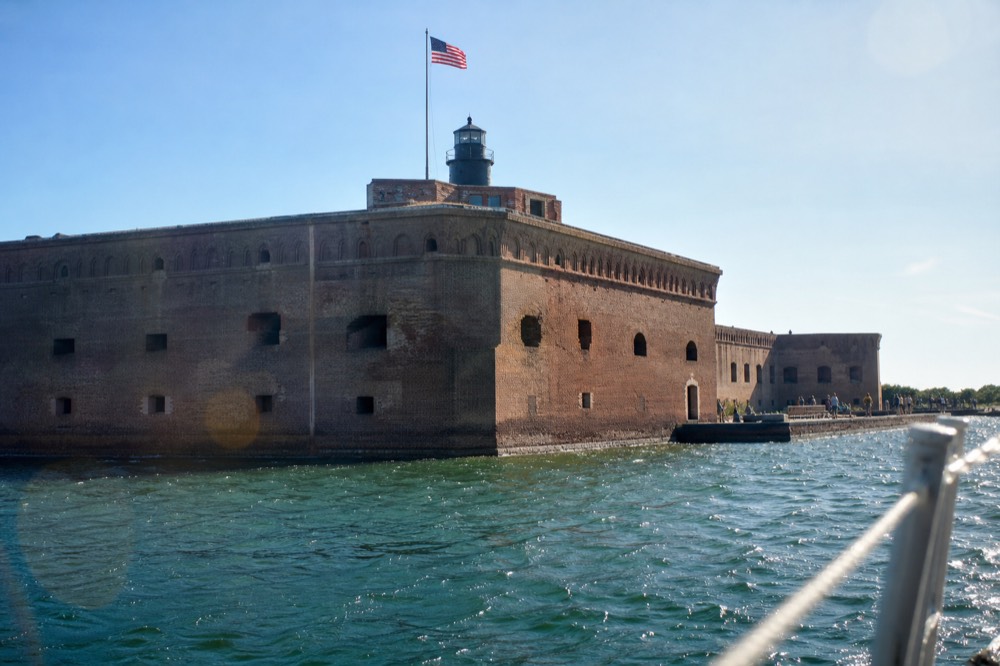
Once you're actually standing on the island, that roughly 60 minutes ashore goes faster than you'd expect, so it helps to walk in with a plan. The ferry docks at the fort's modern visitor center, and from there the site unfolds around the original brick walls. The most striking feature is the massive angled parapet at the fort's end, a reconstruction built after the Civil War when the U.S. Army modified the ruins for later military use, including installing huge rifled cannon known as Rodman guns. Two of those Rodman guns still sit in place, and they're among the first things visitors photograph. Inside the fort's interior, crews excavated down through layers of rubble after the war to expose the original 1861 parade ground level, so as you walk the inner pathways you're literally moving between two eras of the same structure. The surviving sections of the original walls, scarred by shot and shell, face the channel toward Fort Moultrie on Sullivan's Island, from which the first shots of the Civil War were fired in April 1861.
The fort was built on a man-made granite island at the entrance to Charleston Harbor, a project begun in 1829, and it sits close to the shipping channel, which is a big part of why the ferry ride itself is worth the trip. On the way out you'll pass container ships and shrimp boats, and on clear days the views back toward the city's church steeples and the Ravenel Bridge are some of the best you'll get from the water. Keep an eye out for dolphins in the harbor; they're a common sight on the crossing, especially on calmer morning runs. The ride is narrated by the boat crew or recorded commentary covering the harbor's Civil War history, the locations of the first shots fired from Fort Johnson and Fort Moultrie, and points along the waterfront, so the crossing doubles as a moving history lesson rather than dead travel time. If you're prone to motion sickness, the enclosed lower deck is the steadier choice, though most crossings are smooth enough that the open upper deck is where the photographers end up.
Timing your visit around the fort's history adds another layer. April 12 marks the anniversary of the 1861 bombardment that opened the Civil War, and the park typically sees heavier visitation and special programming around that date, so if you want to avoid crowds, plan around it, and if you want to lean into the history, it's the most evocative week of the year to go. The fort was shelled repeatedly during the war, reduced largely to ruins by 1865, and the breach in one wall was left unrestored deliberately as a visible record of the damage. After the national monument was established in 1948 and the site was later folded into the Fort Sumter and Fort Moultrie National Historical Park, the National Park Service took on its care. Park rangers are stationed on the island during operating hours and give short orientation talks near the flagpole; catching one at the start of your hour ashore is the easiest way to get oriented before exploring on your own. Fort Moultrie, the fort's counterpart on Sullivan's Island, is also part of the same park and can be reached by car, which makes a two-fort day possible if you want the full picture of where the opening shots of the war came from and where they landed.
A few practical notes can help your timing decisions. The ferry runs year-round from Liberty Square in downtown Charleston and from Patriots Point in Mount Pleasant, and the two departure points can have different schedules, so check which dock your ticket leaves from before you plan your day (see Is Patriots Point worth visiting?). Arriving about 30 minutes before departure gives you time for parking and boarding, since boats leave on schedule. The last ferry of the day back from the island is the one you cannot miss; the National Park Service is clear that visitors must catch their assigned return boat. Layer clothing for the crossing in cooler months, since the harbor breeze can feel 10 degrees cooler than downtown, and bring water in summer, since shade on the island is limited to the museum and a few covered spots. With 814,658 recreation visits recorded across the park in 2025, the summer midday departures are the ones most likely to fill, another reason the morning slots and shoulder-season dates tend to reward travelers who book early.
Weather plays a bigger role in this trip than in most sightseeing, since you're exposed to open harbor water for the crossing. Summer afternoons can bring thunderstorms that churn up the harbor and cut visibility, which is one more argument for the earlier boats. In winter, crossings run less often and the light is flatter, but the fort's brickwork photographing well in the low-angle light and the near-empty decks make it a quiet time to go. Spring and fall sit in the sweet spot, with mild temperatures and the steadiest conditions of the year.
If you're timing a visit around the anniversary week in April, book the ferry well in advance, since those departures are among the first to sell out and the special programming draws visitors from across the country. The same applies to holiday weekends in summer, when both the Liberty Square and Patriots Point departures can hit capacity. Travelers who arrive without a ticket on those dates often find the day's sailings full by mid-morning, so reserving ahead is the safer play.
Who should skip the Fort Sumter ferry and take a harbor cruise instead?
If you're short on time, traveling with young kids who might not last through a 2-hour-plus ferry schedule, or simply want a broader Charleston overview without committing to a single landmark, a narrated harbor cruise is the smarter choice; it costs less, runs more frequently, and still delivers the fort's story with live commentary. The ferry is a singular experience, but it demands a half-day commitment when you factor in parking, boarding, and the fixed return time. A harbor cruise, by contrast, slips easily into a morning or afternoon and leaves you free to explore the city afterward.
Families with small children often find the 1.5-hour harbor cruise more manageable than the ferry's longer, structured itinerary. The live narration keeps kids engaged with stories of pirates, dolphins, and the fort's dramatic history, without the need to sit through a museum tour. And for photographers, the water-level perspective from a harbor cruise often yields better shots of the fort's full profile than the limited angles from the island itself. The Charleston Harbor Live Narrated History Cruise, with its 80-foot Carolina Belle and 3,229 reviews, is a reliable alternative that covers the same ground and often sells out, so booking ahead is wise.
Common questions about Fort Sumter tours
Fort Sumter tours let you visit the historic island fort where the Civil War began, reached by ferry from downtown Charleston or Mount Pleasant. Most visitors spend about two hours total, including the boat ride and time on the island. Tickets should be booked in advance, especially in peak season, and the site is managed by the National Park Service.